Saudi buyers who need a bag that stacks, squares off and holds a premium product pay the U-panel premium knowingly — the question is never whether the construction costs more than circular, but whether the price is built honestly. Petrochemical distributors in Dammam, mineral processors shipping concentrate, and food-grade packers in Riyadh all buy square walls for reasons their operations team can list in a minute. Here is the wholesale picture for the Kingdom.
What the U-panel premium actually buys
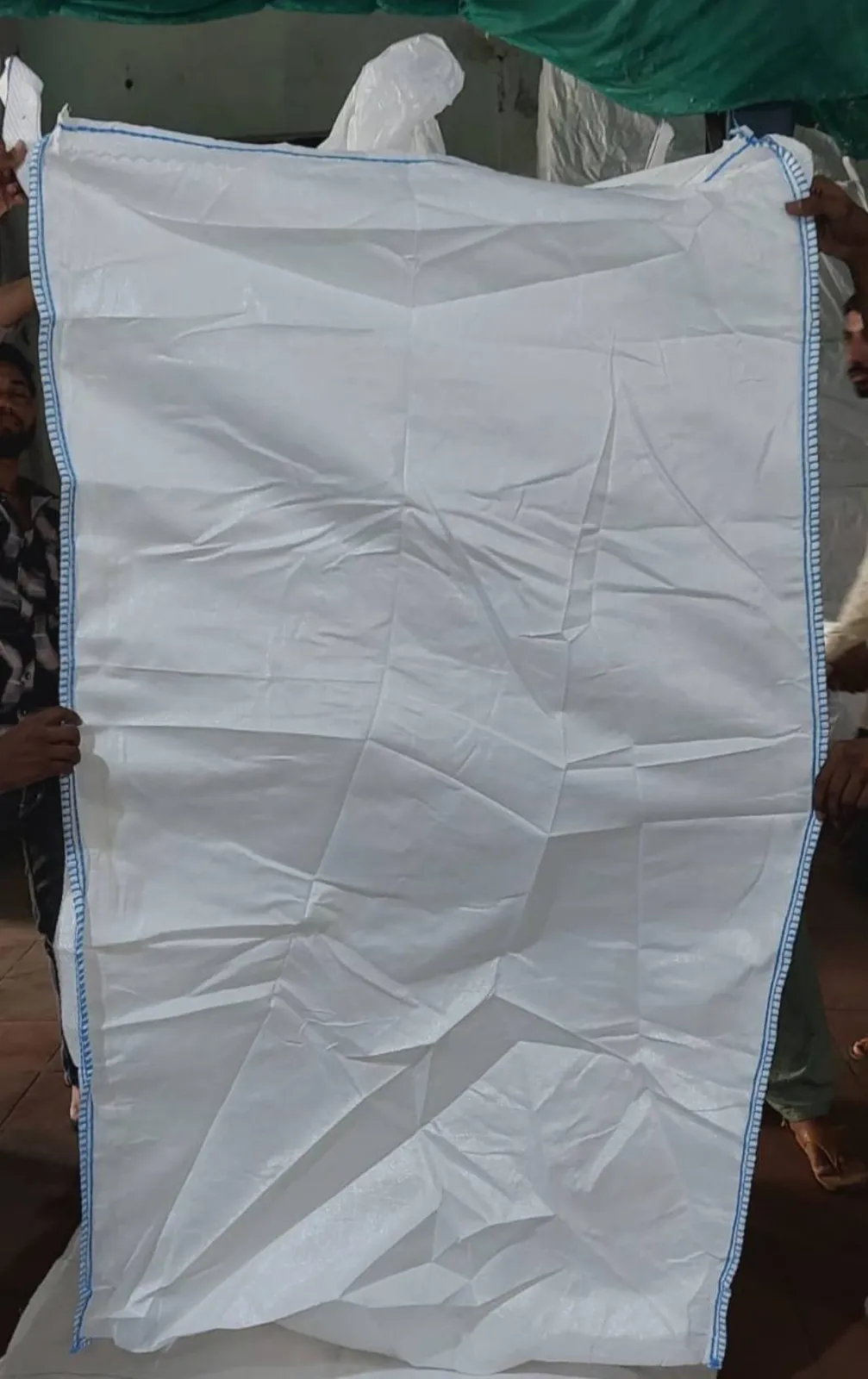
The construction adds fabric and stitching — two U-shaped panels plus sides versus a single tube — so the price step over an equivalent circular bag is real but modest at wholesale volume. What it buys: four near-vertical walls that stack two-high without leaning, a square footprint that fits warehouse racking and pallet patterns, flat faces that take print and labels cleanly, and a shape that handles cohesive cargo — powders that bridge, concentrates that are anything but free-flowing — without bulging into a round problem. Add baffles for stack stability and a form-fit liner where moisture or contamination matters, and the bag becomes infrastructure rather than packaging. Wholesale buyers comparing quotations should normalise the sheet first: GSM, safety factor, baffle, liner, print — then the numbers mean something.
Container loads into Dammam and Jeddah
A 40 foot high cube carries 14 to 16 tonnes of pressed bales — between 5,000 and 7,000 standard one-tonne bags by GSM. Baffles and liners reduce the compression ratio slightly because baffled bags pack a little tighter per bale but weigh more per unit; the bale plan is drawn at order confirmation so the count is known before the container closes. From Mundra, Jeddah runs five to seven days and the eastern ports land a few days behind. Most Saudi accounts order two containers per quarter against an annual agreement, which is the volume where the wholesale price and reserved slots both hold.
The quality agreement that survives Gulf summers
Volume buyers renew for years when the paperwork is boring: batch test reports for top lift, seam and drop against declared SWL at 5:1, UV certificates for the fabric lot, retained samples per batch for the life of the agreement, and inspection rights — SGS or Bureau Veritas at our plant before stuffing, at the buyer's cost, welcome every time. Payment runs telegraphic transfer against documents on established accounts, letters of credit on larger first orders. When a Dammam warehouse finally unloads a batch two years into an agreement and it performs exactly like the first, the agreement renews itself.
Frequently Asked Questions
How much more does U-panel cost than circular at wholesale?
A modest, honest step for the added fabric and stitching — normalise the spec sheet and compare live quotations rather than chasing a percentage that varies with GSM and options.
Do baffled bags reduce the container count?
They change the bale plan slightly; we confirm the exact per-container count at order confirmation so the landed cost model holds.
CIF or FOB for Saudi orders?
Most accounts take CIF Jeddah or Dammam with freight fixed at booking; importers running their own freight take FOB Mundra.
What documentation ships with each batch?
Top lift, seam and drop results, UV certificate for the fabric lot, dimensional and GSM checks against the approved sample, and retained sample references.
Specs and baffle options are on the U Panel FIBC Bag page. For the wider Saudi supply picture read the FIBC sourcing guide for Saudi Arabia, and for the price logic see the FIBC price guide for distributors.