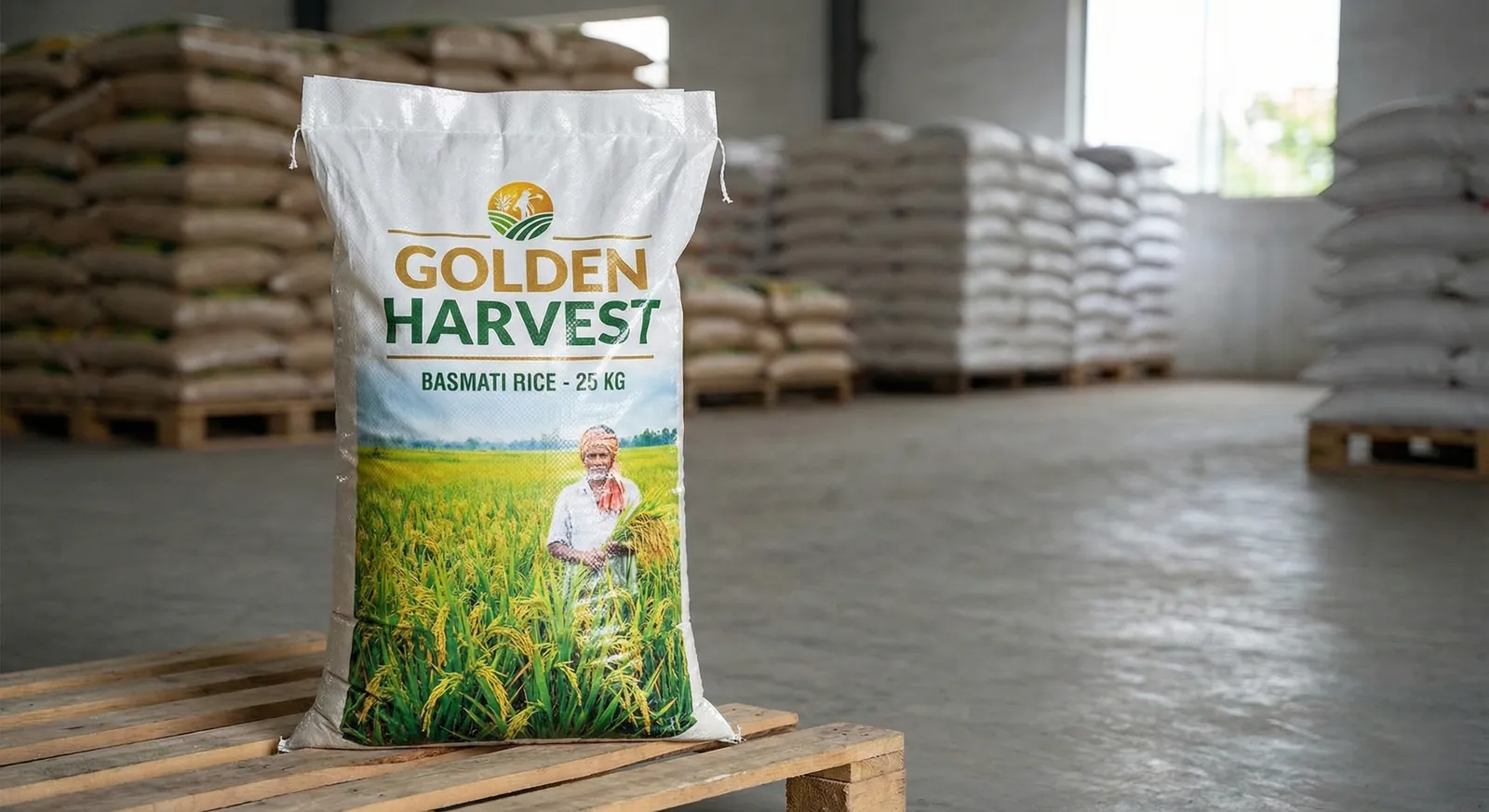
Australian pet food shelves explain the BOPP story better than any brochure: photographic dogs and cats, ingredient call-outs, saturated brand colour — all on a laminated woven bag that costs a fraction of rigid packaging and survives the run from importer to warehouse to shelf. Australian brands in pet food, rice, seed and garden products run BOPP laminated programmes as standard now, and the wholesale mechanics — loading, pricing, duty, timing — are what separate a smooth programme from an expensive education.
Loading and the packaging format choice
BOPP bags ship either baled (like all woven sacks, compressed hard) or boxed in cartons for buyers who want cleaner downstream handling. Baled loading wins on cost: a 40ft high cube carries 25 to 35 tonnes and the per-piece landed price drops visibly at FCL scale. Boxed loading suits brands feeding semi-automated bagging lines that cannot handle bale-break labour — the carton premium is real, so most Australian buyers bale the commodity lines and box only the premium SKUs. Mixed loading — several designs and sizes per container — is standard, and the biosecurity packing declaration covers the whole consignment either way.
Pricing, GST and the AI-ECTA angle
Wholesale pricing quotes per thousand pieces FOB Mundra or CIF Melbourne or Sydney, driven by size, GSM, laminate finish and colour count. Cylinder engraving is one-time per design and stored free between runs — the structural reason repeat containers get cheaper. Duty on woven polypropylene constructions under HS 6305.33 runs low to nil on the general rate, and AI-ECTA preferential treatment applies to many Indian textile lines with a certificate of origin; your broker confirms the exact line. 10% GST applies on landed value and is creditable for GST-registered importers. Transits from Mundra to Melbourne or Botany run 25 to 35 days.
Programme structure for Australian brands
The pattern that works: lock two to five house designs with cylinders held, order quarterly against retail promotions and seasonal pet food spikes, and keep a safety stock of the hero SKU. Colour governance runs through signed press proofs on real material — Australian retail buyers audit shelf consistency hard, and a brand red that shifts between quarterly runs reads as a discount line. Our production holds the signed standard and ink-batches every run against it, with retained samples per lot shipped on request.
Frequently Asked Questions
Should we bale or box BOPP bags?
Bale for commodity and mid-tier SKUs — the per-piece landed cost wins; box premium SKUs feeding semi-automated lines that need clean, scuff-free handling.
What duty applies to Indian BOPP bags?
HS 6305.33 constructions generally run low to nil on the general rate with AI-ECTA preferential access available on many lines with a certificate of origin — your broker confirms. GST at 10% applies and is creditable.
How many designs per container?
Two to five designs sharing one FCL is normal; each ships with its own colour standard so retail consistency holds across the container.
What lead time fits Australian retail calendars?
First orders 8 to 10 weeks door to door including press proofs; repeats with held cylinders 6 to 7 weeks — schedule one cycle ahead of promotions.
Constructions and finishes are on the BOPP Bags and rolls page. For pet food packaging strategy read why BOPP dominates pet food retail, and for UV and fade protection see the faded packaging guide.