Saudi Arabia runs one of the densest bulk-packing economies in the Gulf. Cement leaves Riyadh and Jeddah plants in tonne bags, Ma'aden-scale mining moves bauxite and phosphate in them, petrochemical processors ship masterbatch and powder grades in lined ones, and every grain import through Jeddah Islamic Port lands in a bulk bag at some point in the chain. A procurement manager in Dammam who sources well once usually reorders for years, which is why getting the first specification right matters more than squeezing the last riyal out of the first order.
What Saudi buyers actually specify
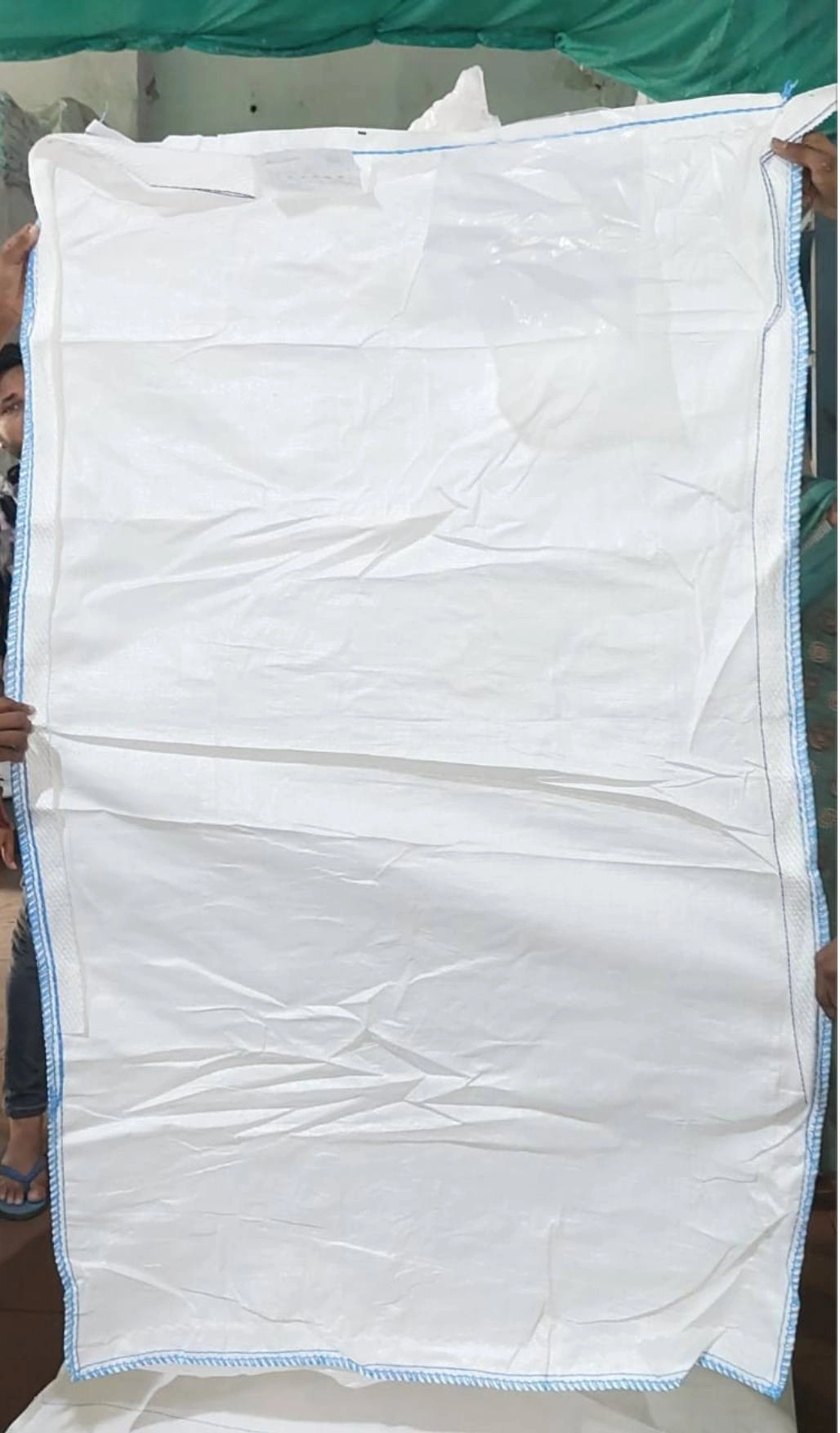
The workhorse spec in the Kingdom barely changes across sectors: a 90 x 90 x 110 cm bag with a 1,000 kg safe working load and a 5:1 safety factor, four corner loops, a top fill spout and a bottom discharge spout. Fabric sits between 160 and 200 GSM uncoated for cement and minerals, or coated when fine powders need sift-proofing. Because Gulf summer storage yards routinely cross 50 degrees Celsius on the tarp, we recommend a 12-month UV package rather than the 6-month grade that works in temperate markets, and we build that into every Saudi quotation by default. Baffled versions are worth the small premium where bags must stack two or three high in a warehouse without bulging into each other.
Shipping from India to Jeddah and Dammam
Our plant ships FCL from Mundra and Nhava Sheva, and the west-bound Gulf service puts containers at Jeddah Islamic Port in roughly five to seven days, with Dammam a few days behind it. A 40 foot high cube carries about 14 to 16 tonnes of pressed bales depending on fabric weight, which works out to somewhere between 5,000 and 7,000 bags for the standard 1-tonne spec. Most Saudi distributors order two containers per quarter against a fixed price agreement, and we hold production capacity for those call-offs so lead time stays around three weeks from order to gate-in.
Quality checks we run before every Gulf shipment
Every lot is tested for top lift, seam strength and drop before it leaves the floor, and we retain production samples for the life of the contract so any claim can be checked against a physical reference. For buyers who want third-party assurance we welcome SGS or Bureau Veritas inspection at our plant before container stuffing. On paperwork, woven sack consignments into Saudi customs typically clear with commercial invoice, packing list, bill of lading and certificate of origin, and we supply mill test certificates alongside where the buyer's contract calls for them — your broker will confirm whether the shipment needs anything on the SABER platform for your specific use.
Frequently Asked Questions
What is your MOQ for Saudi Arabia orders?
500 pieces for standard specs and 1,000 pieces for printed or lined bags, packed as pressed bales on wooden pallets for easy forklift handling at Jebel Ali transhipment or direct port discharge.
Can you print our logo and Arabic product details?
Yes, up to four colours flexo printed in-line, including Arabic text — send artwork in vector format and we return a print proof for approval before production.
How long does the whole cycle take from PO to Dammam delivery?
About three weeks of production plus five to eight days of ocean transit, so a realistic door-to-door planning window is five to six weeks on a new order and less on repeat call-offs.
Do the bags survive Gulf summer storage?
With the 12-month UV stabilization we quote as standard for the Kingdom, bags handle outdoor yard storage through a full summer cycle without the fabric chalking or losing tensile strength.
Full FIBC specifications, SWL options and liner choices are on the PP Jumbo Bags (FIBC) product page. For the wider sourcing picture read the B2B guide to sourcing FIBC bags from India, and before you sign a new supplier check the five mistakes importers make when sourcing from India.