Ask a British merchant for a bag of sand in bulk and you will get a tonne bag filled from a circular-construction FIBC more often than anything else. The tubular weave dominates UK bulk-bag volume for the same reason it dominates everywhere fast product moves: it fills quickly, discharges almost completely and lands at the lowest cost per unit in its class. What follows is the specification and supply picture for UK buyers, from builders merchants to waste contractors.
Where circular construction wins for UK buyers
Aggregates, sand, gravel and decorative stone are the merchant volume — free-flowing cargo that fills fast and drains clean through a discharge spout or a cut base panel. Waste and recycling contractors run circular bags for segregation streams and for off-site transfers, where the lack of side seams matters because skip-side handling is brutal on weak points. Grain merchants and seed houses use lined or ventilated variants depending on the season. The honest counterpoint stands: cohesive powders, two-high warehouse stacking and palletisation-critical applications belong to U-panel, and a good supplier will route you there rather than force-fit a circular bag onto the wrong job.
Specs the UK trade actually orders
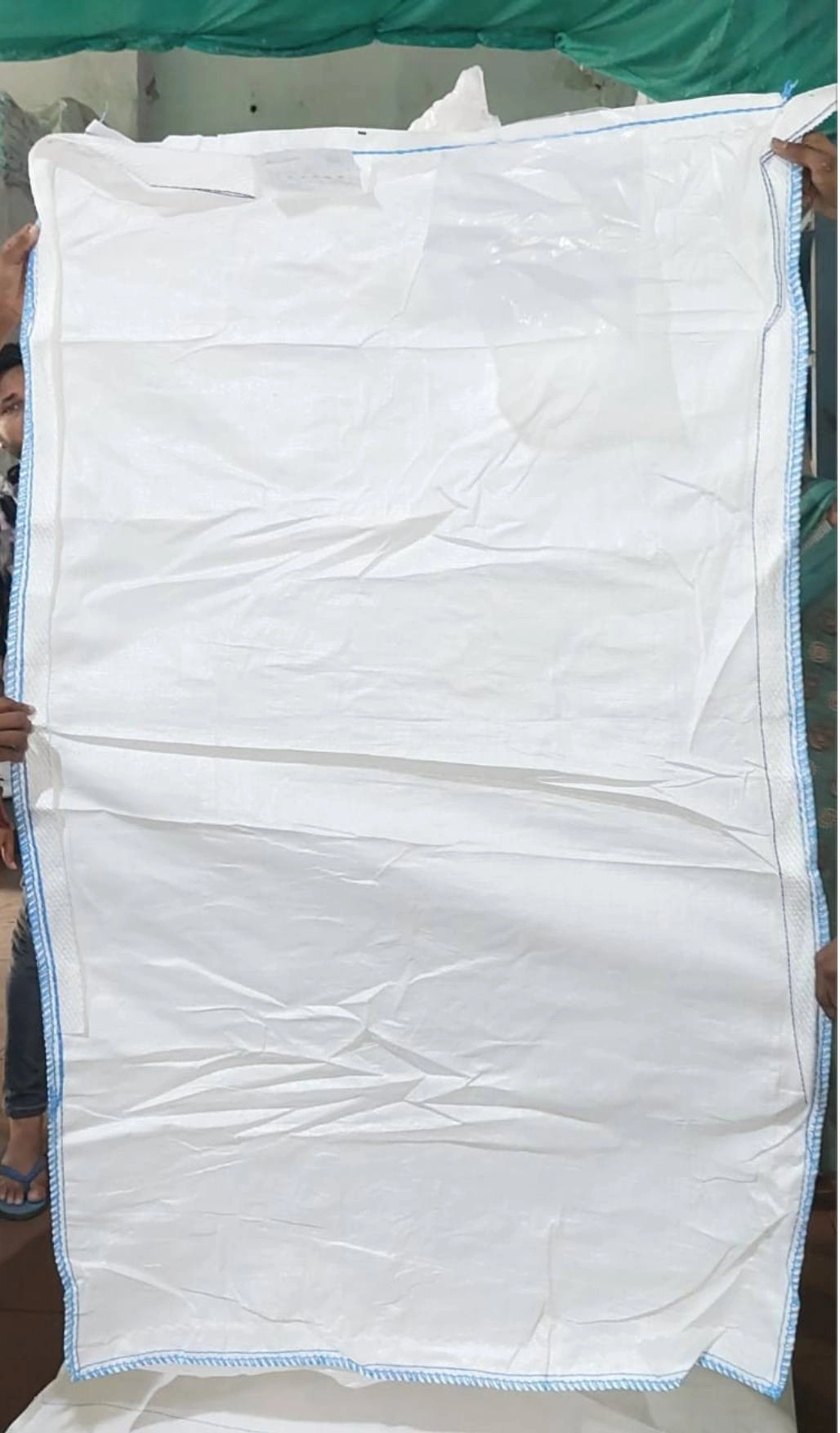
The merchant workhorse: 90 x 90 x 110 cm, 1,000 kg SWL at 5:1, uncoated 170 to 190 GSM, four loops, duffle top or fill spout, discharge spout, one or two colour print with the SWL marking visible. Waste-sector variants run heavier base fabric because dragging across yard concrete is the failure mode. Outdoor storage through a British winter is less punishing than Gulf summer but wet-UV cycles still degrade cheap fabric, so the UV package stays specified rather than assumed. Every batch ships with top lift, seam and drop results and retained samples, which keeps the merchant's own liability story clean when a customer asks how the bags are rated.
Supply arithmetic to Felixstowe
Production on a new order runs about three weeks; ocean transit from Mundra is 18 to 24 days to Felixstowe, London Gateway or Southampton. A 40 foot high cube carries 5,000 to 7,000 standard bags as palletised pressed bales. MOQ starts at 500 pieces unprinted, 1,000 printed, and most UK accounts settle into quarterly call-offs against a held price after the first container proves out. Duty sits in the low single-digit band under the UK Global Tariff — your broker confirms the current line — and the document set ships complete because a clean customs entry is part of the product, not an afterthought.
Frequently Asked Questions
Circular or duffle-top — what do merchants standardise on?
Duffle top with discharge spout is the merchant default: fast filling by shovel or hopper, controlled emptying at the customer's yard.
Can we brand bags with our merchant colours?
Yes, up to four colours in-line including SWL and batch markings — branded bags also reduce counter disputes about what was sold.
What about bags for waste segregation streams?
Heavier base panels, optional colour coding by stream and coated fabric for outdoor yard storage — send the handling description and we spec it properly.
What is the realistic lead time?
Five to six weeks from purchase order to UK port on a new order; repeat call-offs against reserved capacity run shorter.
Specs and options are on the Circular FIBC Bag page. For the U-panel alternative read U-panel vs circular bulk bags, and for the full UK import picture see importing PP jumbo bags from India to the UK.