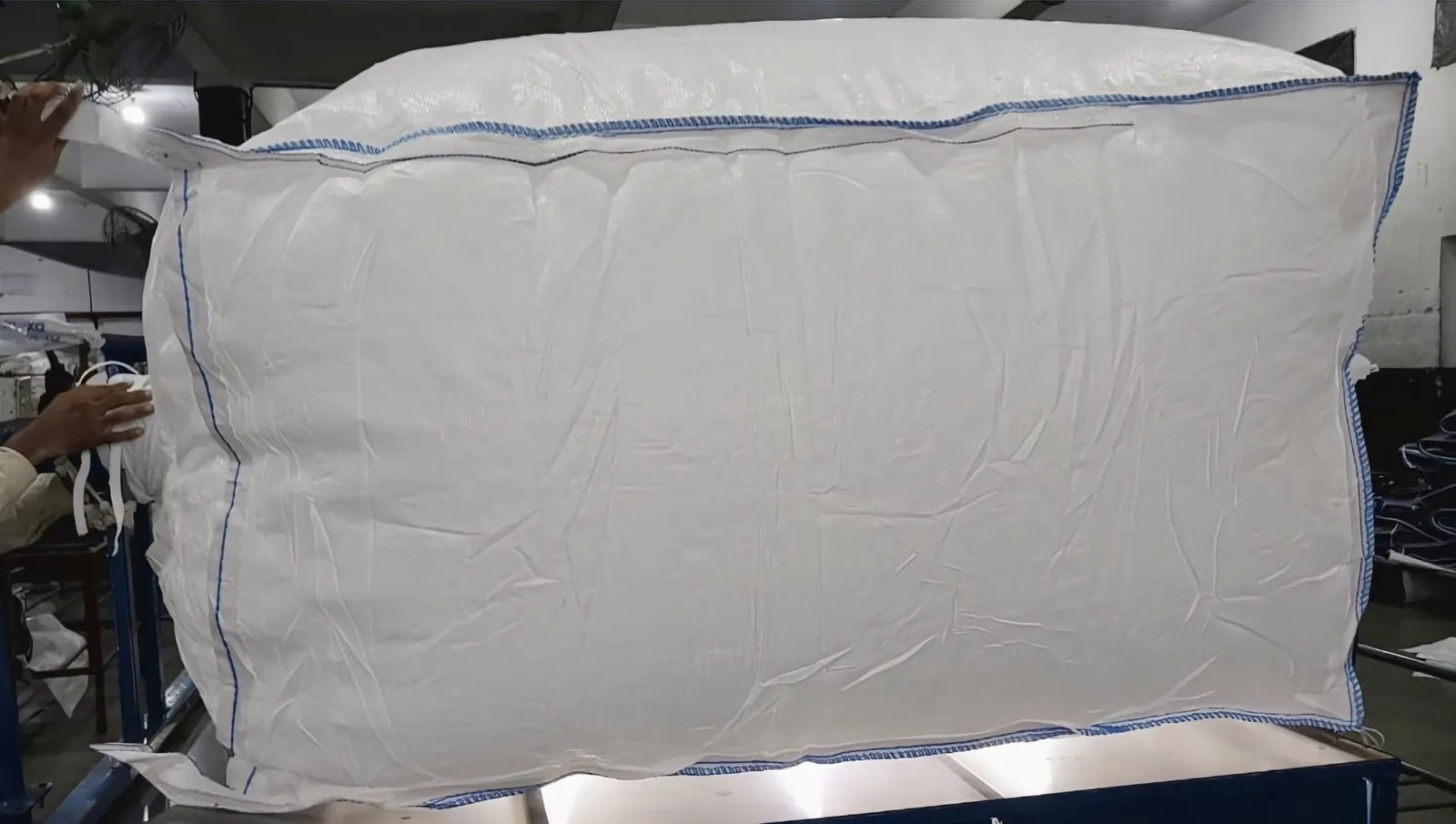
Germany consumes Big Bags the way it consumes everything industrial: with a specification sheet, a test expectation and a purchasing team that will read both. Circular construction — the tubular weave German buyers specify as rundgewebt — has its place in that market for free-flowing products where filling speed and complete discharge matter more than flat-wall stacking. What follows is the compliance and QC picture a German buyer needs, written the way a German buyer would ask it.
Standards: what conforming actually means
The performance frame is the ISO 21898 test family — top lift, cyclic load, drop, tear, upright topple — run against the declared safe working load with the standard 5:1 safety factor. For dangerous goods the UN packaging regime doubles the safety factor to 6:1 and adds the certification markings, and that is the version German chemical buyers ask for by certificate number, not by name. Antistatic requirements follow the IEC static references: Type B where weak hazardous discharges need containing, Type C conductive bags that are earthed at the filling frame, Type D static-dissipative bags that remove the earthing step. Every batch we ship to Germany carries the named test method, the recorded result and the production batch number, with retained samples held so any later claim verifies against a physical reference.
The packaging-law layer, honestly stated
Transport packaging placed on the German market touches VerpackG, and for FIBC the practical point is this: your German distributor or the entity first placing packaging commercially usually carries the registration and take-back obligations, typically managed through the LUCID system. What we supply is the factual layer — polymer and additive declarations, material composition, weights — so the compliance file assembles without guessing. The AGEC-style questions French and Dutch buyers ask about recyclability get the same treatment: we state what the product is, plainly, and let your compliance people do their job with real inputs.
What a German QC pack contains
The pack that passes a German purchasing audit: approved sample referenced by number, batch test reports against named methods, UV certificate for the fabric lot where outdoor storage is specified, mill certificates for the polymer, photographs of bales before container closing, and dimensional checks recorded against the spec sheet. Third-party inspection before stuffing — SGS, TÜV, Bureau Veritas — is welcome and routine at our plant. German buyers who audited us keep reordering, which is the shortest summary of how this process holds up.
Frequently Asked Questions
Is a circular bag acceptable for warehouse stacking in Germany?
For single-layer or loose storage, yes; for two-high or three-high stacking, U-panel with baffle is the honest recommendation — the round walls push outward under load.
Which UN certification do you hold for dangerous goods?
UN-certified production runs at the 6:1 regime with the relevant markings; send the cargo classification and we confirm the certified spec and current certificate references.
Do you support LUCID registration data requests?
Yes, we supply polymer composition, weights and material declarations so whoever first places the packaging commercially can register without chasing data.
What lead time should a German buyer plan?
About three weeks production plus 24 to 30 days ocean to Hamburg or Bremerhaven — five to eight weeks door to door on a new order.
Construction options are on the Circular FIBC Bag page. For the UN dangerous goods detail read why UN certified FIBC bags are mandatory, and for the German market overview see FIBC jumbo bags for Germany.