German buyers ask harder questions than any other market, and that is a good thing: the answers travel well everywhere else in the EU. Whether you are moving polymer granules to a Ruhr processor, silica sand to a Bavarian glass plant or food powders to a Hamburg blender, the specification logic of an FIBC is the same. What changes for Germany is the paperwork: dangerous goods need UN certification tested to the exact packed product, food applications expect documented food-contact liners, and quality auditors increasingly want traceability from resin to finished bag.
Specification basics that satisfy EU audits
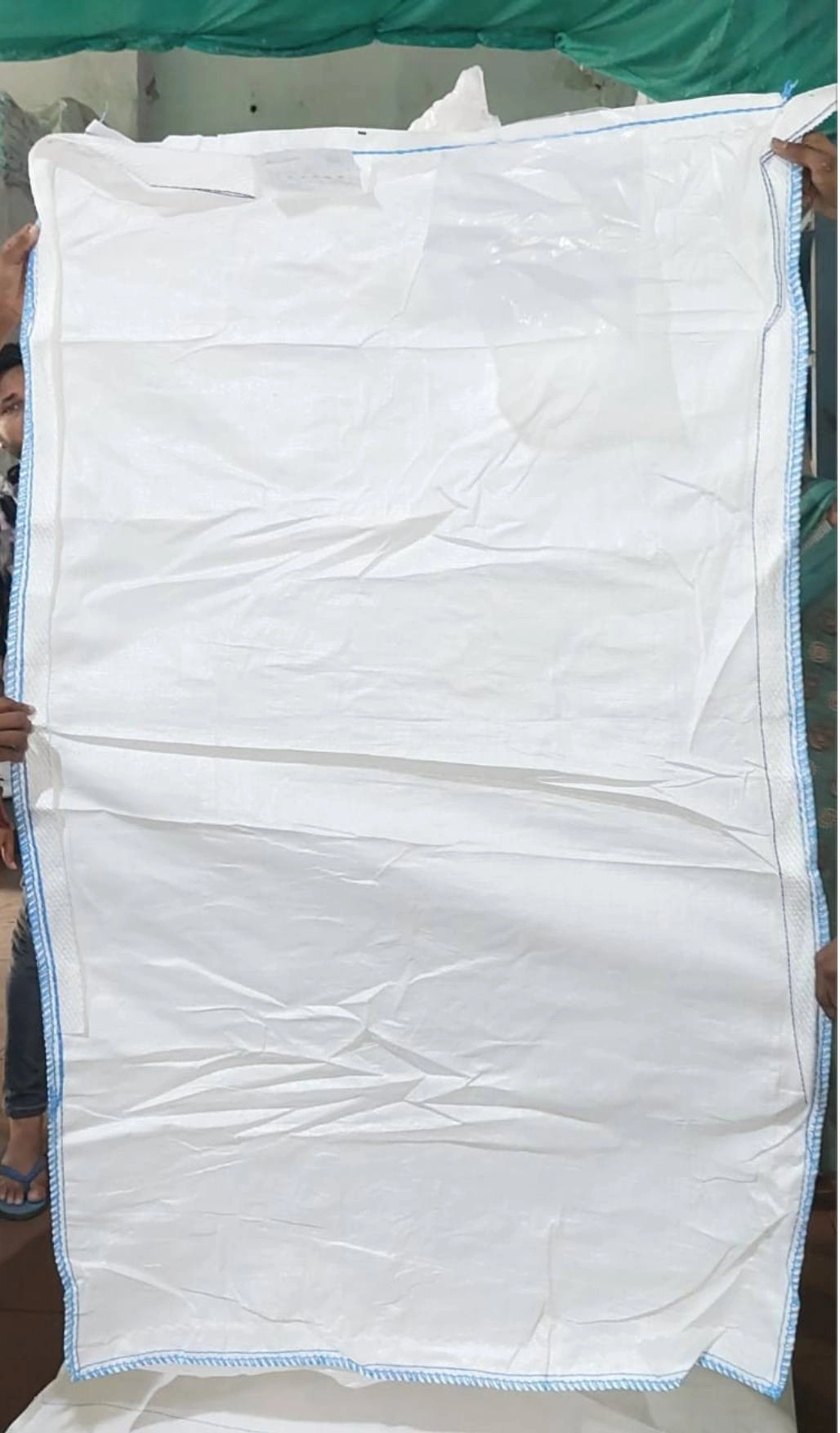
Most industrial fillers in Germany run 90 by 90 cm base bags at 100 to 110 cm height for one tonne, or 95 by 95 cm for denser products. The safety factor decision matters more than any other line item: 5:1 is the standard for single-trip bags and 6:1 is required for multi-trip use under the relevant FIBC codes. For hazardous goods the bag itself does not carry a blanket UN mark; the certificate pairs a design type with the specific product group, so send us the product name, class and packing group before we quote. Anti-static options (type B, C and D) are available for flammable powder environments, which German chemical plants request routinely.
Food, liners and logistics
Food powders into the EU generally travel in bags with an internal PE liner, either tabbed or fully formed, produced on a clean line with documented food-contact material. We supply liner thicknesses from 50 to 125 micron and can add a bottom discharge spout where the filling line expects it. On logistics, a 40 foot high cube takes roughly 320 to 380 bags baled on pallets depending on height, landing in Hamburg or Rotterdam in about 18 to 24 days from Mundra. German importers typically hold a safety stock of four to six weeks; a quarterly call-off order against a fixed price keeps both warehouses and budgets predictable.
Frequently Asked Questions
Do I need UN certified FIBC bags for my product?
Only if the filled product is classified as dangerous goods for transport. Group II and III solids in categories such as certain powders and granules need a UN certified design tested with that product type; ordinary minerals and polymers do not.
What is the difference between 5:1 and 6:1 safety factor bags?
A 5:1 bag is designed for a single trip with a safe working load of one third of its test break load, while 6:1 supports multi-trip handling at half. German logistics chains that reuse bags between plants specify 6:1.
Can you supply food-grade FIBC bags for EU buyers?
Yes, with food-contact documented PE liners and production on a dedicated clean line. We provide material declarations and can arrange third-party testing if your auditor requires it.
What are typical lead times to Hamburg?
Three to four weeks of production after specification sign-off plus 18 to 24 days of sea transit from Mundra, so first orders should be planned roughly eight weeks ahead of the filling date.
Compare U-panel and circular constructions on the U Panel FIBC Bag page and the PP Jumbo Bags (FIBC) page. For liner selection read our FIBC liners types guide, and for a full sourcing walkthrough see the B2B guide to sourcing FIBC bags from India.