German purchasing teams audit suppliers the way auditors audit: method named, result recorded, batch identified, sample retained. U-panel Big Bags sell in Germany on stacking performance and documentation, which is fortunate because that is exactly what the construction is good at. This is the compliance checklist written from the supplier side — the answers a German buyer needs before the first purchase order.
Testing against ISO 21898, on U-panel construction
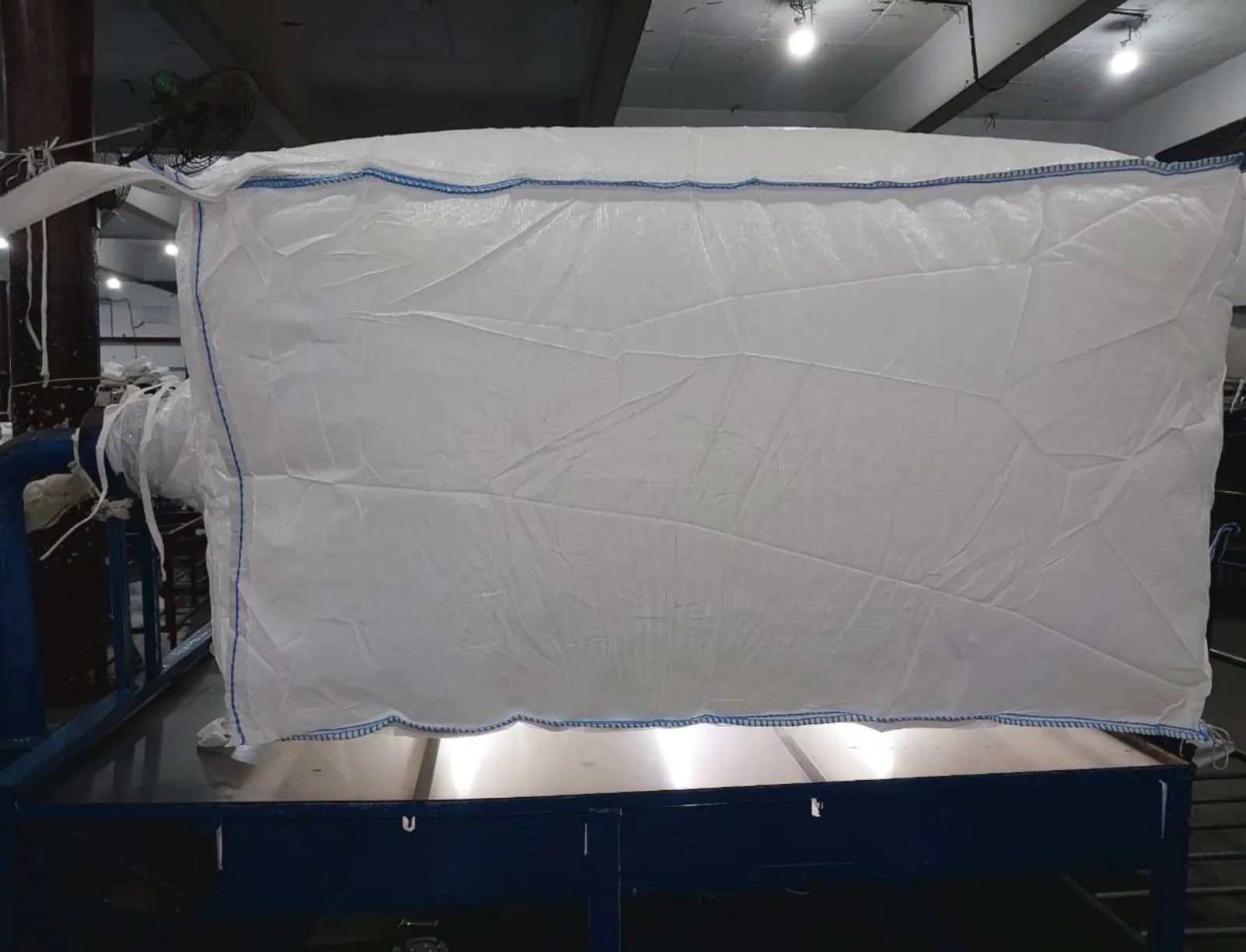
The performance frame is the ISO 21898 family: top lift, cyclic load, drop, tear and upright topple, run against the declared safe working load at the standard 5:1 safety factor. U-panel construction earns its place in that test set — the four-wall shape carries load more symmetrically than a round tube, which shows up in stacking and cyclic results. For dangerous goods the UN regime applies the 6:1 factor with certification markings, and German chemical buyers ask for the certificate by number, not by adjective. Antistatic variants follow the IEC static references: Type B for containing weak hazardous discharges, Type C conductive bags earthed at the filling frame, Type D static-dissipative bags that remove the earthing step. Every claim we make is a batch-numbered report with retained samples behind it.
Stacking: the question behind the question
When a German warehouse team asks about stacking, they are really asking whether the second layer will look the same in June as it did in January. The honest answer has three parts: U-panel geometry, which resists outward bulge better than tubular; baffles, which add real stability at a modest price; and the cyclic load test results, which show how the bag behaves under repeated load rather than a single heroic lift. We supply all three, plus stacking photographs from the test file, because a claim a buyer can see is a claim they do not have to take on faith.
Compliance layers, stated plainly
Transport packaging placed on the German market touches VerpackG, and in the FIBC chain the entity first placing the packaging commercially — usually your German distributor — carries the LUCID registration and take-back obligations. We supply the factual inputs: polymer composition, additives where relevant, unit weights, material declarations. For food-contact liners the EU food-contact framework applies with the Declaration of Compliance documentation, and for buyers audited under their own quality systems, third-party inspection at our plant before container stuffing is routine, not exceptional. German buyers who ran this checklist with us re-order — the paperwork does the selling after the first container lands.
Frequently Asked Questions
Which test reports ship with each batch to Germany?
Named-method reports for top lift, cyclic load, drop and tear against the declared SWL, UV certificate for the fabric lot where specified, dimensional and GSM checks, all batch-numbered with retained samples.
Is the UN 6:1 certification available on U-panel bags?
Yes, UN-certified production runs at the 6:1 regime with the required markings — send the cargo classification and we confirm the certified specification and certificate references.
Who handles VerpackG registration for transport packaging?
Typically the German entity first placing the packaging commercially, through LUCID — we supply the material declarations and weights their compliance file needs.
What lead time should we plan?
About three weeks production plus 24 to 30 days ocean to Hamburg or Bremerhaven — five to eight weeks door to door on a new order.
U-panel specifications are on the U Panel FIBC Bag page. For the German market overview read FIBC jumbo bags for Germany, and for what fails in transit see why generic FIBC bags fail in transit.