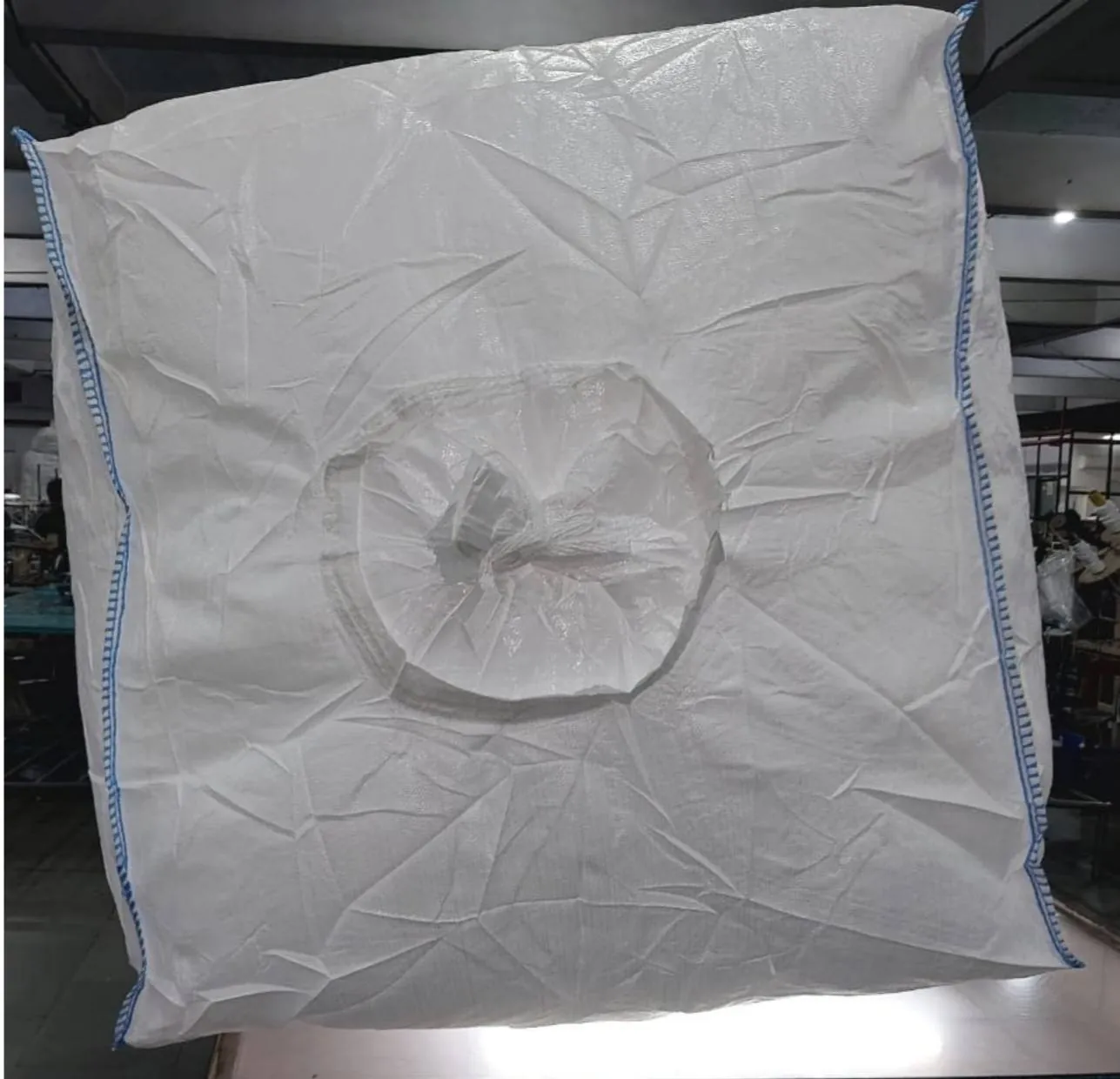
Circular bags move the volume in the US bulk-bag market, but U-panel bags move the margin — the applications that need square walls, stable stacking and premium construction are the ones where a failed bag costs a line stoppage, not just a cleanup. American operations in chemicals, minerals and food-grade handling specify U-panel for reasons their safety and QA teams can document. Here is where the construction earns its place, and the spec each application needs.
Chemicals, resins and powders
Chemical distributors and resin packers handle products that are often cohesive, dusty or static-prone — the three conditions where U-panel construction and antistatic engineering meet. The four-wall shape handles bridging powders without the outward bulge that makes round bags walk off pallets, and the flat faces take the UN markings, hazard labels and lot print that chemical logistics require. Antistatic options follow the IEC references: Type B where weak hazardous discharges need containing, Type C conductive bags for disciplined grounding lines, Type D static-dissipative bags where human error is the risk being engineered out. UN-certified 6:1 production covers dangerous goods, and the certificates arrive with the batch reports, not as a separate chase.
Minerals, aggregates and concentrates
Mining supply chains and aggregate operations load hard, heavy, abrasive cargo — the profile where base-panel wear and lift-zone stress decide bag life. U-panel construction with a heavier base fabric, reinforced lift zones and coated fabric for outdoor stockpile exposure is the standard answer. Concentrate cargoes add liners, because moisture changes weight and weight changes money on a settlement contract. Stacking two-high in the warehouse is where the square shape pays its rent — round bags under load push outward and creep, square walls hold the footprint.
Food-grade and pharma-adjacent handling
Flour, sugar, starch, milk powder and pharma excipients move in U-panel bags with food-contact liners inserted at the plant before baling. The documentation chain matters as much as the fabric: food-contact declarations for the liner, migration test availability per lot, sift-proof seam treatment, and clean-room-conscious packing practices on our floor. American food and pharma buyers audit their packaging chain, and the document pack we ship is built to survive that audit rather than to look good in a brochure.
Where the extra spend is wasted
Free-flowing pellets, sand and grain filled and discharged fast do not need four walls — circular construction does the identical job for less, and we say so. The right construction for the cargo is the only sales argument that survives a year of reorders.
Frequently Asked Questions
Which industries should default to U-panel?
Chemicals with static or bridging issues, minerals with abrasive loads, anything stacking two-high, and premium powders where presentation and pallet-fit matter.
Do you supply UN-certified U-panel bags for hazardous cargo?
Yes, certified production at the 6:1 safety factor with the required markings — send the cargo classification and we confirm the certified spec.
Can liners be pre-inserted before shipping?
Yes, form-fit or tubular food-contact liners are fitted and closed before baling, so the bag arrives filling-line-ready.
What is the import timeline to a US port?
About three weeks production plus 24 to 32 days ocean depending on coast — five to eight weeks from purchase order to warehouse.
Specs and antistatic options are on the U Panel FIBC Bag page. For the price structure read the FIBC price guide for US distributors, and for the liner detail see FIBC liners: form-fit, tubular and food-grade options.