Qatar buys jumbo bags the way it buys most industrial inputs: fewer, larger orders placed with suppliers who can hold a specification steady for years. The fertilizer complex at Umm Said, the steel and aluminium lines, ready-mix operations feeding Lusail towers, and the grain handlers at Hamad Port all move product in one-tonne FIBC bags. For a wholesaler in the Doha industrial area, the margin lives in the gap between a predictable landed cost and what the local market will bear, so understanding how the price is built is the first commercial skill.
What actually drives jumbo bag pricing
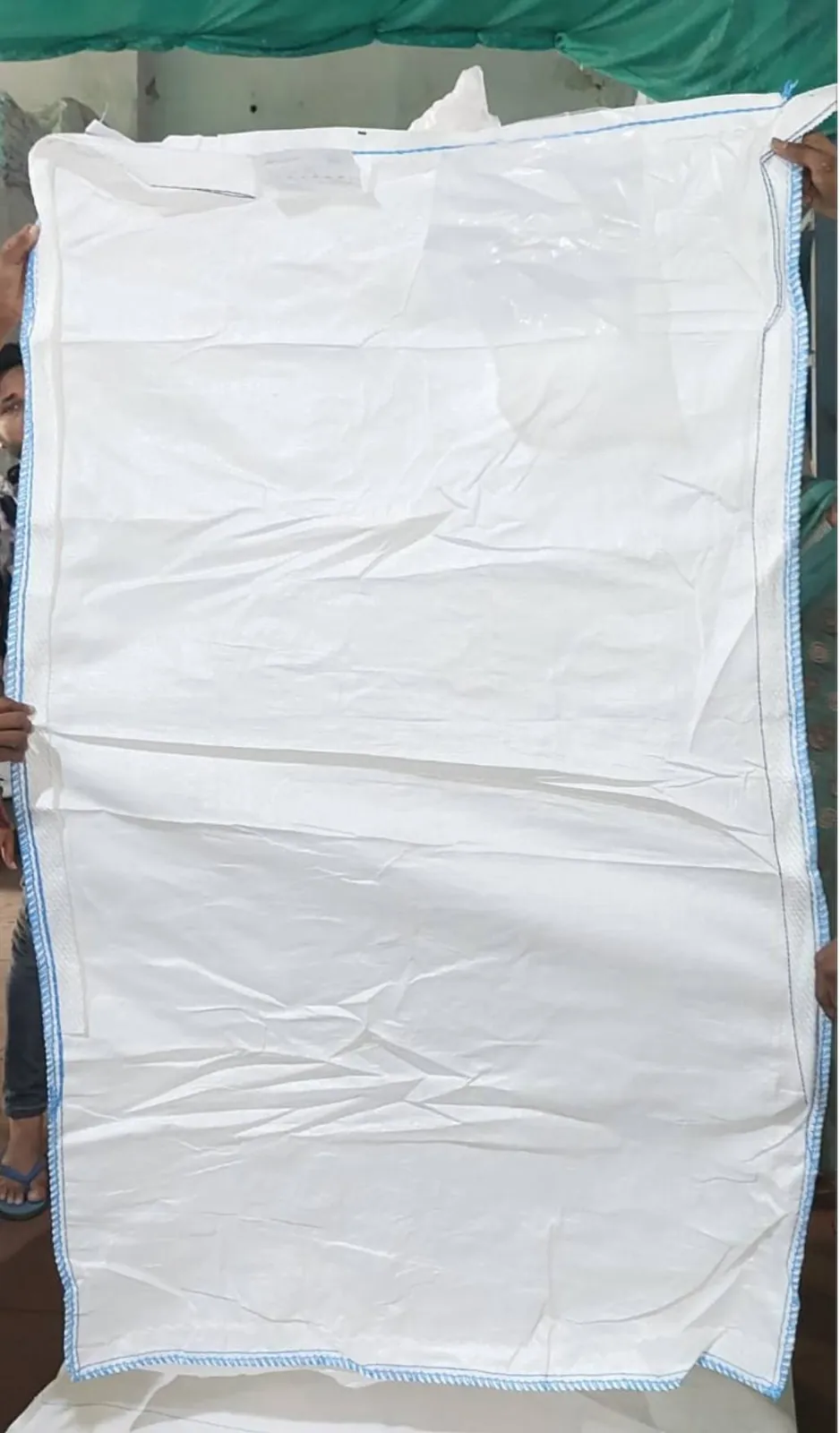
Four things decide the number on the quotation. Fabric weight comes first: moving from 160 to 200 GSM adds real money per bag because polypropylene tape is priced by weight, and going coated adds a lamination step on top. Safety factor is second — a standard 5:1 bag is cheaper than a UN-certified 6:1 bag tested for dangerous goods, and there is no reason to pay for 6:1 unless your cargo legally needs it. Liners are third, since a 75 micron form-fit liner can add as much as the fabric difference between two GSM grades. Printing is fourth, but it is the cheapest of the four, so most Qatar buyers take two-colour branding without worrying about it.
Container loads and freight into Hamad Port
A 40 foot high cube takes roughly 14 to 16 tonnes of pressed bales, which lands between 5,000 and 7,000 standard bags depending on GSM. From Mundra the Gulf service runs into Hamad Port in about four to six days, and most of our Qatar quotations are CIF Hamad so the buyer handles local clearance and delivery to the industrial area. One point worth noting for planning: bales are palletised and shrink-wrapped, so a warehouse in Doha can de-stuff a container with a single forklift in under two hours.
How Qatar wholesalers actually order
The pattern we see most is an annual price agreement with quarterly call-offs. Resin moves, so an agreement fixes the specification and holds the price for a defined window rather than forever. Payment for established accounts runs telegraphic transfer against documents, with letters of credit on larger first orders. We hold agreed production slots for contract customers, which is what keeps repeat lead times shorter than the first-order three-week window — and if a shipment is urgent, partial air-freight of a few hundred sample or replacement bags is cheaper than most buyers expect.
Frequently Asked Questions
Can you give an indicative per-bag price for the standard 1-tonne spec?
Resin and freight move month to month, so we quote live numbers against your exact spec sheet rather than a number that goes stale in a week — send the specification and destination port and you will have a formal quote within one working day.
What is the minimum order for a first Qatar shipment?
500 pieces for unprinted standard bags; printed or lined versions start at 1,000 pieces because print set-up and liner changeover only make sense at that volume.
Do you supply test certificates with each batch?
Yes, top lift, seam and drop results are supplied per production batch, and retained samples let us re-verify any batch for the life of the agreement.
Can we mix bag sizes in one container?
Yes, within limits — two specs per container is routine, three is possible if both are planned at order confirmation rather than improvised at loading.
Specs and liner options are on the PP Jumbo Bags (FIBC) page. For a worked example of pricing logic read the FIBC bulk bag price guide for distributors, and if your cargo is moisture-sensitive see why PE liners are the moisture barrier that matters.