German buyers ask liner questions in a specific order: what is the material, what does the Declaration of Compliance say, and what happens in an ATEX zone. The order is not arbitrary — it is the EU regulatory structure turned into a checklist. A liner supplier who can answer all three from standing documentation wins the account and keeps it, because in Germany the paperwork is not an annex to the product; it is part of the product.
EU food-contact compliance, the working version
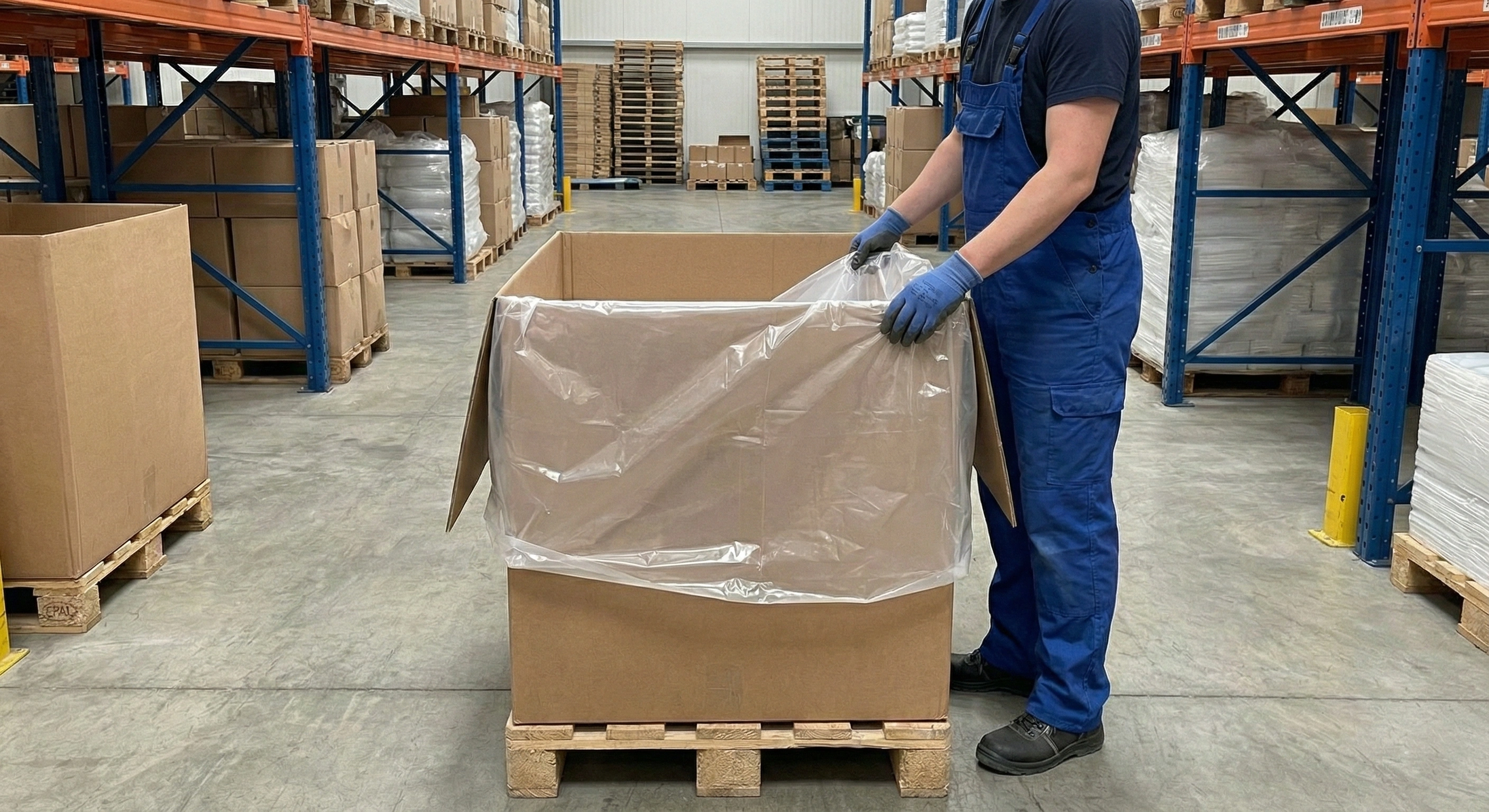
Liners destined for food cargo in the EU sit under the food-contact materials framework: the base regulation requiring materials not to transfer their constituents to food, and the plastics implementation measures that set migration limits for the monomers and additives involved. The practical artefact a German QA team needs is the Declaration of Compliance — a named document from the liner manufacturer stating the material, the authorised substances used, and the conditions of use it complies with. We issue that per liner lot, with migration test documentation available against the relevant conditions. Buyers in flour milling, sugar processing, dairy powders and food ingredients file the DoC into their supplier-audit chain once and the topic stays closed for the contract's life. For non-food cargo the same discipline covers anti-static and barrier constructions — what it is, what migrates, what does not.
Antistatic liners and the ATEX conversation
Static-prone powders in classified handling zones raise the liner question sharply: a non-conductive film inside a bag on a filling frame can hold charge exactly where the dust is. The options are anti-static treated liners that reduce charge generation, and conductive liner constructions for environments where the whole packaging system is engineered to earth. Which one belongs in your operation depends on the zone classification and the filling-line discipline — Type C outer bags ground at the frame pair with conductive liners, Type D systems pair with static-dissipative liners to remove the human earthing step. We build all variants, labelled and tested to the relevant IEC references, and the honest recommendation follows your zone audit rather than our margin.
The QC pack that passes the audit
Per lot: batch-numbered test reports for the bag, liner DoC and migration documentation where food contact applies, material declarations for the compliance file, UV certificate where outdoor storage is specified, retained samples per batch, and inspection rights at our plant before stuffing — third-party witnesses welcome. Add polymer and additive declarations that feed the packaging-law file your distributor maintains, and the audit converts into a formality. German buyers who ran this pack with us re-order without a second sourcing round, which is the point of doing the paperwork properly the first time.
Frequently Asked Questions
Do you issue a Declaration of Compliance per liner lot?
Yes, for food-contact liners the DoC ships with the batch documentation, naming material, authorised substances and conditions of use, with migration test availability per lot.
Which antistatic liner fits an ATEX-classified filling line?
It depends on your zone and the outer bag system — conductive liners with Type C bags for grounded lines, static-dissipative liners with Type D where earthing steps are being engineered out. Send the zone details and we spec it honestly.
Are barrier liners available for moisture-critical cargo?
Yes, coextruded EVOH and aluminium-barrier constructions block moisture, oxygen and odour for cargo with contractual shelf-life specs.
What is the lead time to Hamburg?
About three weeks production plus 24 to 30 days ocean — five to eight weeks door to door on a new order.
Liner options are on the FIBC Liners page. For the German Big Bag compliance frame read U Panel FIBC standards in Germany, and for the food-grade liner detail see how food-grade FIBC packaging preserves aroma.