US converters buy BOPP film on two clocks: the clock on their converting line, and the clock on resin prices. Both argue for sourcing direct from a film producer rather than through layers of distribution, and that is the conversation we have with label converters, bag makers and laminators buying our printed and plain BOPP rolls. Here is how the specification and the economics actually work.
Gauge and width: start from the end use
BOPP runs from roughly 15 micron (labels, overwrap) to 40 micron plus (heavy lamination, bag film). Food lamination for pouches typically sits at 18 to 25 micron; bag-grade film for laminated woven sacks runs 20 to 30 micron; label facestock likes 50 to 60 gauge imperial equivalents. We slit to custom widths on the same jumbos, which matters because odd widths bought as stock rolls always convert with waste. Tell us your web width and we quote slit-to-size with core options that match your unwind stands.
Corona treatment is not optional
Film arrives with a surface energy that ink and adhesive need to beat. Converting lines want incoming dyne levels around 38 to 42; untreated film prints like glass. We ship BOPP corona-treated to spec, and we recommend converters verify dyne on receipt with test pens, because storage conditions and time erode treat level slowly. If your line adds primer in-house, say so; we can adjust the treat level rather than double-treating.
Printed rolls: the rotogravure route
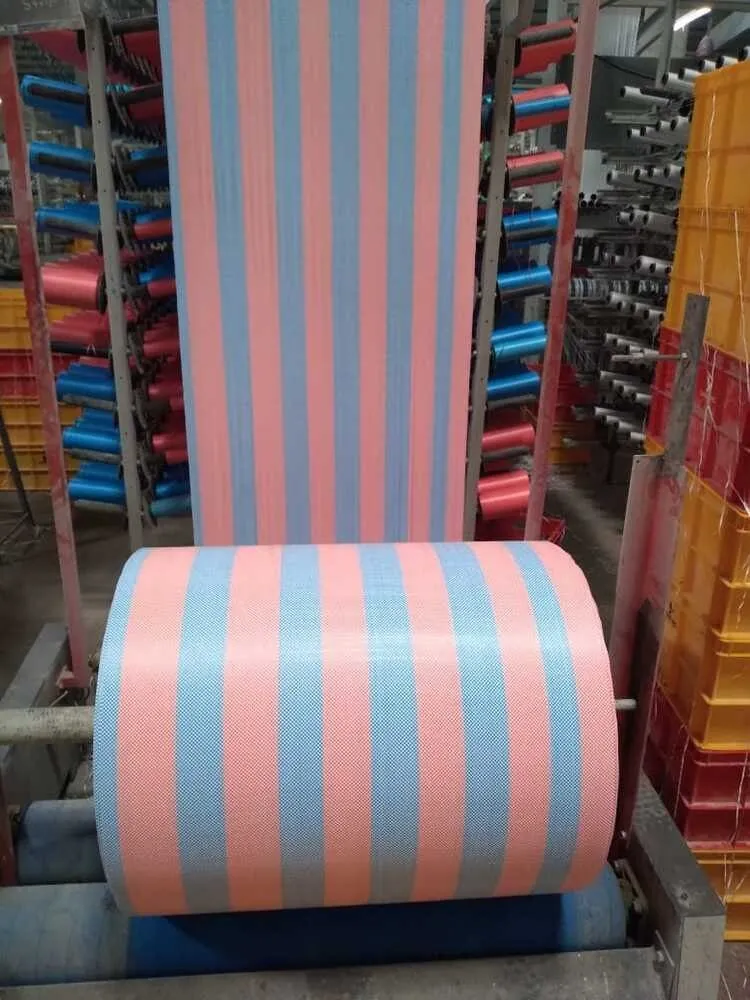
For printed work, rotogravure up to 10 colors gives the registration and density that shelf packaging demands. The economics are cylinder-driven: engraving runs $120 to $250 per color, one-time, and cylinders stay on file for repeat orders. Indicative printed BOPF film pricing lands at $2.20 to $3.20 per kg FOB India depending on gauge, coverage and ink system, with unprinted film meaningfully below that. Minimums run by design: one production jumbo per artwork is the practical floor, which at typical gauges is thousands of kilograms, so printed direct-from-factory suits converters with steady designs rather than constant art churn.
What quality control looks like on arrival
- Gauge uniformity: ask for the gauge profile report per jumbo; we supply it as standard.
- Corona level verification with dyne pens on the first meters of each roll.
- Core and wound hardness matched to your unwinding speed, stated on the PO, not discovered on the line.
- COA per lot with optical and haze readings for food-facing work.
Logistics reality
Film is dense, so containers weigh out before they cube out; a 40-ft load carries roughly 20 to 24 tons depending on packaging. Production is 3 to 4 weeks for printed orders after cylinder approval, 2 to 3 for plain rolls, plus 4 to 6 weeks ocean East Coast. Films ship on the same ports as our sack business, Mundra and Nhava Sheva.
Converter questions, answered
Can you match an incumbent film exactly?
Send us a roll sample or full spec sheet, gauge, haze, seal values, dyne, and we run a side-by-side comparison before quoting. Changing film suppliers should be a data decision, not a leap.
Do you offer sealant grades?
Yes, heat-sealable BOPP variants for bag converting, plus coex and metallized options on request for barrier work.
Print and grade options are on the BOPP Films Printed page. For film already converted into branded sacks, see BOPP woven bags, and for polyethylene workhorses read the LDPE shrink film guide.