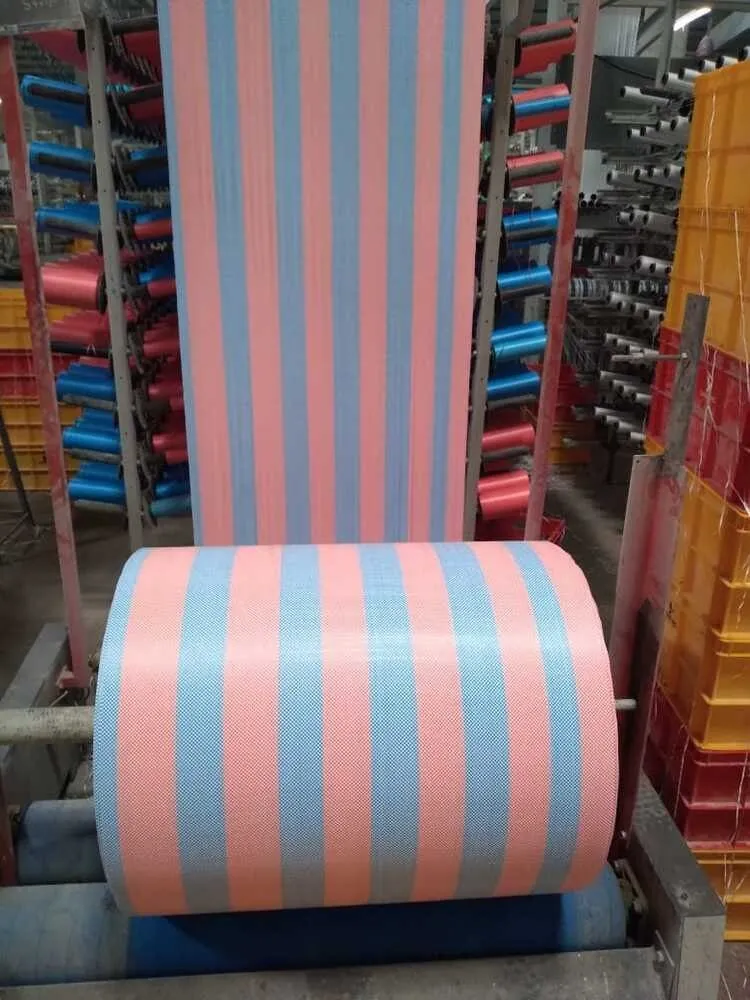
Behind nearly every product we ship sits the same raw material: woven polypropylene fabric, off the loom in rolls. Some of that fabric becomes our own bags; some ships to converters who sew, print and convert it into their own product lines. US converters buying fabric direct, sack makers, small label houses, agricultural product manufacturers, ask the same first question: what does fabric cost per kilogram, and what can I run through my conversion equipment without fighting the roll? Here are both answers.
What fabric specs a converter actually orders
GSM is the headline: 50 to 65 GSM for lighter carry and liner work, 70 to 90 GSM for the standard 50 lb sack class, 100 to 120 GSM for heavy-duty and furniture-grade applications. Widths run from 500 mm up to 2 meters and wider on our looms, slit to your conversion width or shipped full-width. Tape denier pairs with GSM (800 to 1,200 typical); lamination adds a 25 micron film face for print and moisture; UV packages matter for anything stored or used outdoors, which is most agricultural and construction conversion.
Pricing that makes conversion economics work
| Fabric spec | Indicative FOB |
|---|---|
| 70 GSM, unlaminated, natural | $1.35 - $1.65 / kg |
| 85 GSM, laminated, white | $1.50 - $1.85 / kg |
| 100+ GSM, UV package, add | +$0.10 - $0.20 / kg |
Per-kilogram pricing converts to per-square-meter arithmetic your costing sheet can use directly, and because fabric rolls densely, a 40-ft container carries 20 to 22 tons, roughly the most cost-efficient format we ship. Production is 2 to 4 weeks depending on GSM and width; ocean 4 to 6 weeks East Coast. Roll lengths run 500 to 2,000 meters depending on width and GSM, and we wind on cores that match standard unwinds.
What good roll fabric should behave like
- Consistent width and edge trim, so your cutters are not re-jigging every roll change.
- Flat wind without telescoping; a rolled-edge roll wastes more than its price difference.
- Stated GSM tolerance with lot test reports, because your bag weight declarations depend on it.
- Printability stated up front: corona or primer needs for your print method, before the roll ships, not after it fails on press.
Converter questions we field weekly
Can we buy fabric and bags together?
Yes, and many US buyers do exactly that on split containers: fabric rolls for their in-house lines, finished sacks for the SKUs they outsource. It balances a container's weight and keeps one quality standard across both.
What is the minimum for a custom width?
Custom slitting runs within a standard production jumbo, so the practical minimum is one jumbo per width, typically a few tons. For steady converters that is a week or two of stock, not a burden.
Fabric specs and roll formats are on the Woven Fabric (PP/HDPE) page. If you would rather buy finished sacks, start from the PP woven bags guide, and for printed surfaces see custom printing options.