Most importers compare PP woven bags on price and GSM alone, but the real quality difference is created on the production floor. Understanding the manufacturing process helps you ask the right questions, judge samples correctly, and spot the shortcuts that cause split seams, torn tapes and faded print after one trip. This guide walks through every stage of a modern PP woven bag line, from raw polypropylene granules to the stitched sack that leaves the factory.
Step 1: Raw Material Selection and Extrusion
The process starts with polypropylene granules, typically virgin PP resin blended with additives such as UV stabilisers, anti-oxidants and masterbatch colour. The blend is fed into an extruder that melts and pushes the molten polymer through a die to form a continuous flat film. Extrusion temperature and melt pressure control here decide the strength of everything downstream, because a poorly mixed or overheated melt produces weak spots that later become torn tapes.
- Virgin PP gives the best tensile strength and clean appearance for food and export cargo.
- Recycled blends reduce cost but lower strength consistency - acceptable for some industrial uses, risky for food grade.
- UV masterbatch is dosed at this stage if the bags will be stored outdoors or shipped to high-sun markets.
Step 2: Tape Stretching and Winding
The extruded film is slit into narrow tapes and stretched in an oven to several times its original length. Stretching orients the polymer chains and turns a soft plastic strip into a strong tape - this single step is the reason woven PP is so strong for its weight. The tapes are then wound onto bobbins. Tape width, thickness and stretch ratio decide the final fabric denier and GSM, so serious buyers should ask their supplier for tape test data, not just fabric GSM.
Step 3: Circular Loom Weaving
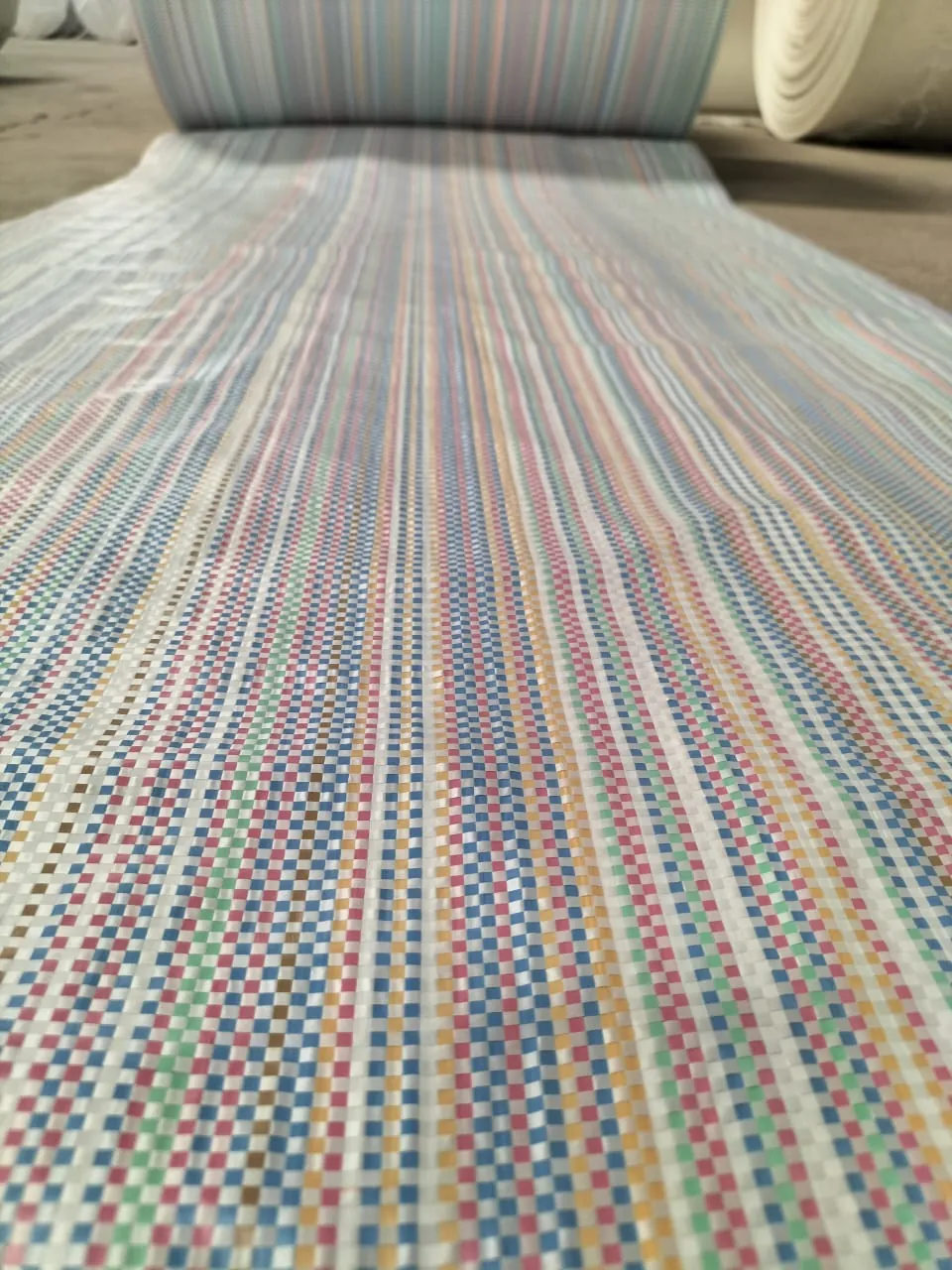
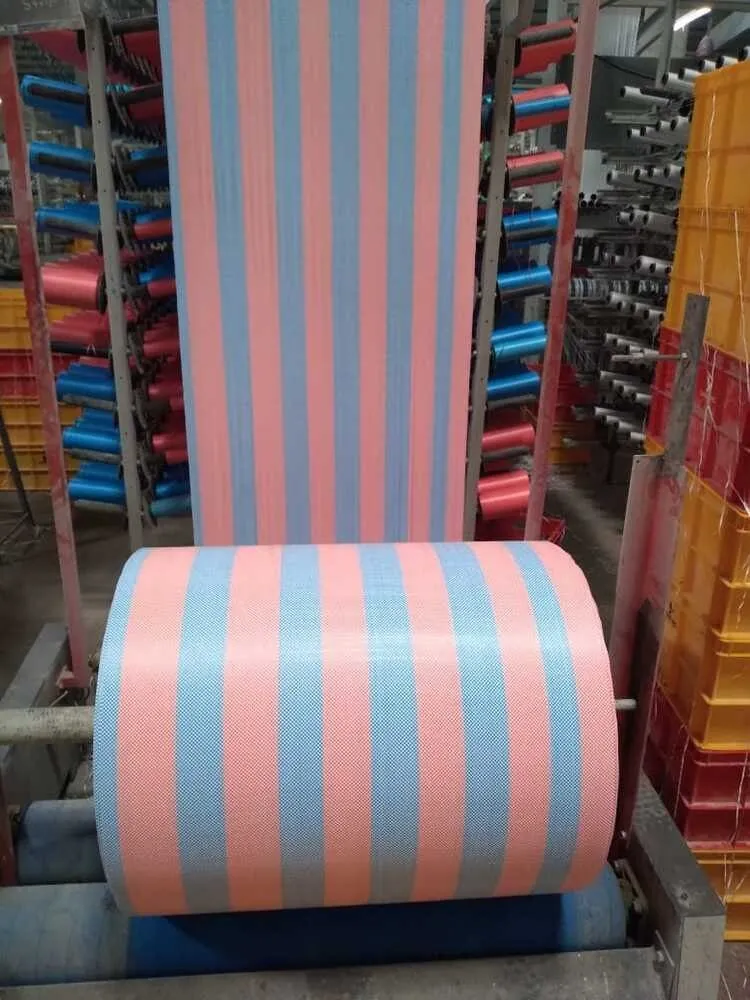
Bobbins load onto circular looms where warp and weft tapes interlace into tubular fabric. Weaving density - how many tapes per inch in each direction - controls porosity, seam strength and how well the bag holds fine powder. At this point the fabric can be left bare (unlaminated), or sent for lamination where a thin BOPP or PP film layer is bonded to the surface for printing and moisture resistance. You can see both fabric forms on our PP and HDPE woven fabric page.
Step 4: Printing, Cutting and Stitching
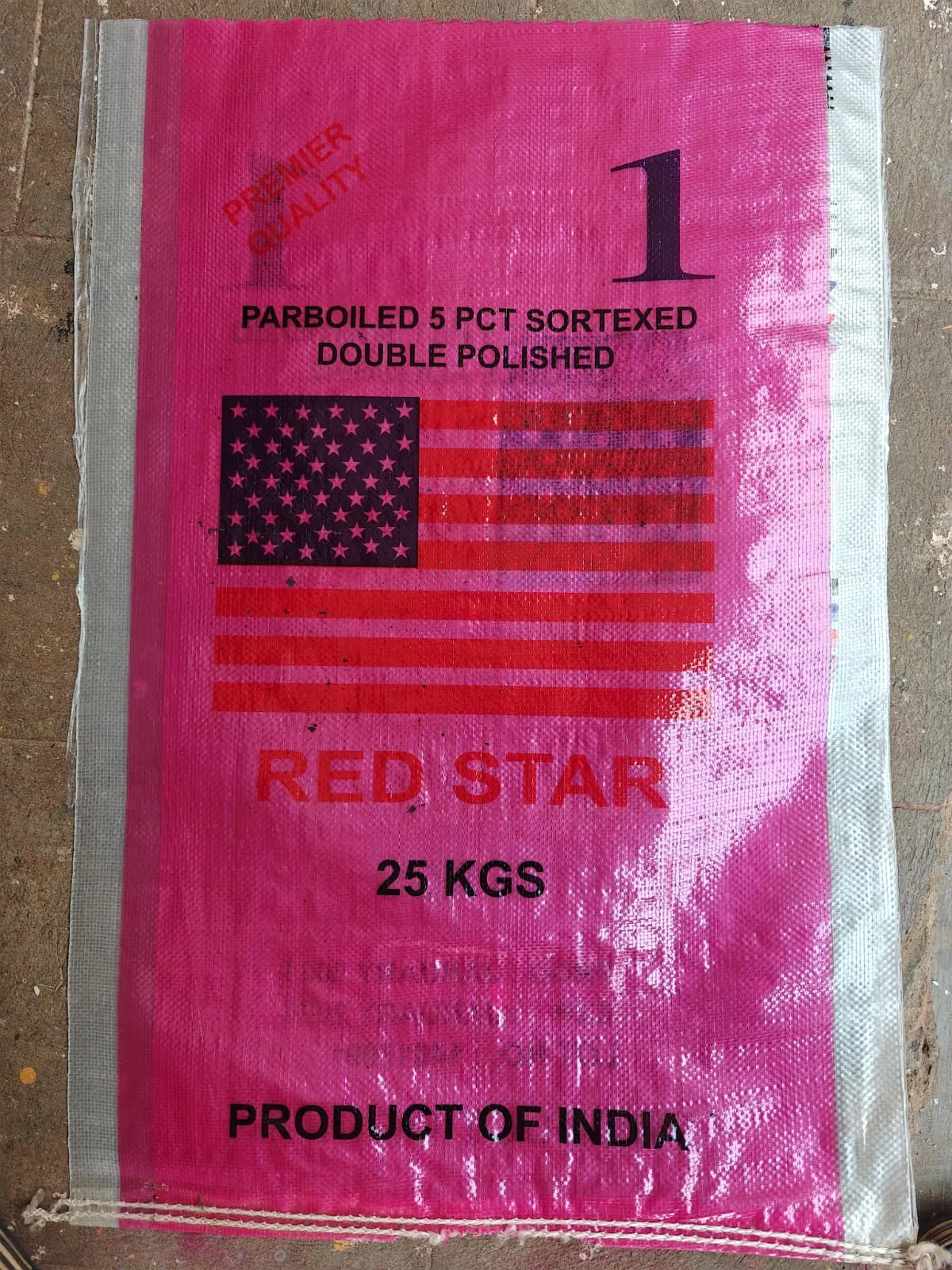
Laminated or treated fabric moves to printing - flexo for simple one to three colour logos, rotogravure for photo-quality multi-colour artwork on BOPP laminated bags. The printed fabric is then cut to length, side-gusseted if needed, and stitched with bottom hem, handle loops or valve as per specification. Seaming is done with industrial sewing machines using chain stitch or double-fold hems; a weak seam ruins an otherwise perfect bag, so seam strength is a standard QC checkpoint.
- Bottom stitch count and thread type should be specified in the purchase order, not left to chance.
- Perforation, anti-slip coating and liner insertion happen at this stage when required.
- Every batch should carry a QC record: GSM, tensile, seam strength and print registration.
Why the Process Matters When You Buy
When you compare quotes from India, ask each manufacturer the same five questions: virgin or blended resin, tape stretch ratio, loom density, lamination type and seam specification. A factory that controls extrusion, weaving and conversion in-house - like the integrated lines described on our PP woven bags and rolls page - can guarantee consistency across containers, while traders who outsource weaving often ship bags that vary from pallet to pallet. That consistency is exactly what large buyers audit before approving a supplier; our factory audit checklist walks through it step by step.
Frequently Asked Questions
How long does production take for a custom printed PP woven bag order?
For repeat GSM and size, weaving and conversion take days once fabric is on the loom. New orders add artwork approval and film or cylinder making for printing, so plan for the full lead time explained in our lead time guide - artwork approval is usually the bottleneck, not weaving.
Is the manufacturing process different for HDPE bags?
The line is similar - extrusion, tape stretching and weaving - but HDPE resin behaves differently and gives stiffer, more UV-resistant fabric. The trade-offs are compared in our HDPE woven bags guide.
What GSM is used for a standard 50 kg sack?
Typical 50 kg industrial sacks use woven fabric in the mid-to-high GSM range with a safety factor suited to the filling line; the exact selection logic is in our weight capacity chart.
Siddhii Global manufactures PP woven bags, fabric rolls, BOPP bags and FIBC at its Kalol, Ahmedabad plant in Gujarat and exports worldwide. Send us your specification and we will quote with tape and fabric data, not just a price per bag.