Plastic mulch is one of those inputs where the cheapest roll is rarely the cheapest season. A film that fragments mid-August leaves a grower hand-weeding rows that should have stayed clean, and cleanup costs more than the film ever saved. We extrude mulch film in black, white-on-black and silver, and we ship to vegetable growers across Florida, California, Georgia and the Mid-Atlantic. This is the acre-level version of the conversation.
Color is an agronomic decision
Black is the default: it blocks light, so weeds under the bed die, and it warms soil by a few degrees in spring, which moves transplant dates earlier. White-on-black suits hot-season plantings where root zone heat becomes the enemy; the white face reflects and the black face still suppresses weeds. Silver reflects shortwave light that confuses aphids, thrips and whitefly, and growers managing virus pressure in squash, cucumber and tomatoes use it as a genuine IPM tool, not a gimmick. If virus vectors are in your scouted fields, silver pays for its premium inside one season.
Thickness by crop and season
| Crop / situation | Thickness | Indicative FOB |
|---|---|---|
| Short-cycle (lettuce, greens) | 0.8 - 1.0 mil | $1.55 - $1.95 / kg |
| Standard vegetables (tomato, pepper) | 1.0 - 1.25 mil | $1.60 - $2.05 / kg |
| Long-season (cucurbits, multi-crop) | 1.25 - 1.5 mil | $1.70 - $2.15 / kg |
| Silver reflective, add | same | +$0.10 - $0.20 / kg |
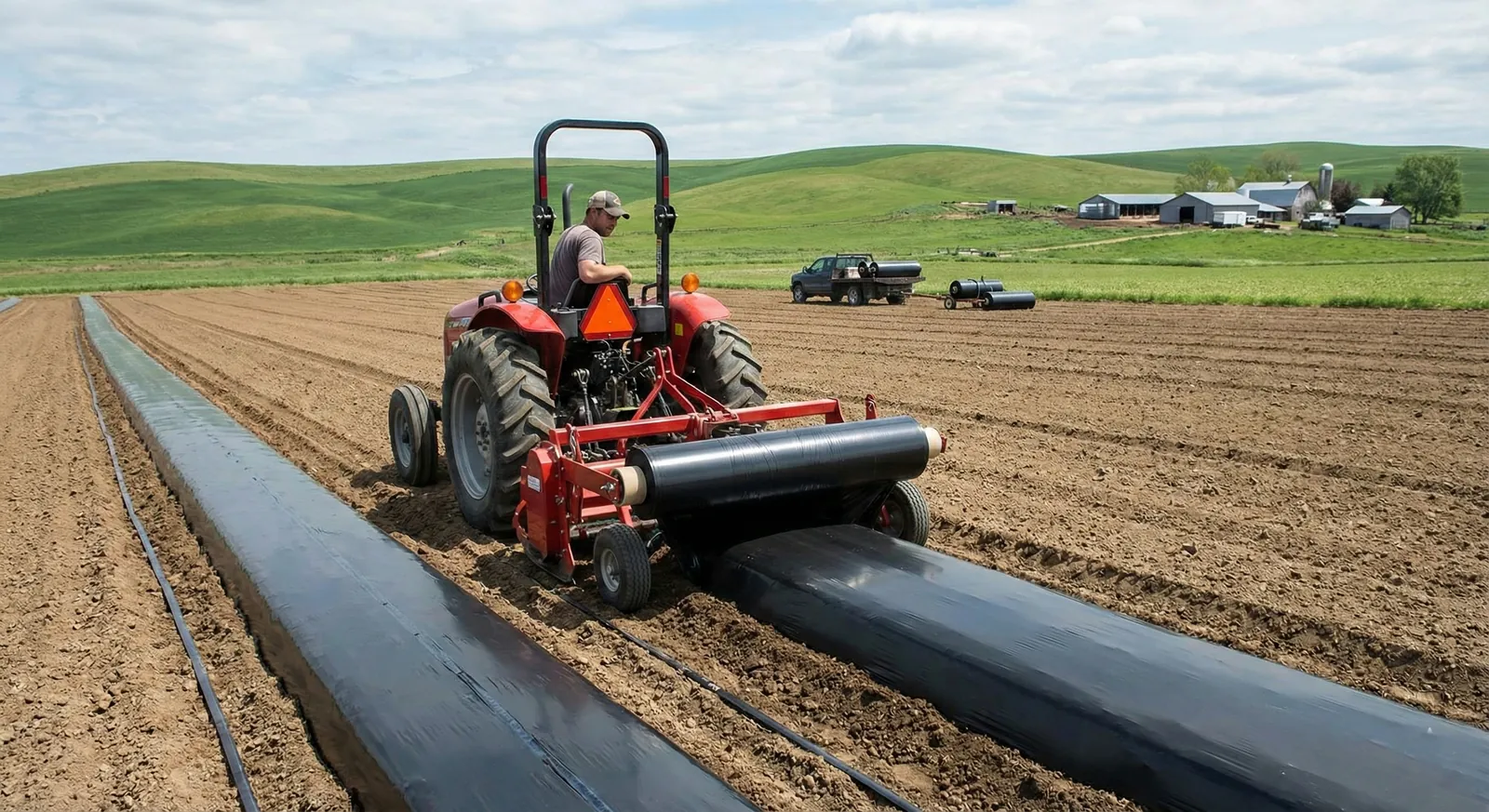
Per-acre material math: with 4-foot beds on 5-foot centers, an acre consumes roughly 100 to 135 pounds of 1.0 mil film, so material cost lands around $180 to $280 per acre FOB before freight. Embossed film lays flatter and grips wind better on exposed ground; smooth costs slightly less and suits calm, pre-shaped beds.
Laying realities that affect what you order
Film width should match your bed top plus tuck for the disk edges, typically 48 to 60 inches. Roll length matters for changeover speed: 2,400 and 4,000 foot rolls are the common speeds for mechanical layers. Drip tape goes under the film at laying, so coordinate gauge and width with your drip supplier before the planter rolls. And order UV for the growing season you actually run; a fall crop finishing in November does not need the same exposure package as double-cropped spring-fall ground.
Grower questions we hear at planting time
Embossed or smooth?
Embossed for open, windy fields and lighter lays; smooth where beds are firm and the layer runs slow. Both hold transplants equally once punched.
What about disposal at season end?
Plan it: several states run agricultural plastic recycling programs, and cleaner pulls (minimal soil) recycle better. Some buyers are trialing our biodegradable mulch grades for crops where retrieval economics are poor; performance differs, and we will tell you straight where it fits and where it does not.
Colors, widths and additives are on the Mulch Film page. For overhead covers read the greenhouse film guide, and for weed control without plastic see weed barrier fabric.