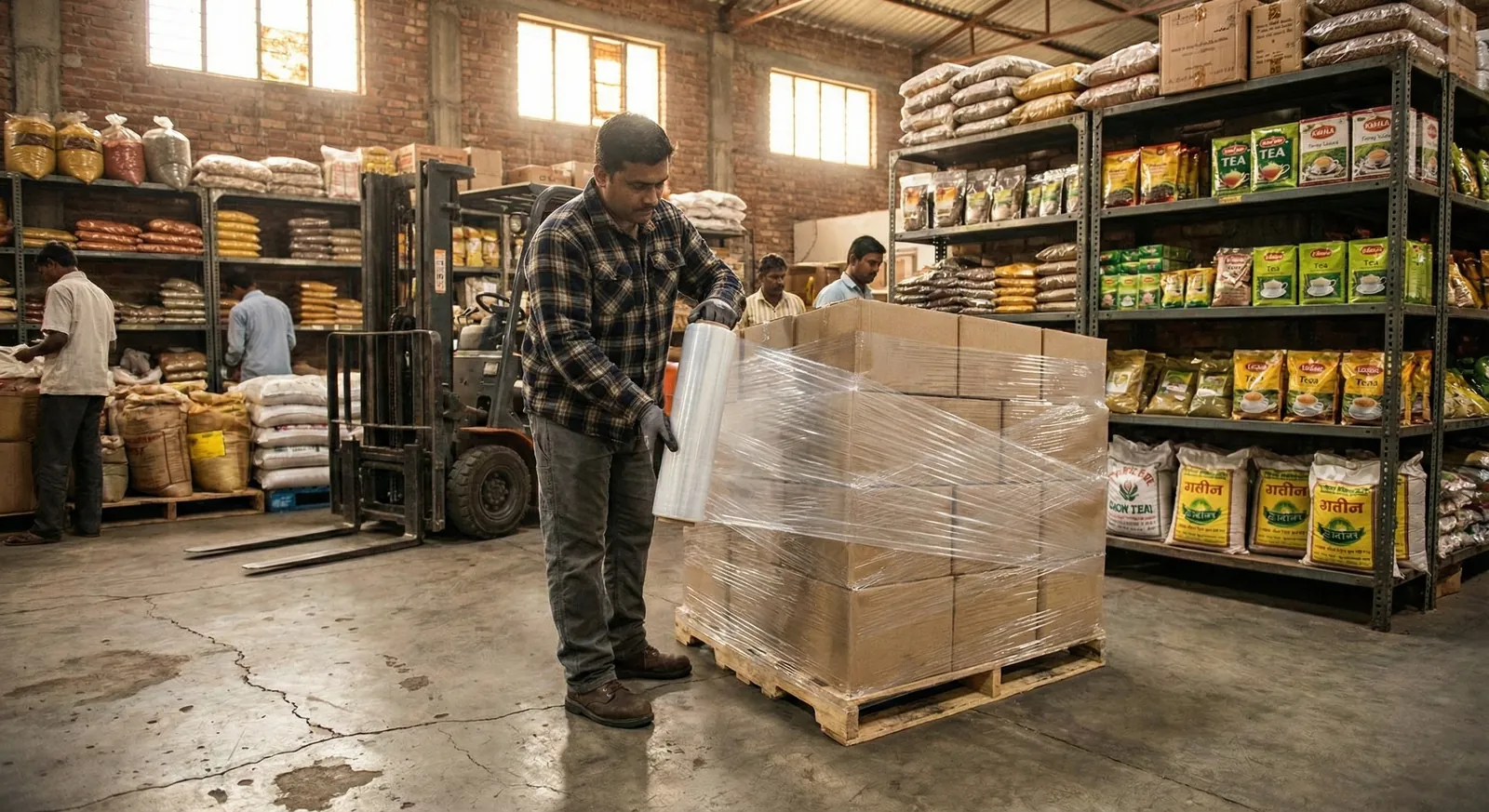
Every warehouse director wants the same thing from pallet wrap: hold the load, spend less. The industry answered with a decade of down-gauging, and the 80 versus 60 gauge decision is where that lands on paper. We extrude machine-grade stretch film and ship it to US distributors and end users, and the honest answer is that gauge alone decides nothing. Film formulation, your wrapper's pre-stretch capability and your loads decide it. Here is the framework we use on spec calls.
What gauge actually buys you
80 gauge (about 20 micron) is the US default: forgiving on rough loads, high puncture resistance, works on older wrappers. 60 gauge (15 micron) with modern metallocene resins delivers comparable holding force at lower film weight, but it punishes abuse: sharp edges, nail heads and aggressive transfer stations show up as breaks. Loads of boxed consumer goods convert to 60 gauge beautifully. Mixed pallets with protruding product often do not, and pretending otherwise just moves the cost from film to damage.
Pre-stretch is where the money hides
The wrapper stretches film before it hits the load, typically 150 to 250 percent on modern machines. Higher pre-stretch means more wrapped pallets per roll, which is the real cost lever, not sticker price. A roll that yields 15% more pallets at the same price beats a cheaper roll that yields less, every single week. Ask any supplier for yield per roll at your wrapper's actual pre-stretch setting, not at lab conditions. We publish yield on our spec sheets because it ends the pricing argument with arithmetic.
Cast versus blown, in one paragraph
Cast film is clear, quiet, clings one side and unwinds smoothly on machine lines; it dominates US warehouse use. Blown film is noisier and hazier but tougher and clingier, which suits irregular industrial loads and outdoor storage. We make both; most machine-grade buyers land on cast, and we say so rather than upselling the tougher grade they do not need.
Indicative pricing
| Format | Indicative FOB (per roll) |
|---|---|
| 18 in x 1500 ft, 80 gauge, machine | $7.50 - $11.00 |
| 18 in x 1500 ft, 60 gauge, machine | $6.20 - $9.00 |
| Hand grade 18 in x 1500 ft, 80 gauge | $6.80 - $9.50 |
Film containers weigh out at roughly 20 to 22 tons; a 40-ft box carries 2,600 to 3,000 machine rolls depending on format. Production is 2 to 3 weeks, ocean 4 to 6 weeks East Coast. Freight per roll lands around a dollar, which keeps imported film competitive against resin-driven domestic swings.
Warehouse questions we field weekly
Will 60 gauge break on my loads?
Run a two-week trial: one wrapper on 60, the rest on your incumbent. Break rate and film cost per pallet, both measured, settle it. If breaks rise above baseline, the load profile told you the truth and we spec 80 with no argument.
One-side or two-side cling?
One-side cling for machine film, always. Two-side cling welds adjacent pallets in trailer and storage rows, and warehouse crews will remind you of it.
Grades and formats are on the Stretch Film page. For rigid bundling instead of stretch, see the LDPE shrink film guide, and for downstream bagging the PP woven sacks guide.