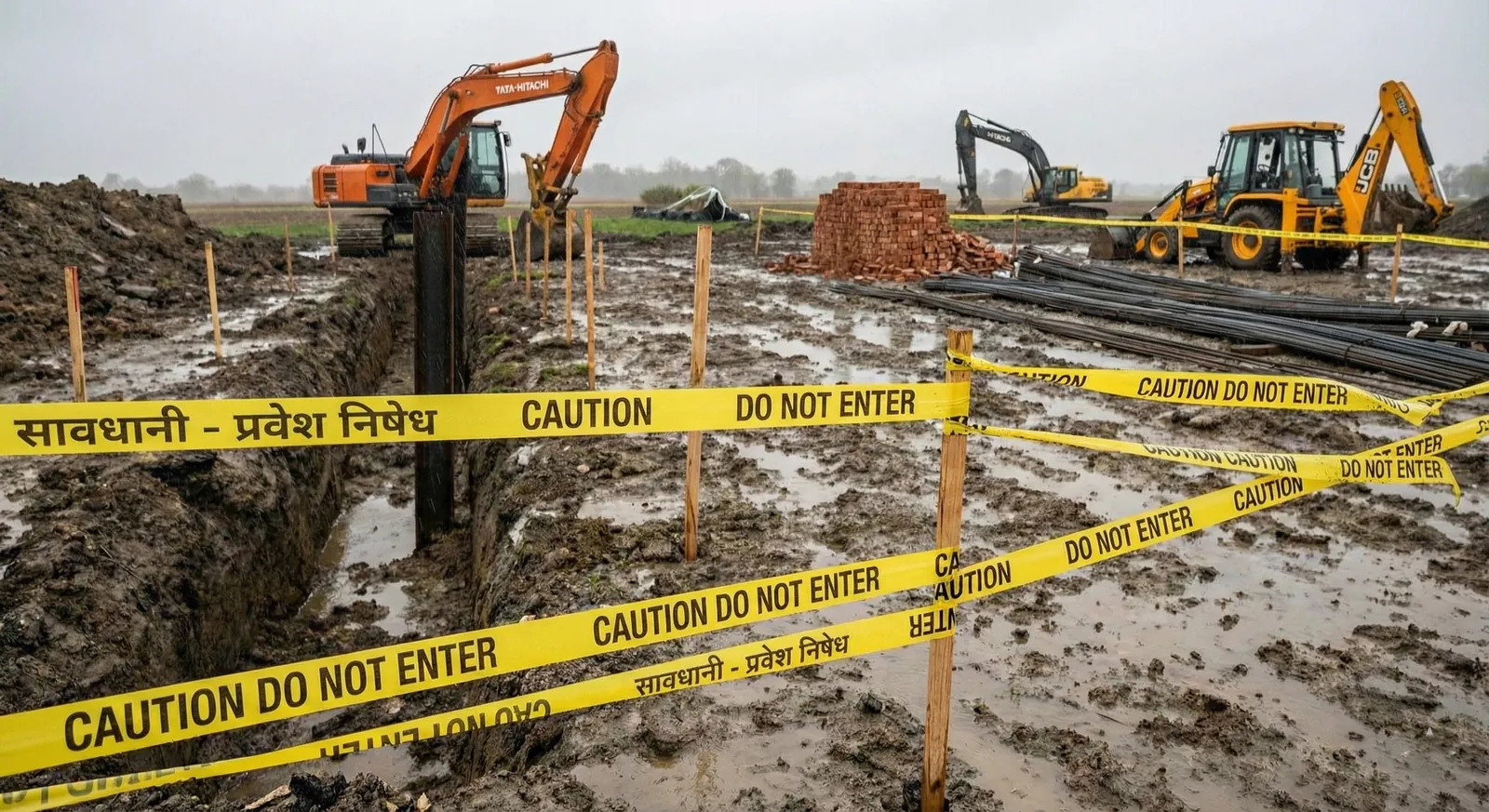
Flagging tape is a small ticket item with a large footprint in American fieldwork — utility locators, survey crews, forestry teams, trail builders and event crews pull through rolls constantly, and none of it is made domestically at scale. US distributors therefore import, and India is the competitive origin on quality per dollar. We manufacture flagging tape at our Kalol plant in Gujarat and supply American safety distributors and utility-supply wholesalers by the container, and this page walks through the specifics that matter on a US entry: classification, the full duty stack including the 2026 surcharge, colour conventions, and which coast to land on.
What the US market buys
The standard SKU is 1-3/16 inch (30mm) wide, 300-foot rolls at 1.0 to 2.0 mil, packed 12 rolls per sleeve and gross-packed in cartons. The colour range is the product: orange and pink for survey, red for danger, blue for potable water, yellow for gas and caution, green for sewer and drain, white for proposed excavation, plus glo and striped variants for low light. Distributors typically stock 12 to 18 colours, which makes colour consistency the real quality test — a repeat order of "hi-vis orange" that comes back a different shade gets returned, so we hold Pantone masters per colour and verify each batch against them. Fluorescent and glo grades use optical brighteners that cost a little more per roll but carry a premium on the shelf, and striped tape runs on the same lines with dual-color extrusion.
The duty stack, line by line
Non-adhesive plastic flagging tape generally classifies under HTS 3926.20 (plastic articles — fasteners, ties and similar) or 3920.10 as polyethylene film, with Column 1 general rates around 3% to 5.3% depending on the line. On top sit the Merchandise Processing Fee at 0.3464% of entered value and the Harbor Maintenance Fee at 0.125% for vessel arrivals. The line that changed the math in 2026 is the additional Section 301 action applying to a long list of economies including India — budget roughly 10% extra on Indian-origin goods and confirm the live rate with your broker before quoting landed cost, because the base rate alone will under-budget the entry. Goods from several competing origins carry comparable or worse surcharges, which is why India still wins the category on landed quality. Your broker files ISF 10+2 before vessel loading; we supply invoice, packing list and origin documents in the same week production closes.
Standards and colour conventions
There is no federal product standard for flagging tape itself, which is both freedom and trap: buyers judge on colour consistency, tensile and unwind behaviour. The working reference across US utilities is the APWA uniform colour code — it governs what each colour means on the ground, so a distributor's colour set has to map cleanly to it. For California-bound consignments, Prop 65 cautioning on packaging is a routine ask; we print or sticker accordingly. Where tape accompanies buried-utility work, the product that matters is printed underground warning tape, a different animal with foil detection layers — see our underground warning tape line for that spec.
Ports, route and lead times
East Coast landing at NY-NJ or Savannah runs 28 to 35 days port to port from Mundra and suits distributors drawing from mid-Atlantic and southeast warehouses; Houston serves the Gulf and energy corridor; LA/Long Beach works for the West Coast though the sailing is longer from India than from Pacific Asia. Clearance adds 2 to 4 days with a competent broker. Production runs 7 to 10 days for the standard colour range and 12 to 15 days when new Pantone masters or printed cartons are involved. A 40-foot high cube takes roughly 2.5 to 3 million rolls depending on mix — flagging tape is volumetrically efficient, and freight per roll lands small enough that LCL trials make sense before committing to FCL.
Documents and terms
Invoice, packing list, certificate of origin, bill of lading and a batch test report ride every shipment; Prop 65 labelling and any customer-specific carton print are handled at packing. We ship FOB Mundra and CIF to any US port, with DDP quotes for distributors who prefer landed pricing. For the wider warning range, our flagging tape product page lists colours and specs, and if your counter also stocks bin liners and refuse products, our heavy duty garbage bag sourcing guide shows how we structure those programs for importers.
Frequently Asked Questions
What is the total duty on flagging tape from India?
Base 3% to 5.3% by HTS line, plus MPF 0.3464% and HMF 0.125%, plus the 2026 Section 301 additional action on Indian-origin goods of roughly 10%. Confirm the live stack with your broker — surcharge levels have moved during 2026.
Can you match our existing colour set?
Yes — send physical samples or Pantone references and we build masters per colour. Repeat orders verify against the master before packing, which is what keeps shelf consistency across seasons.
What MOQ should a first US order be?
An LCL trial of 200,000-400,000 rolls across your best colours works; FCL pricing kicks in around one 20-foot container. Most distributors start LCL and move to mixed 40-foot orders.
How long is door-to-door lead time?
Production 7 to 15 days, ocean 28 to 35 days to the East Coast, clearance 2 to 4 days. Plan on six to eight weeks from PO to warehouse for a first order.