Polypropylene sheet is the quiet successor to metal and wood across Indian industry — pickling plants line their tanks with it, auto component makers vacuum-form it, stationery makers die-cut it, and chemical plants build entire scrubber systems from it. Fabricators who master PP fabrication rarely go back. This guide covers what we discuss with buyers of our PP sheet range at Kalol: where PP genuinely wins, what it costs, and the fabrication specifics that decide job quality.
Where PP Sheet Beats the Alternatives
PP's signature property is living hinge fatigue resistance — it folds thousands of times without cracking, which no other common plastic sheet matches. Add chemical resistance to acids and alkalis at temperatures up to 90-100°C (comfortably above HDPE's 70-80°C ceiling) and a clean weldable surface, and PP becomes the default for:
- Pickling and electroplating tank lining: the classic application — acid resistance at warm operating temperatures
- Scrubber and fume duct systems: chemical plants fabricate entire gas-handling systems from welded PP
- Vacuum forming: automotive interiors, appliance components, industrial trays
- Stationery and display fabrication: folders, file boxes, display stands — the folding property at work
- Living-hinge boxes and cases: integrated hinge designs impossible in HDPE
Thickness Chart and Pricing (2026)
PP sheet runs 0.5mm to 10mm in standard production, quoted per kg. Indicative ex-works Gujarat rates:
- Virgin homopolymer PP sheet: ₹115-160 per kg by thickness and volume
- Copolymer (impact) grades: ₹125-175 per kg
- 4ft x 8ft x 3mm virgin sheet: ₹1,900-2,800 per sheet
- 4ft x 8ft x 5mm virgin sheet: ₹3,100-4,500 per sheet
- Thin gauge rolls (0.5-1.5mm): priced per kg with roll-specific economics
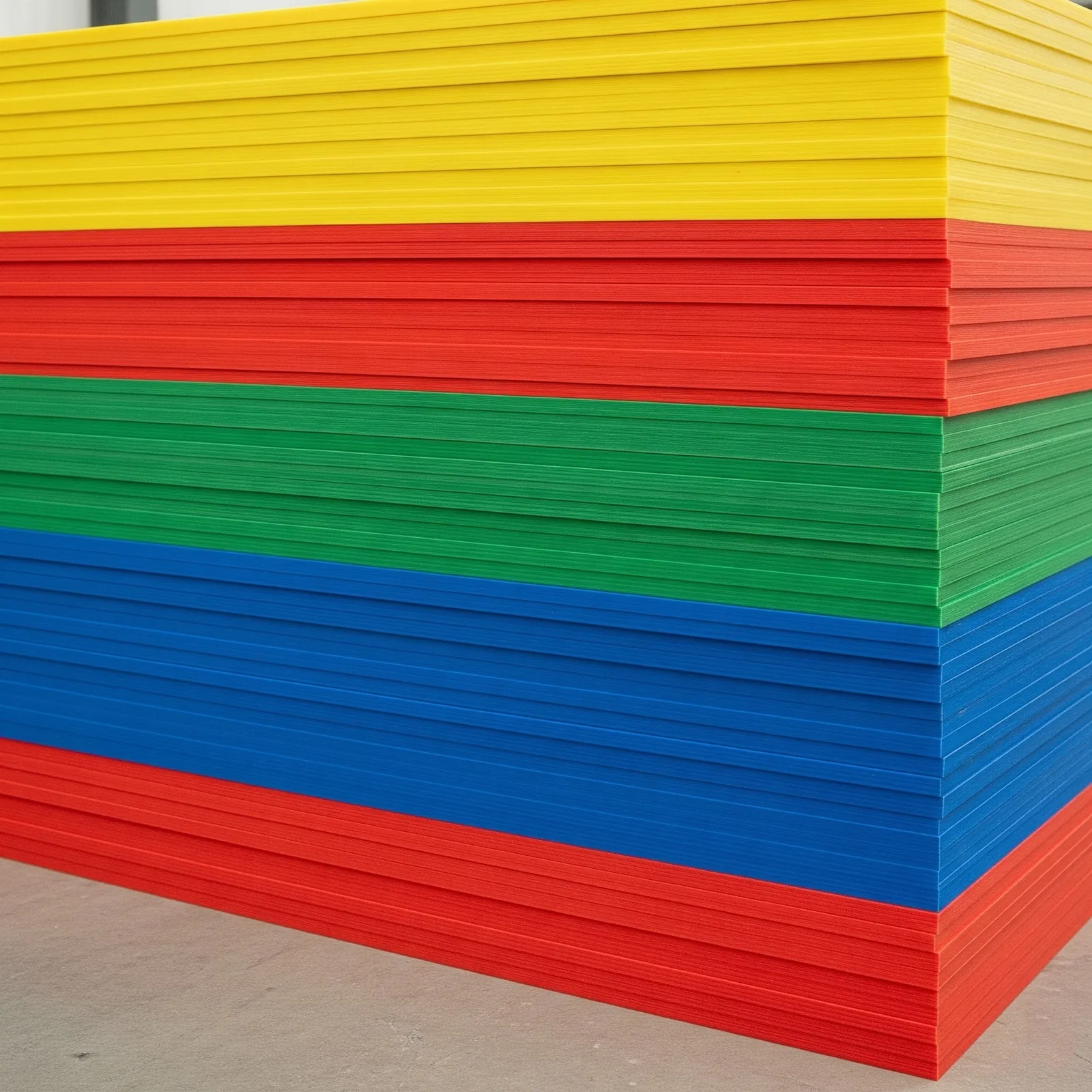
Rates exclude 18% GST and freight, and they track PP granule prices. Colour options (natural, milky white, grey, black) carry minor premiums; glass-filled and UV grades are made-to-order.
Homopolymer vs Copolymer — The Honest Selection Rule
Homopolymer PP is stiffer and chemically more resistant — the default for tank lining and chemical service. Copolymer PP trades some chemical resistance for impact strength, especially at low temperatures — the choice for parts that get dropped, for cold storage applications, and for winter fabrication sites. Fabricators in North India learned the hard way that homopolymer sheet cracked during winter installation; copolymer solved it. Ask which grade you are quoting on — it is a 10-15% price difference and a real performance difference.
Fabrication Notes That Separate Pros From Amateurs
- Folding (the PP superpower): score-and-fold with a router or grooving tool produces sharp, strong hinges without welding. Fold before welding when a job needs both
- Welding: extrusion welding with matched PP rod; surfaces clean, no moisture. PP welds slightly differently than HDPE — rod must be PP, never HDPE
- Machining: PP chips cleanly at moderate speeds; watch chip evacuation on deep cuts as swarf is stringy
- Vacuum forming: sheet must be drying-oven warmed evenly; PP's shrink memory demands generous forming allowances
- Cutting: CNC routing or sawing both fine; melted-edge cutting leaves stress risers that crack later — deburr heat-cut edges
Our comparison article why industries are replacing metal and wood with PP sheets covers the economics of that substitution in detail, and PP vs HDPE for lining applications settles the material-choice question for chemical service.
Real Project Lessons From Gujarat Fabricators
The recurring wisdom from years of supplying fabricators: buy the thickness your welder is comfortable with rather than the minimum calculation, because weld quality on thin sheet separates good jobs from leaky jobs. Buy from manufacturers who stress-relieve sheet — warped-after-cutting is the most common complaint in this trade and it is entirely preventable at the extrusion stage. And for tank work, insist on material test certificates per batch; fabricators who document material specs win the audit-heavy pharma and chemical clients that pay best.
Frequently Asked Questions
What is the price of PP sheet per kg in India?
Indicative 2026: ₹115-160 per kg for virgin homopolymer, ₹125-175 for impact copolymer grades. A standard 4x8ft 5mm sheet runs ₹3,100-4,500. Rates ex-works, excluding GST and freight.
What is the maximum temperature for PP sheets?
Continuous service up to about 90-100°C for chemical applications — comfortably above HDPE. Above that, mechanical properties drop quickly. For higher temperatures, PVDF or PTFE linings enter the conversation.
Can PP sheets be folded without welding?
Yes — this is PP's unique advantage. Score-and-fold creates living hinges that flex thousands of cycles without failure. Folders, boxes and display items exploit this property extensively.
Which is better for tank lining — PP or HDPE?
For warm or aggressive chemical service, PP (homopolymer) wins on temperature ceiling and acid resistance. For ambient water and mild chemicals, HDPE is adequate and slightly cheaper. Match the grade to the chemistry, not the price list.