A container crossing the Arabian Sea to Jebel Ali or Rotterdam experiences temperature swings that create condensation inside the box — the infamous "container rain". For a jumbo bag of hygroscopic powder like chemicals, fertiliser or food ingredients, that moisture is a product-destroying event. This is exactly why liner bags exist, and why seasoned Indian exporters treat them as non-negotiable rather than an optional add-on. After years of supplying liners alongside our FIBC range, here is the practical guide I wish someone had given my first export client.
What Exactly Is a Liner Bag?
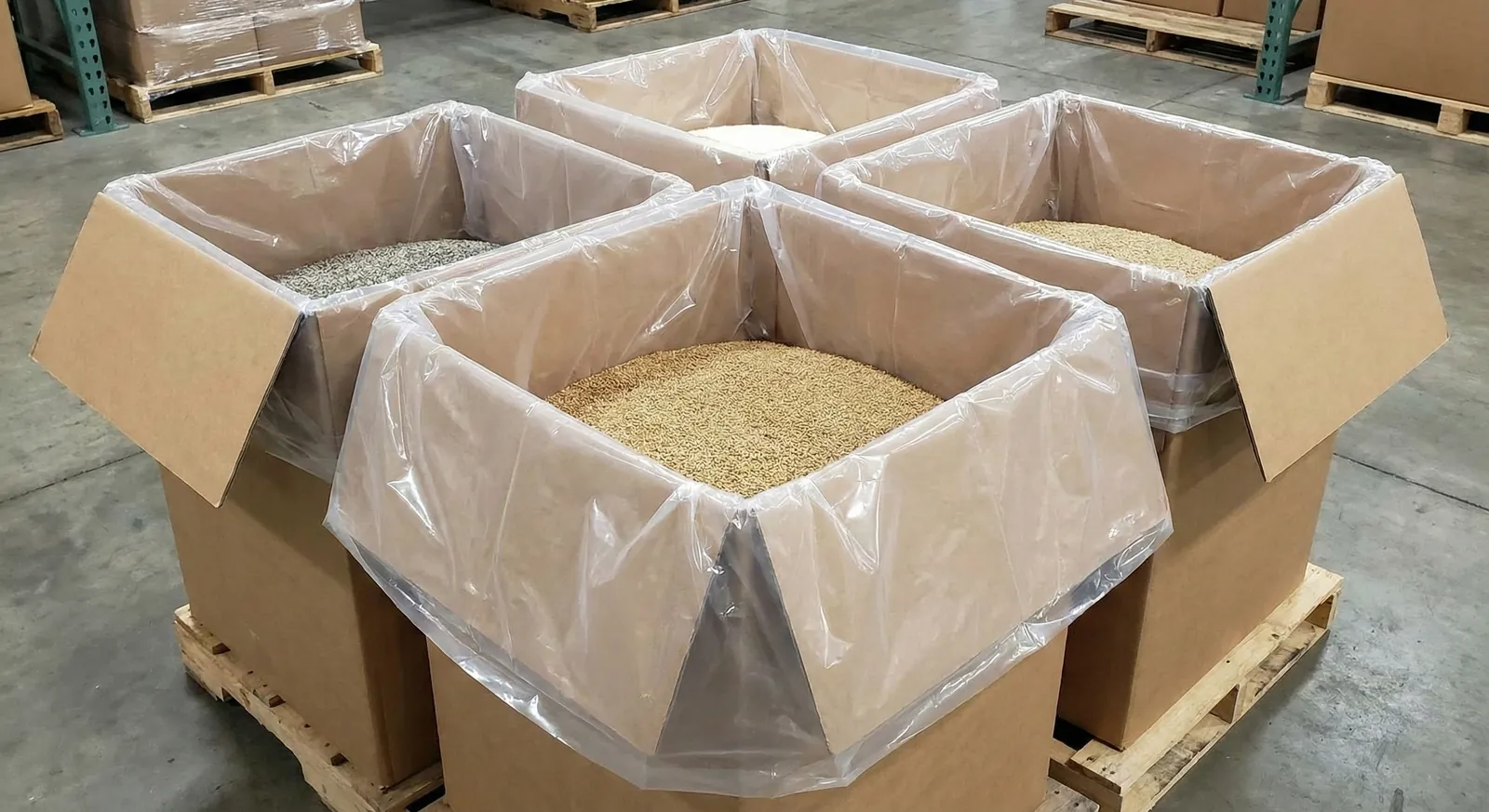
A liner is a polyethylene (LDPE/LLDPE/HDPE) inner bag fitted inside an FIBC or drum to create a moisture and contamination barrier. The outer woven bag provides strength; the liner provides sealing. Without a liner, woven polypropylene fabric — however tightly woven — still breathes. Powders also sift through the weave at the seams over long transit. The liner closes both problems in one layer.
Form-Fit vs Gusseted vs Tubular Liners
Style choice affects filling speed and how the liner behaves under load:
- Form-fit liners: shaped to match the FIBC panel geometry — hangs correctly from the first fill, no fabric folds trapping product, the choice for filling machines
- Gusseted liners: side folds let the liner expand with the bag, good for irregular products and manual filling
- Tubular/flat liners: simplest and cheapest, excess material folds at corners — acceptable for granules and rugged products
Bottom discharge FIBC need liners with a discharge spout match — getting this detail wrong stops your discharge line on day one, so always share the outer bag drawing with your liner supplier.
Micron Selection by Product Type
Liner thickness ranges from 25 to 200 microns in practice. The selection logic is product value plus sharpness plus transit length:
- 25-50 micron: granules, sugar, salt — basic moisture barrier
- 50-80 micron: powders, fertiliser, most chemical exports — the workhorse range
- 80-150 micron: sharp or abrasive products, long sea transit, aluminium foil laminates for high-barrier needs
- 150-200 micron: specialty chemicals and pharma intermediates with strict moisture specs
For food ingredients, confirm food-grade certification of the liner material — it is a different resin grade and the certificate should be traceable to the batch, not just a generic claim.
Pricing for Indian Buyers (2026)
Liners are quoted per kg like most polyethylene products. Indicative ex-works Gujarat ranges:
- Plain tubular liner: ₹95-125 per kg
- Form-fit liner: ₹110-145 per kg (shaping adds material and conversion cost)
- Antistatic liners: ₹135-180 per kg
- Aluminium foil barrier liners: ₹220-320 per kg
A standard 1-tonne FIBC liner at 60 micron weighs roughly 400-600 grams depending on dimensions, putting the per-bag liner cost around ₹55-85 in the workhorse range. Compare that against a rejected export container and the maths is easy. Rates exclude 18% GST and freight.
Antistatic and Conductive Liners — When Required
Flammable powders and solvents create static during filling — a genuine ignition risk. Type B/C/D FIBC systems need matching liner types: standard insulating liners are forbidden with Type C conductive bags, and Type D bags need antistatic liners designed for them. We covered the broader FIBC safety space in our UN-certified FIBC guide — the same diligence applies to liner selection. If your product has a minimum ignition energy below 100 mJ, involve your supplier's technical team before choosing liner material.
Common Liner Failures We See (And How to Avoid Them)
- Seal failure at filling nozzle: liner top designed for manual tying being used with automated filling — specify your filling method upfront
- Puncture at bag corners: tubular liner excess folding under product pressure — upgrade to gusseted or form-fit
- Condensation still occurring: liner solved interior moisture but container walls still sweat — combine liners with desiccant strips and container liners
- Wrong spout matching: discharge spout diameters mismatched with FIBC — share drawings both directions
Most liner complaints are specification communication failures, not manufacturing defects. A supplier who sends pre-production samples and asks about your filling line is worth their rate premium. Our liner bag manufacturing range covers transparent, coloured and form-fit styles, and we pair them with our U-panel FIBC range for matched fit.
Frequently Asked Questions
Is a liner necessary for every FIBC shipment?
No — gravel, scrap metal and some dense granules ship fine without liners. But powders, food ingredients, chemicals and anything moisture-sensitive need them for ocean freight. Your product's moisture tolerance and destination climate decide, not habit.
What micron liner should I use for chemical powder export?
The 50-80 micron range handles most chemical powder exports. Sharp crystalline products and long transits justify 80-150 microns. Share the product's moisture spec and we recommend the exact gauge.
What is the price of PE liner bags in India?
Indicative 2026 rates: ₹95-125 per kg for plain tubular, ₹110-145 for form-fit, more for antistatic and foil types. A 1-tonne FIBC liner in the workhorse range costs roughly ₹55-85 per piece ex-works.
Can liners be printed or coloured?
Yes — coloured and tinted liners are common for product-line identification, and single-colour printing on liners is possible for tracing. Food-grade certification remains available on coloured grades when required.