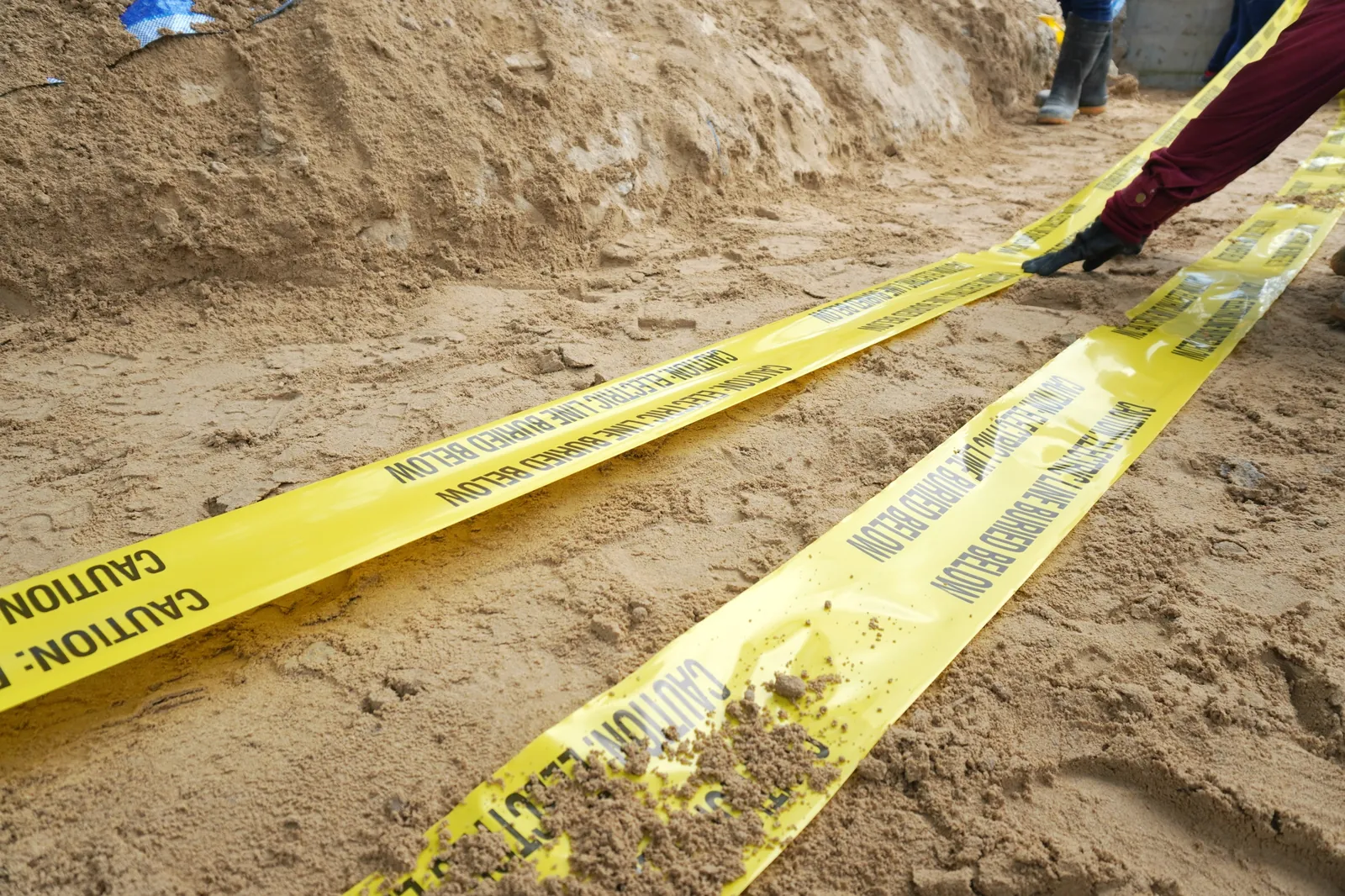
An underground warning tape does its job years after everyone forgot it exists - when an excavator bucket is 300 mm from a live cable and the operator sees red plastic in the spoil. That is why utilities specify it by service and detectability, not price. The wrong tape class on a gas line is not a packaging mistake; it is an incident report. This guide covers the two families and how each is specified.
Underground Tape Specifications That Matter
- Detectable type: aluminium foil core sandwiched in polymer - locatable from surface with standard detection gear, required where future excavation must find the line.
- Non-detectable type: solid polymer tape for services where the line itself is locatable - cheaper, still a physical last warning.
- Thickness: 100-200 micron and up; backfill stones abrade thin tape for decades, so gauge is a lifespan decision.
- Colour coding: red for electric, yellow for gas, orange for telecom, blue for water, green for sewer - APWA convention that crews train against.
- Print: continuous service text repeated along the roll - wording, language and repetition matter for legal defensibility.
Detectable and non-detectable options are on our warning tape product page, with colour code detail in our APWA colour guide.
Where Underground Tape Is Specified
- Power and gas distribution: the classic detectable-tape applications where strikes are catastrophic.
- Telecom fibre: orange tape protecting high-value routes during roadworks.
- Water and sewer mains: green and blue codes at cover depths utilities mandate.
- Industrial estates and campuses: buried service corridors marked at installation - installation depth practice is covered in our colour code guide.
Manufacturing and Quality Control
Detectable tape is laminated in-house - polymer, aluminium, polymer - with foil continuity checked per roll, because a broken foil line is invisible until detection fails in the field. Solid tapes are extruded with service text printed in fade-resistant ink. QC covers thickness profile, tensile, print fastness and foil continuity logs per batch. Rolls ship in dispenser-friendly winding that feeds directly into laying crews' routines.
How to Specify Your Order
Fix four things: service (it decides colour and wording), detectable or non-detectable, thickness class and roll length. Utility programmes order by container with mixed colours; contractors order by project. MOQ starts from carton quantities for stock colour-text combinations, higher for custom wording. Lead time is typically 1-2 weeks for stock, 2-3 weeks for custom print. Ask for foil continuity documentation on detectable orders - it is the one test a paper spec cannot fake.
Frequently Asked Questions
Detectable or non-detectable tape for gas lines?
Detectable - gas utilities specify locatable tape so future excavation can find the route before the bucket does; non-detectable is for services locatable by other means.
What depth should warning tape be buried?
Common practice is 300-450 mm above the service, below plough and spade depth - your utility's specification governs, and the tape prints make the intent clear in the trench.
Does tape thickness really matter underground?
Yes - backfill stones work against thin film for decades; 150-200 micron class tape is the utilities' answer to abrasion, not a premium add-on.
Siddhii Global manufactures detectable and non-detectable underground warning tape at its Kalol, Ahmedabad plant for utilities, contractors and distributors. Send your service, colour and detectability requirement and we will quote with foil continuity records.