Qatar's urban landscape program has planted and replanted enormous public areas over the past decade — the developments around Lusail and Doha alone consumed landscape materials at a scale the country had never seen — and woven ground cover sits under most of it. Add the nursery sector that grows the plant material and the farm strip-row use on commercial operations, and ground cover has become a quiet staple of the Qatari agriculture and landscape supply chain. Here is how the applications break down and what each one specs.
Applications: landscape, nursery, farm
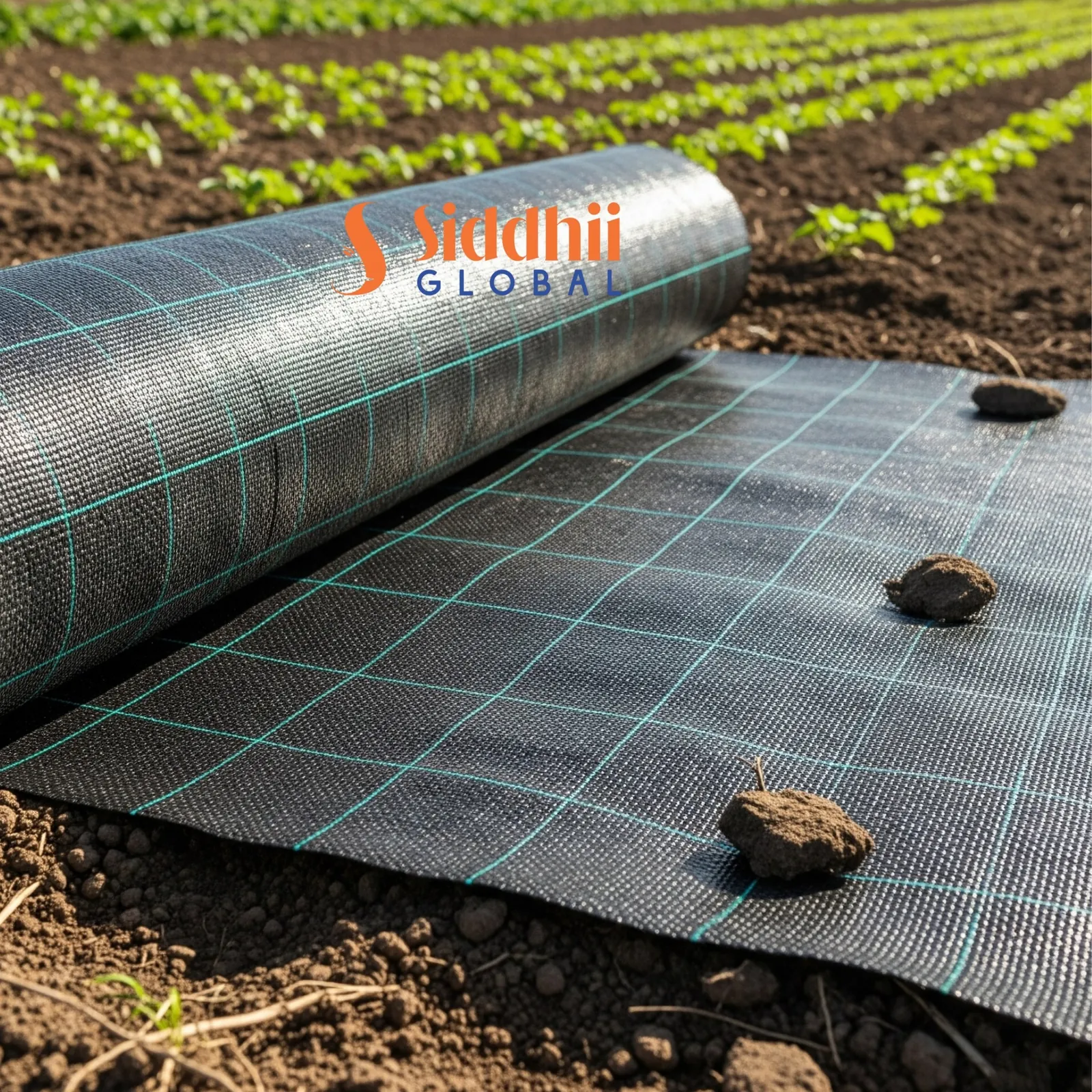
Landscape projects run the heaviest volumes: full-cover rolls of 120 to 150 GSM woven polypropylene laid under planted beds and gravel areas, often with marked grid lines for layout precision, always with a UV package validated for desert irradiance — the public realm re-plants on schedules that cannot wait for failed fabric. Nurseries that supply the landscape sector run heavy grades under pot benches and on growing floors, where the fabric takes seasons of pot traffic and irrigation. Commercial farms run 90 to 120 GSM strips under crop rows and palm basins — the same water-saving logic as the wider Gulf: every weed suppressed is irrigation water saved. Across all three tracks the specification constant is UV life; the variable is GSM and format per application.
The desert UV reality
Qatari sun is among the harshest UV environments ground cover faces anywhere — generic fabric fails within months of a Doha summer, and landscape projects that planned multi-year service with generic imports learned this the expensive way. Multi-year service requires stabilisation built into the tape before weaving, validated against Gulf-level irradiance, and declared honestly. We test per lot, ship documentation with every roll, and retain samples on file — because when a landscape consultant asks for the UV validation, the answer needs to be a document, not an assurance.
Import flow: Hamad Port
Ground cover ships rolled and baled from Mundra to Hamad Port in roughly 5 to 9 days — one of the fastest lanes we run. GCC customs applies the standard 5% CIF duty on woven polypropylene products (your broker confirms the line), with a simple document set. Landscape distributors order per project with delivery windows tied to planting schedules; nurseries and farms run programme buying with mixed GSM and width loads per container — which is how the market actually buys, and how we pack it.
Frequently Asked Questions
What GSM suits Qatari landscape projects?
120 to 150 GSM full-cover rolls with grid lines for layout precision, UV validated for desert irradiance; farm strips run 90 to 120 GSM.
How long does ground cover last in Qatar?
Multi-year service when the UV package is built for Gulf sun — generic fabric fails within one Doha summer, which is the most common import mistake here.
What duty applies at Hamad Port?
The GCC standard 5% CIF duty on woven polypropylene products — your clearing agent confirms the exact line and documents.
Can project and nursery orders share a container?
Yes — mixed GSM and widths per FCL, colour- and width-separated, which is how Qatari distributors serve landscape, nursery and farm demand together.
Fabric specifications are on the Weed Mat (Ground Cover) page. For the Saudi wholesale comparison read the Saudi ground cover guide, and for mulch alternatives see the Qatar mulch film guide.