Saudi Arabia buys woven ground cover from three directions at once: the date palm sector that lays fabric under orchard basins across millions of trees, the landscape and beautification projects that reshaped the Kingdom's cities, and the tree-planting programmes tied to the country's environmental commitments. All three share the same logic — every weed suppressed in a Saudi bed is water saved, and water is the Kingdom's most expensive agricultural input. Here is how the wholesale side of that market works.
Specs across the three buying tracks
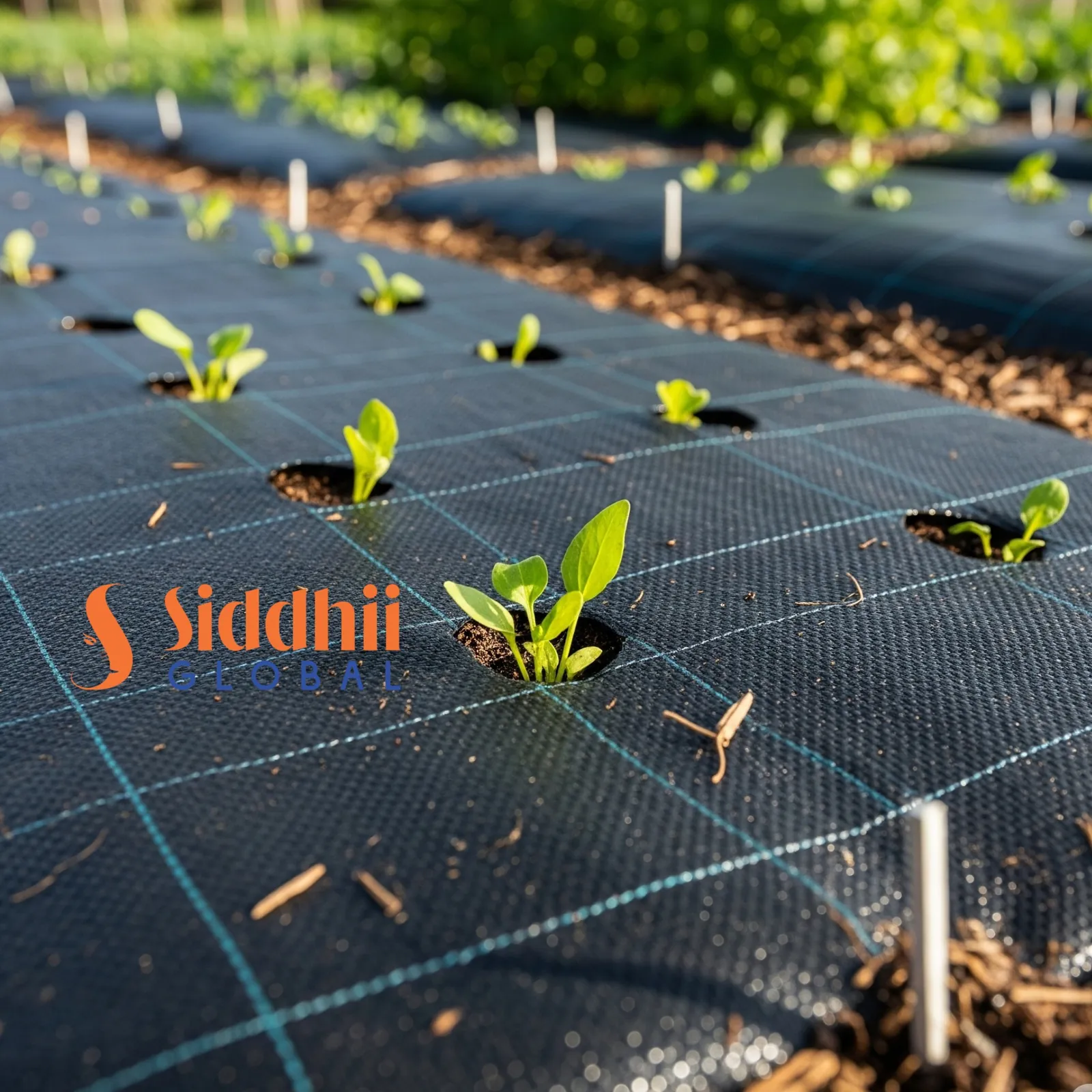
Orchard and crop use runs 90 to 120 GSM woven polypropylene in strips under palm basins and along crop rows — permeable fabric that lets irrigation through while blocking light. Landscape projects run heavier 120 to 150 GSM with marked grid lines where layouts demand them, and the UV package is the specification that matters most: Saudi sun kills generic fabric within a season, and multi-year service life requires stabilisation validated for Gulf irradiance, built into the tape before weaving. Tree-planting programmes buy mat squares and strip rolls for seedling protection where the fabric competes against herbicide on environmental grounds — and usually wins. Edge reinforcement, colour consistency (black dominates, green and white available) and grid-line print quality are the detail checks Saudi buyers run on arrival.
FCL pricing and the wholesale structure
Ground cover ships rolled and baled; a 40ft container carries serious tonnage and per-square-metre landed cost improves sharply at FCL. Pricing quotes per square metre or per kilo FOB Mundra or CIF Jeddah or Dammam, with GSM, width and UV package as the drivers. Most Saudi distributors combine ground cover with mulch film lines per container — both ship in compatible roll formats — and mixed GSM and width loads are normal. Payment runs 30% advance with balance against documents on first orders, moving to programme terms for annual-volume buyers. Transit to Jeddah or Dammam runs 10 to 15 days, so order-to-warehouse is a five-to-six week rhythm.
Quality before commitment
Four checks protect a Saudi order: UV validation against Gulf irradiance, GSM and weave audit per roll, permeability to the declared rate, and edge quality under traffic. Third-party pre-shipment inspection is available and used on project consignments where reports must reach consultants — we book and support it, and retained lot samples stay on file for a year.
Frequently Asked Questions
What GSM suits date palm orchards?
90 to 120 GSM strips under basins — permeable, traffic-tolerant fabric sized to the orchard's maintenance pattern.
What duty applies on woven ground cover?
The GCC standard 5% CIF duty applies on woven polypropylene products — your clearing agent confirms the exact HS line and documents.
Can we combine ground cover and mulch film per container?
Yes — both ship in compatible roll formats and most Saudi distributors combine lines per FCL.
How is UV life validated?
Stabilisation built into the tape and validated against Gulf-level irradiation; test documentation ships with every lot.
Fabric specifications are on the Weed Mat (Ground Cover) page. For the orchard water story read the weed mat water savings guide, and for mulch alternatives see the Saudi mulch film guide.