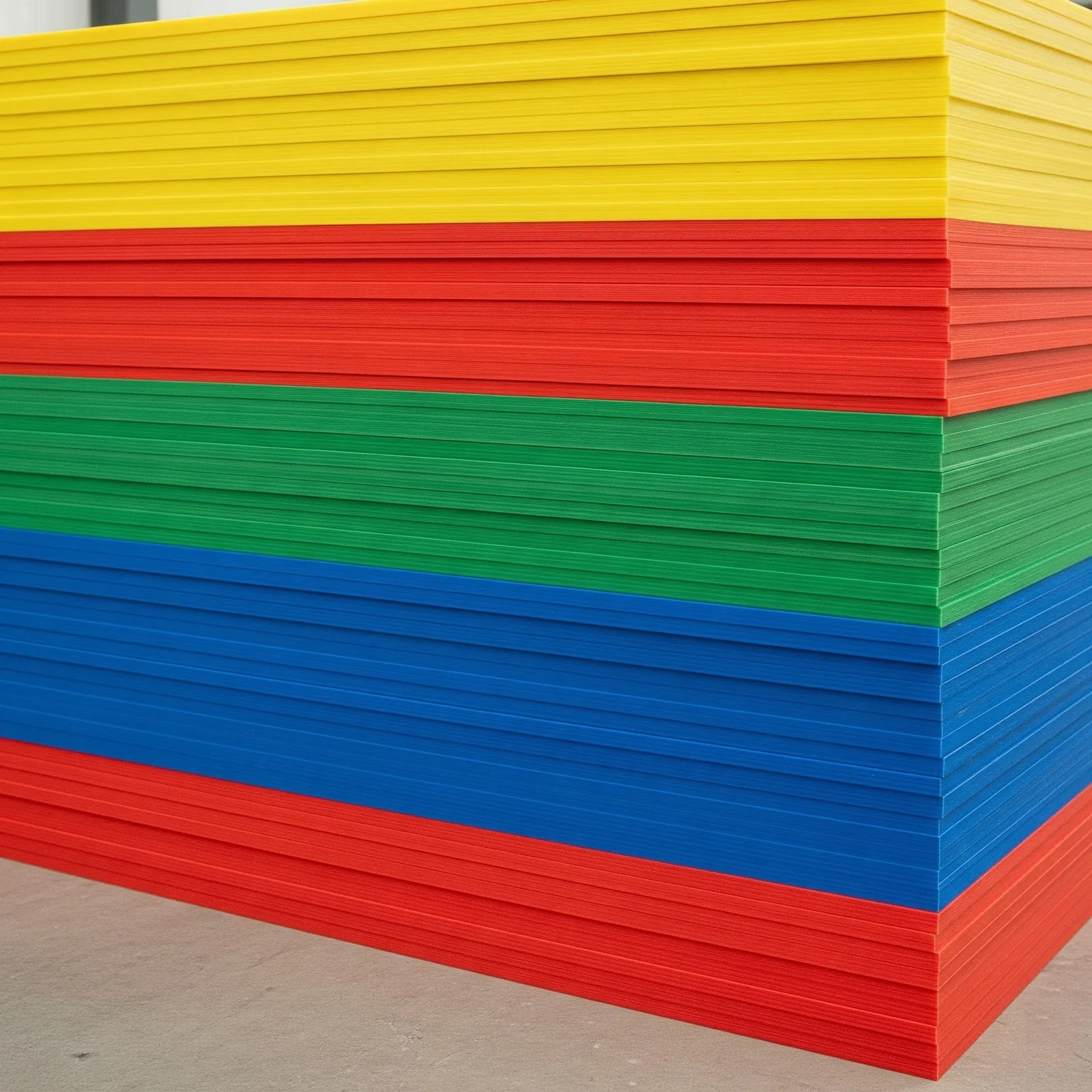
Polypropylene sheet is the engineer's choice when stiffness, chemical resistance and heat tolerance matter more than impact toughness - pharmaceutical trays, folding boxes, plating tanks, battery cases and stationery products all live on PP. Because it hinges without cracking and welds predictably, it often beats HDPE where forming is involved. This guide sets out the specification set from the manufacturing side.
PP Sheet Specifications That Matter
- Thickness: 0.5 to 6 mm standard, with flatness and gauge tolerance controlled for print and CNC work.
- Stiffness: noticeably stiffer than HDPE at equal thickness - the reason folders, boxes and trays hold square corners.
- Heat tolerance: service temperatures above HDPE's comfort zone, which matters near sterilisation and hot-fill processes.
- Chemistry: strong against acids, alkalis and many solvents at ambient service; plating and electrochemical shops rely on it.
- Forming: scores and hinges cleanly without white-line cracking; welds with standard PP rod and extrusion techniques.
Thickness and format options are on our PP sheets product page, and the polymer-versus-polymer comparison is in our PP vs HDPE guide.
Where PP Sheets Are Specified
- Folding boxes and stationery: document folders, display boxes and archives that hinge thousands of times - the replacement economics are in our material replacement guide.
- Plating and chemical tanks: linings and baffles in aggressive electrochemical service.
- Pharma and food trays: clean, weldable, sterilisation-tolerant formats.
- Industrial components: machine guards, battery cases and ducting where stiffness pays.
Manufacturing and Quality Control
Sheets are extruded and pressed in-house with homopolymer and copolymer grades selected per application - copolymer where impact matters, homopolymer where stiffness rules. QC covers thickness profile, flatness, density and hinge-cycle tests on forming grades. Sheets ship with interleaf protection in cut sizes or press sizes, and forming-grade lots carry hinge test records that fabricators ask for before committing a production run.
How to Specify Your Order
State thickness, sheet format, colour and grade (homopolymer or copolymer, smooth or textured). Tell us the forming plan - folding, welding or CNC - so tolerance and grade match the job. MOQ starts at pallet quantities; fabricator formats run by container with mixed thickness loads. Lead time is typically 2-3 weeks. Trial sheets for forming validation are available before volume orders - the cheap way to confirm hinge behaviour on your tooling.
Frequently Asked Questions
PP or HDPE sheet for chemical tanks?
Both resist the common acids and alkalis; PP wins when operating temperatures run high or stiffness is needed, HDPE wins on impact and cold service - our comparison guide walks the decision.
Does PP sheet crack when folded?
Forming-grade PP scores and hinges cleanly; cracks come from wrong grade or too-sharp score radii - trial sheets confirm behaviour before production.
What thickness for folding boxes?
0.5-1 mm covers document folders and light display boxes; 1.5-3 mm serves reusable industrial boxes and heavier tray work.
Siddhii Global manufactures PP sheets at its Kalol, Ahmedabad plant for fabricators, pharma suppliers and industrial distributors. Share thickness, application and forming plan and we will quote grades with hinge-test data.