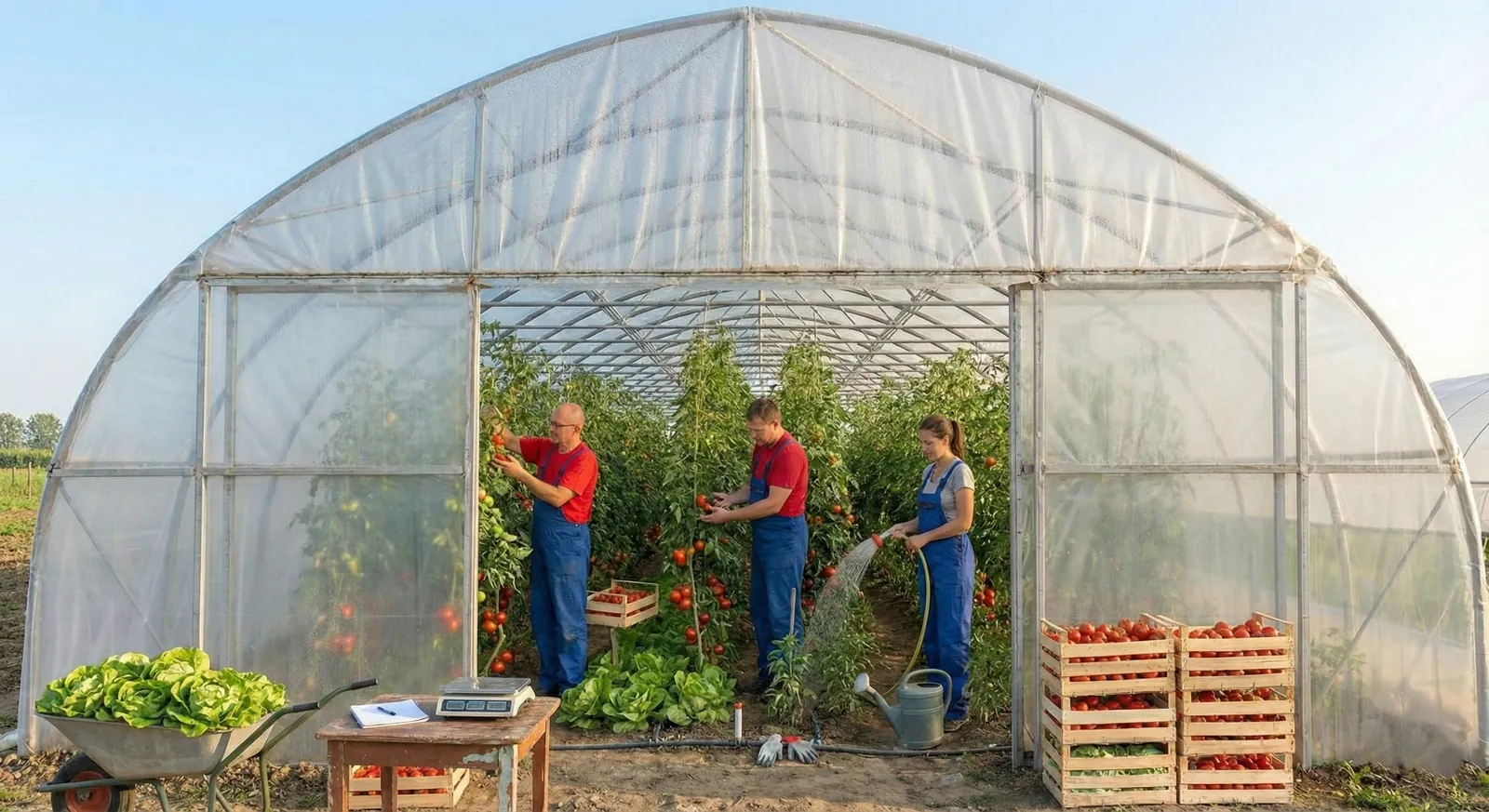
Australia's protected cropping sector has grown into one of the most sophisticated in the world — vegetable and flower operations from Victoria to Queensland running greenhouses that compete on precision, not just shelter. Cover film is the sector's recurring consumable: every structure re-covers on a three-to-four season cycle, and the importers who supply that cycle run a calendar business with a strict border process attached. Here is the full import path from India.
Cover specs for Australian conditions
The Australian standard is 150 to 200 micron three-layer polyethylene with UV stabilisation validated for southern-hemisphere irradiance — the sun here is harder on film than northern-hemisphere packages assume, and covers specified generically fail visibly early. Thermal (IR) barrier layers matter for the southern winters, anti-drip treatment for the humid summer production, and anti-dust surface behaviour for the dry interior. Light diffusion variants serve high-wire vegetable programs where even canopy radiation is a yield strategy. Widths run to 12 metres for modern gutter-connect structures, folded and rolled with crease management treated as a specification — a crease line is a future failure line, and Australian growers know it.
Biosecurity, duty and GST
DAFF biosecurity applies as to every Australian consignment: clean bale and roll packing, the packing declaration and container cleanliness statement ship with each order as standard, with loaded-container photographs for the file. Duty on polyethylene film under HS 3920.10 runs low to nil on the general rate, with AI-ECTA preferential access available on many Indian lines when a certificate of origin is filed; 10% GST applies on landed value and is creditable for GST-registered buyers. Transit from Mundra to Melbourne runs 25 to 35 days, with Brisbane and Fremantle serving their regions — which makes the ordering calendar matter: re-covering stock confirmed one to two cycles ahead lands in time, stock ordered late misses the season.
Verification and the supplier file
Australian growers and their distributors verify: third-party pre-shipment inspection on first orders (we book and support it), lot test documentation with each shipment, and retained samples on file for a year. The material documentation we provide also feeds the end-of-life conversation, which in Australia is real: cover film that lifts clean fits regional collection and recycling programmes, and we supply handling guidance with every order because clean film is the difference between recycling value and disposal cost.
Frequently Asked Questions
What UV package does Australian cover film need?
Southern-hemisphere-validated stabilisation in a 150 to 200 micron three-layer construction — generic northern packages degrade early under Australian sun.
What DAFF documents come with the shipment?
Packing declaration, container cleanliness statement and standard trade documents, issued with every consignment so clearance runs on schedule.
What duty applies from India?
HS 3920.10 film runs low to nil on the general rate with AI-ECTA preferential treatment available on many lines with a certificate of origin; 10% GST is creditable.
How far ahead should re-covering stock be ordered?
One to two cycles before the re-covering window: production plus ocean runs 8 to 10 weeks, and the cover should land before the season it is needed.
Cover specifications are on the Greenhouse Film page. For the import mechanics on other agricultural lines read the Australia import guide, and for the growing side see the Australian mulch film guide.