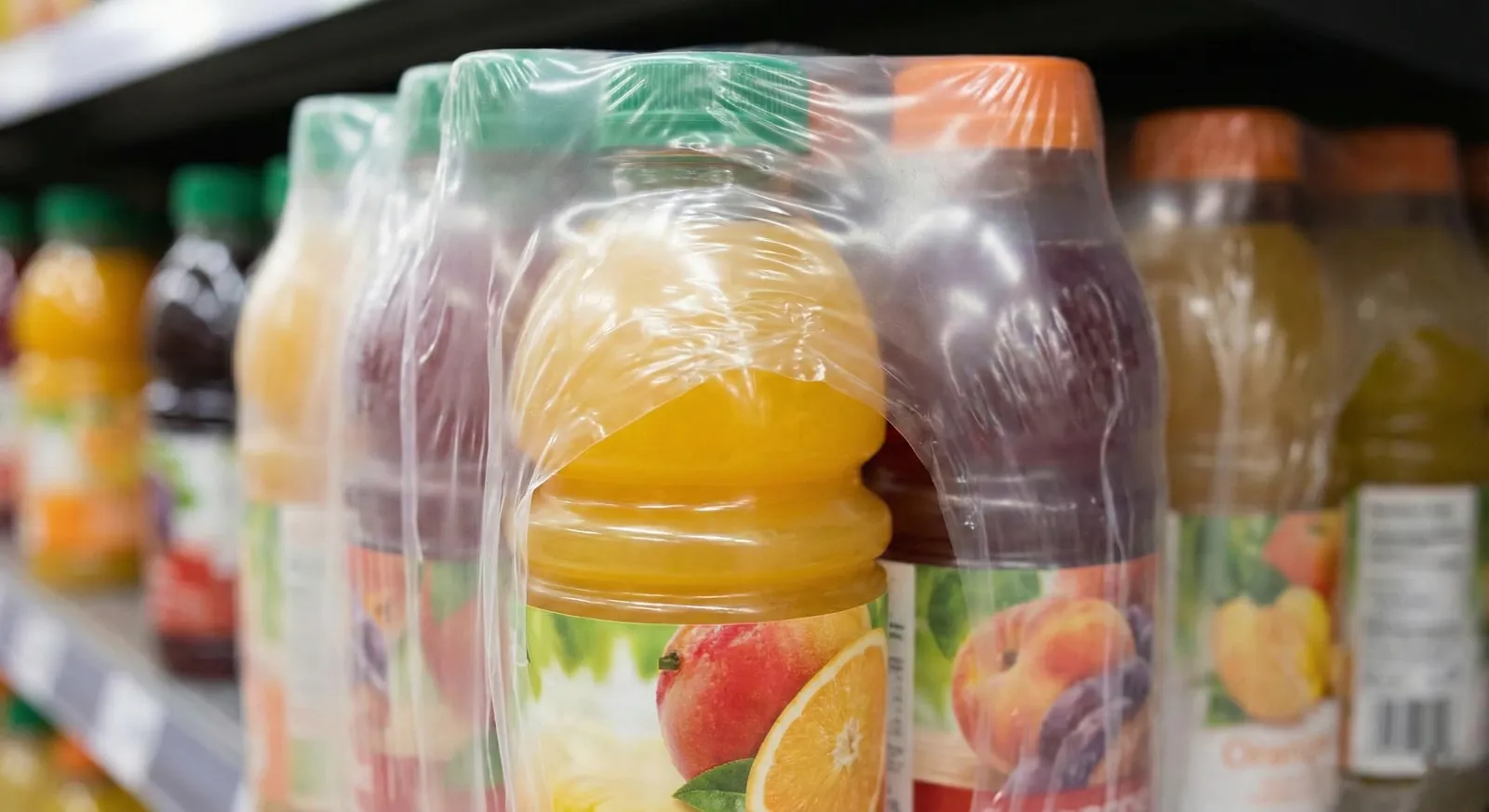
Walk into any bottled water plant or dairy in India and you will see LDPE shrink film doing its unglamorous job — holding 6 or 12 bottles together through warehouse stacks, truck loading and retail handling. It is one of the highest-volume films in Indian packaging, yet buyers routinely overpay because they spec by habit rather than by application. Here is what we tell packaging line managers who ask us to review their shrink spend.
What LDPE Shrink Film Does Best
Low-density polyethylene shrink film shrinks when heated, drawing tight around bundles. Its strengths are strength and economy: it has high tear resistance for its cost, making it ideal for heavy bundles — water bottles, tetra packs, glass jars, cans. Its weakness is clarity and shrink range: it is less transparent than polyolefin and needs higher shrink temperatures. So the honest rule: retail-ready individual products with shelf appeal → polyolefin; transit bundling where strength matters → LDPE. Using polyolefin for heavy bundling wastes money; using LDPE for premium retail wraps hurts shelf looks.
Typical Indian Applications
- Water and beverage bottle bundling (the classic 6-pack and 12-pack wraps)
- Tetra pack and dairy carton bundles
- Glass bottle and jar transit protection
- Industrial goods collation — paints, lubricants, agrochemical bottles
- Heavy pallet-corner protection and unitising
Gauge Selection and Pricing (2026)
LDPE shrink film runs 25 to 200 microns. Most beverage and food bundling sits in 50-100 micron. Indicative ex-works Gujarat pricing:
- 50-60 micron bundling film: ₹105-130 per kg
- 80-100 micron heavy duty: ₹100-125 per kg
- Printed LDPE shrink (1-2 colours): ₹125-155 per kg
- Per-bundle cost: a 12-bottle 1L water bundle uses roughly 12-18 grams of film → ₹1.30-2.20 per bundle
That per-bundle number is what plant managers should track — not per-kg rate — because it captures gauge optimisation. Cutting average gauge by 10% across a year of production is serious money. Rates exclude 18% GST and freight; polymer price movements apply.
Shrink Tunnel Settings — Where Lines Go Wrong
LDPE needs higher shrink temperatures than polyolefin — typically tunnel zones around 160-200°C depending on gauge and line speed. Common production problems and their actual causes:
- Wrinkles on bundle corners: tunnel temperature too low or line speed too fast for the gauge
- Film burns or holes: element temperature too high, or product too close to elements
- Weak seals that open in tunnel: seal wire temperature or dwell time insufficient for the micron being used
- Fish-eyes and unclear areas: insufficient shrink soak time — reduce speed one notch before raising temperature
Keep a settings log per film batch. New film lots, even from the same supplier, can shift slightly with resin lot changes — a logged baseline makes retuning a 10-minute job instead of a production-morning disaster.
The Seal Area Is Where Quality Is Won
Most shrink complaints trace to the seal, not the film. LDPE film from our LDPE shrink film production is tested for consistent seal initiation temperature across the roll, because a film that seals unevenly drives operators to raise seal temperature until burn holes appear. If your line constantly fights this, check seal wire condition and flatness first — worn wires create uneven pressure that no film can compensate for.
Roll Handling and Storage in Indian Conditions
Shrink film stored in hot godowns for months ages badly — it loses controlled shrink characteristics and starts behaving unpredictably. Store rolls in cool areas, away from direct sun through shed roofing, and follow FIFO. Summer deliveries in closed trucks without ventilation can heat rolls enough to affect performance; let rolls acclimatise to the pack hall overnight before running. These sound like small things; they are the difference between a line that runs all shift and one that stops every forty minutes.
If you are evaluating shrink vs stretch for your application, our stretch vs shrink comparison guide breaks down when each technology wins. And for export bundling specifications, see why LDPE shrink dominates beverage transit packaging.
Frequently Asked Questions
What is the price of LDPE shrink film in India?
Indicative 2026 rates: ₹100-130 per kg ex-works depending on gauge and volume. A 12-bottle water bundle consumes ₹1.30-2.20 of film. Printed variants cost 20-25% more.
What temperature should a shrink tunnel run for LDPE?
Typically 160-200°C across zones for 50-100 micron LDPE, adjusted for line speed. Start low and increase gradually — LDPE shrinks over a broad range and rushing temperature causes burn holes.
LDPE vs polyolefin shrink film — which should I buy?
Heavy bundling and transit protection: LDPE (stronger, cheaper). Retail-ready individual wraps needing clarity and low-temp shrink: polyolefin. Many plants run both for different lines.
How do I reduce shrink film cost per bundle?
Optimise gauge with your supplier via trial runs — most plants run 10-15% heavier film than needed. Also check seal waste settings and roll-end utilisation; simple operational discipline often saves more than price negotiation.