Introduction
Woven fabric made from polypropylene (PP) and high-density polyethylene (HDPE) serves as the fundamental building block for an enormous range of packaging, industrial, and protective applications. From the bags that carry cement and food grains to the tarps that protect construction sites and the geotextiles that stabilize roads, PP and HDPE woven fabrics are the unseen workhorses of modern industry. Their exceptional strength-to-weight ratio, chemical resistance, and versatility make them indispensable across construction, agriculture, logistics, and manufacturing sectors. Siddhii Global, a premier PP and HDPE woven fabric manufacturer based in Kalol, Gujarat, produces high-quality woven fabric rolls that serve as the foundation for countless products and applications. With ISO 9001:2015, ISO 14001, and ISO 22000 certifications, we deliver woven fabric that meets the most demanding specifications for quality, consistency, and performance.
What is Woven Fabric (PP/HDPE)?
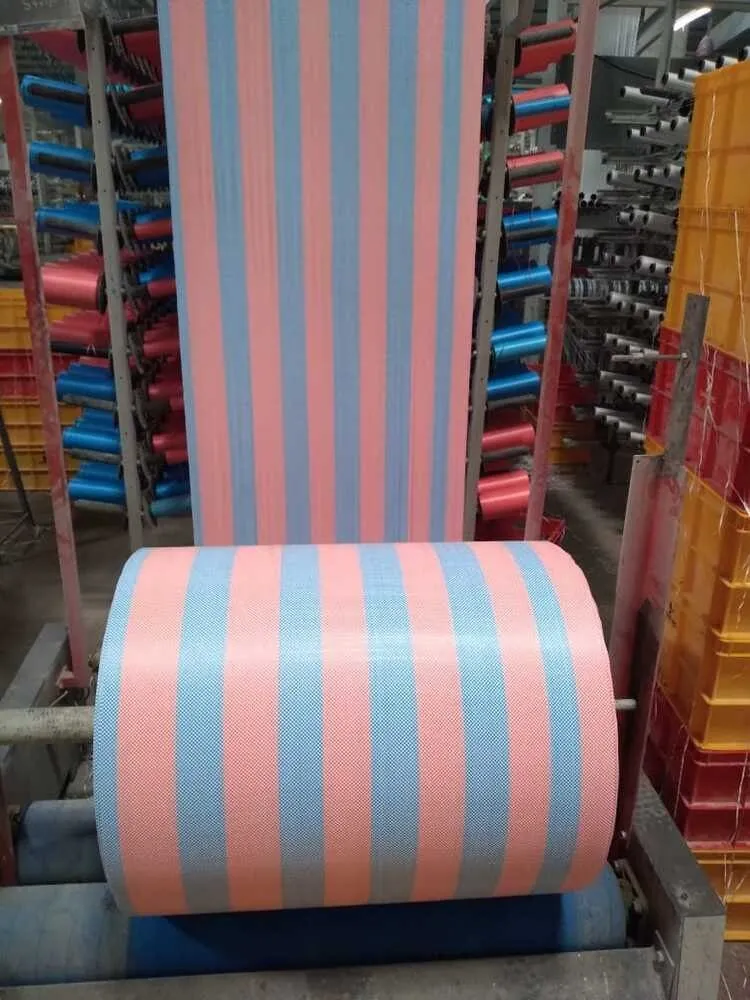
Woven fabric made from PP (polypropylene) or HDPE (high-density polyethylene) is a textile material produced by interlacing extruded polymer tapes or filaments on specialized weaving looms. The process begins with polymer resin being extruded into flat tapes or circular filaments of controlled width and thickness. These tapes are then woven in two perpendicular directions — the warp (lengthwise) and the weft (widthwise) — creating a strong, stable fabric with consistent properties. PP woven fabric is known for its excellent clarity, higher melting point, superior fatigue resistance, and better performance at low temperatures, making it the preferred choice for most bag and packaging applications. HDPE woven fabric offers higher stiffness, better chemical resistance, and lower moisture absorption, making it suitable for heavy-duty and chemical-exposure applications. Both types can be produced in varying densities (measured in GSM — grams per square meter), widths, and constructions to meet specific application requirements. The fabric can also be laminated with various films for enhanced barrier properties, printed for branding, or treated for special performance characteristics like UV resistance or anti-slip properties.
Types Available
Plain PP Woven Fabric — Uncoated, unlaminated woven polypropylene fabric in various GSM ratings, suitable for making standard bags, wraps, and covers where breathability and basic protection are sufficient.
Plain HDPE Woven Fabric — Uncoated HDPE woven fabric offering higher stiffness and chemical resistance, ideal for heavy-duty applications and products requiring exposure to harsh chemicals.
Laminated Woven Fabric — PP or HDPE woven fabric with a lamination layer (BOPP, LDPE, or other films) providing moisture barrier properties, enhanced printability, and improved product protection.
PP Woven Fabric in Roll Form — Continuous rolls of woven fabric available in various widths (30 cm to 200 cm) and GSM ratings, ready for conversion into bags, covers, or other products.
UV-Stabilized Woven Fabric — Woven fabric treated with UV stabilizers for outdoor applications requiring prolonged sun exposure, preventing material degradation and extending service life.
Anti-Slip Coated Woven Fabric — Woven fabric with anti-slip coating for applications requiring enhanced friction between stacked layers, improving stability during storage and transportation.
Key Features & Benefits
High Tensile Strength — PP and HDPE woven fabrics deliver exceptional tensile strength in both warp and weft directions, enabling them to withstand heavy loads, rough handling, and demanding industrial conditions without failure.
Customizable GSM and Width — Available in a wide range of GSM ratings (40 to 250 GSM) and widths, allowing precise specification matching for any application from lightweight packaging to heavy industrial covers.
Chemical and Moisture Resistance — Both PP and HDPE woven fabrics are inherently resistant to water, most chemicals, oils, and solvents, protecting contents and maintaining fabric integrity in challenging environments.
Lightweight and Durable — Despite their strength, these woven fabrics are remarkably lightweight, reducing transportation costs and handling effort while providing long-lasting performance even under demanding conditions.
Versatile Processing Options — Woven fabric serves as the base material for bags, tarps, geotextiles, FIBC liners, furniture webbing, and countless other products, making it one of the most versatile industrial textiles available.
Lamination Compatibility — Can be laminated with various films to add moisture barriers, print surfaces, or special functional coatings, dramatically expanding the range of applications and performance characteristics.
Cost-Effective Material — The combination of affordable raw materials and efficient manufacturing processes makes PP/HDPE woven fabric one of the most cost-effective industrial textiles available, delivering excellent value per square meter.
Recyclable and Sustainable — Both PP and HDPE are fully recyclable materials, and woven fabric products can be recycled at end of life, supporting circular economy initiatives and reducing environmental impact.
Applications & Uses
Bag manufacturing (PP woven bags, BOPP bags, FIBC bags) Tarpaulins and temporary weather protection covers
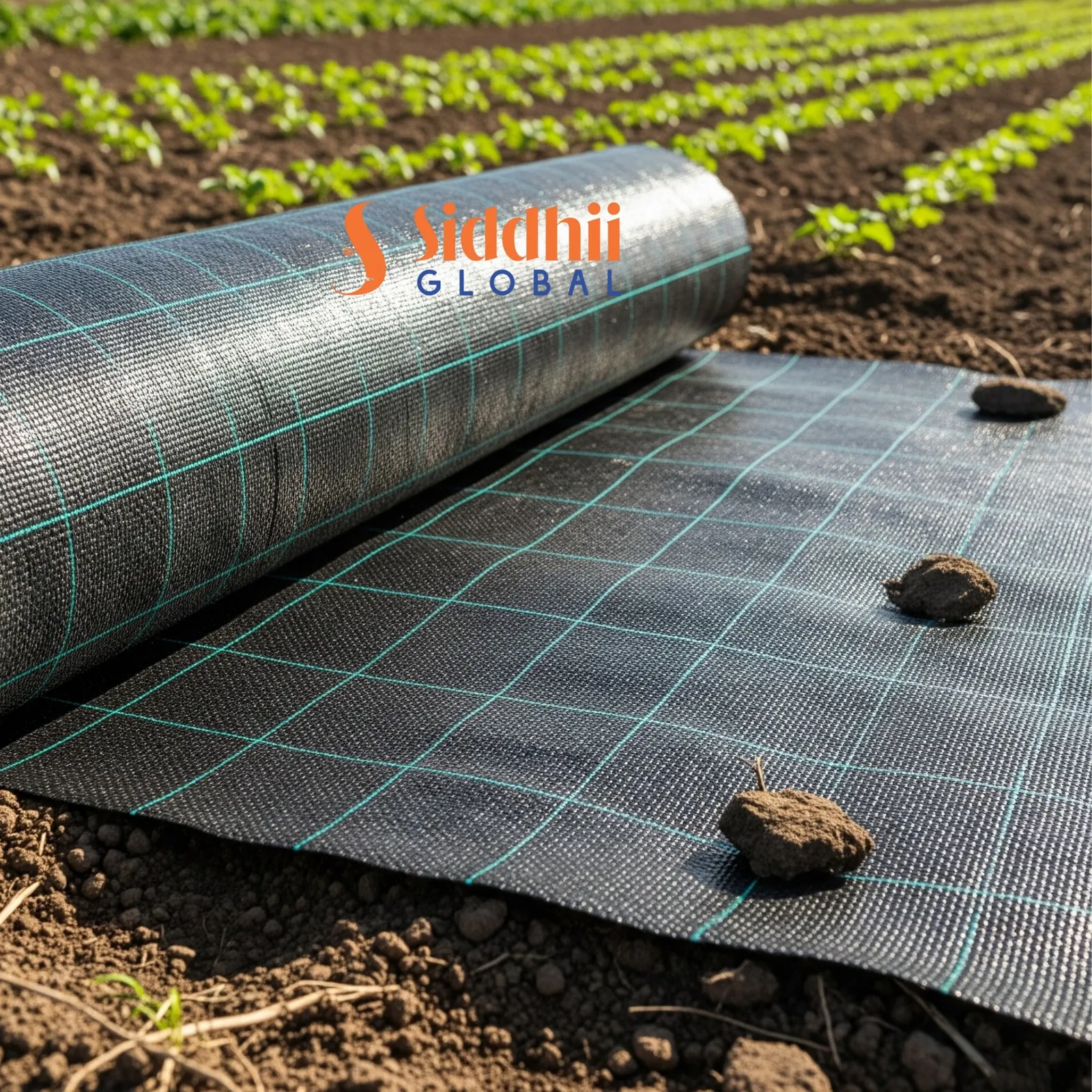
Geotextiles for road construction and soil stabilization Agricultural covers and crop protection
Building and construction material wrapping
Furniture upholstery backing and webbing Industrial packaging and machinery covers Pond and canal lining applications
Scaffolding safety nets and debris netting Export packaging and container liners
Why Choose Siddhii Global?
Siddhii Global has earned its reputation as a leading woven fabric manufacturer through consistent quality, technical expertise, and customer-focused service. Our ISO 9001:2015 certification ensures that every roll of woven fabric meets precise specifications for GSM, width, tensile strength, and construction consistency. The ISO 14001 certification validates our environmentally responsible manufacturing practices, and our ISO 22000 certification ensures food-safe production standards. Our Kalol, Gujarat facility houses a comprehensive production line — from polymer extrusion and tape stretching to circular and flat weaving, lamination, and finishing — giving us complete control over quality at every stage. This vertical
integration also enables us to offer competitive pricing and flexible production scheduling. We work closely with customers to develop custom fabric specifications for unique applications, and our experienced technical team provides expert guidance on material selection and product development.
Buying Guide
Choose the Right Polymer — PP woven fabric is preferred for most bag and packaging applications due to its clarity, flexibility, and higher temperature resistance. HDPE woven fabric is better suited for applications requiring higher stiffness and chemical resistance.
Determine GSM Requirements — The GSM (grams per square meter) determines fabric weight and strength. Lighter fabrics (40-70 GSM) suit lightweight applications, medium weights (70-120 GSM) for standard bags and covers, and heavier fabrics (120-250 GSM) for industrial and geotextile applications.
Specify Width Requirements — Woven fabric is available in various widths. Consider your end-product dimensions and conversion process to select the most efficient width that minimizes waste and processing time.
Consider Lamination Needs — If your application requires moisture barriers, print surfaces, or enhanced durability, specify laminated woven fabric with the appropriate film type and thickness.
Evaluate Environmental Exposure — For outdoor or UV-exposed applications, always specify UV-stabilized woven fabric with the appropriate stabilization level based on expected sun exposure duration.
Request Fabric Samples — Before placing bulk orders, request fabric samples to verify GSM, hand feel, weave consistency, and suitability for your specific application and conversion processes.
Discuss Volume and Delivery — Share your monthly volume requirements with our team to secure the best pricing and establish reliable delivery schedules that keep your production running smoothly.
Frequently Asked Questions (FAQ)
Q1: What is the difference between PP and HDPE woven fabric?
A: PP (polypropylene) woven fabric is more flexible, has better clarity, offers higher temperature resistance, and performs well in fatigue applications like bag manufacturing. HDPE (high-density polyethylene) woven fabric is stiffer, has better chemical resistance, and lower moisture absorption. PP is more commonly used for packaging bags, while HDPE is often chosen for heavy-duty covers and chemical-exposure applications.
Q2: What GSM range do you offer for woven fabric?
A: Siddhii Global manufactures woven fabric in GSM ranges from 40 GSM (lightweight) to 250 GSM (heavy-duty). The most commonly requested ranges are 60-90 GSM for standard packaging bags, 90-120 GSM for heavy-duty bags and covers, and 150+ GSM for industrial and geotextile applications. Custom GSM specifications are available upon request.
Q3: Can woven fabric be laminated on both sides?
A: Yes, we offer both single-sided and double-sided lamination options. Single-sided lamination is common for bags where one side needs moisture protection or print capability. Double-sided lamination provides maximum protection and is used for applications requiring complete barrier properties on all surfaces.
Q4: What widths are available for woven fabric rolls?
A: Our woven fabric rolls are available in widths ranging from 30 cm to 200 cm. Common widths include 45 cm, 60 cm, 90 cm, 120 cm, and 150 cm. Custom widths can be produced to match your specific conversion requirements and minimize material waste.
Q5: Is your woven fabric suitable for food-grade applications?
A: Yes, Siddhii Global holds ISO 22000 food safety certification, and we produce food-grade woven fabric using food- safe polymer resins and controlled manufacturing conditions. This fabric is suitable for making bags and packaging that will be in direct contact with food products.
Source premium PP and HDPE woven fabric directly from a trusted manufacturer. Siddhii Global delivers consistent quality, competitive pricing, and the technical expertise to help you specify the perfect fabric for your application. Whether you need plain or laminated fabric, standard or custom specifications, our ISO-certified production ensures you receive material that performs reliably every time. Reach out today — our team is ready to assist you!
Get your Free Quote today! We respond within 24 hours.