Weed mat, ground cover, weed barrier - one product with three names and an enormous quality spread. A cheap nonwoven sheet disintegrates in eighteen months and strands you with removal work through established planting; a correctly specified woven PP mat outlives the crop it protects. Because the differences are invisible on a folded sample, this guide spells out the specifications that separate a five-year mat from an eighteen-month one.
Weed Mat Specifications That Matter
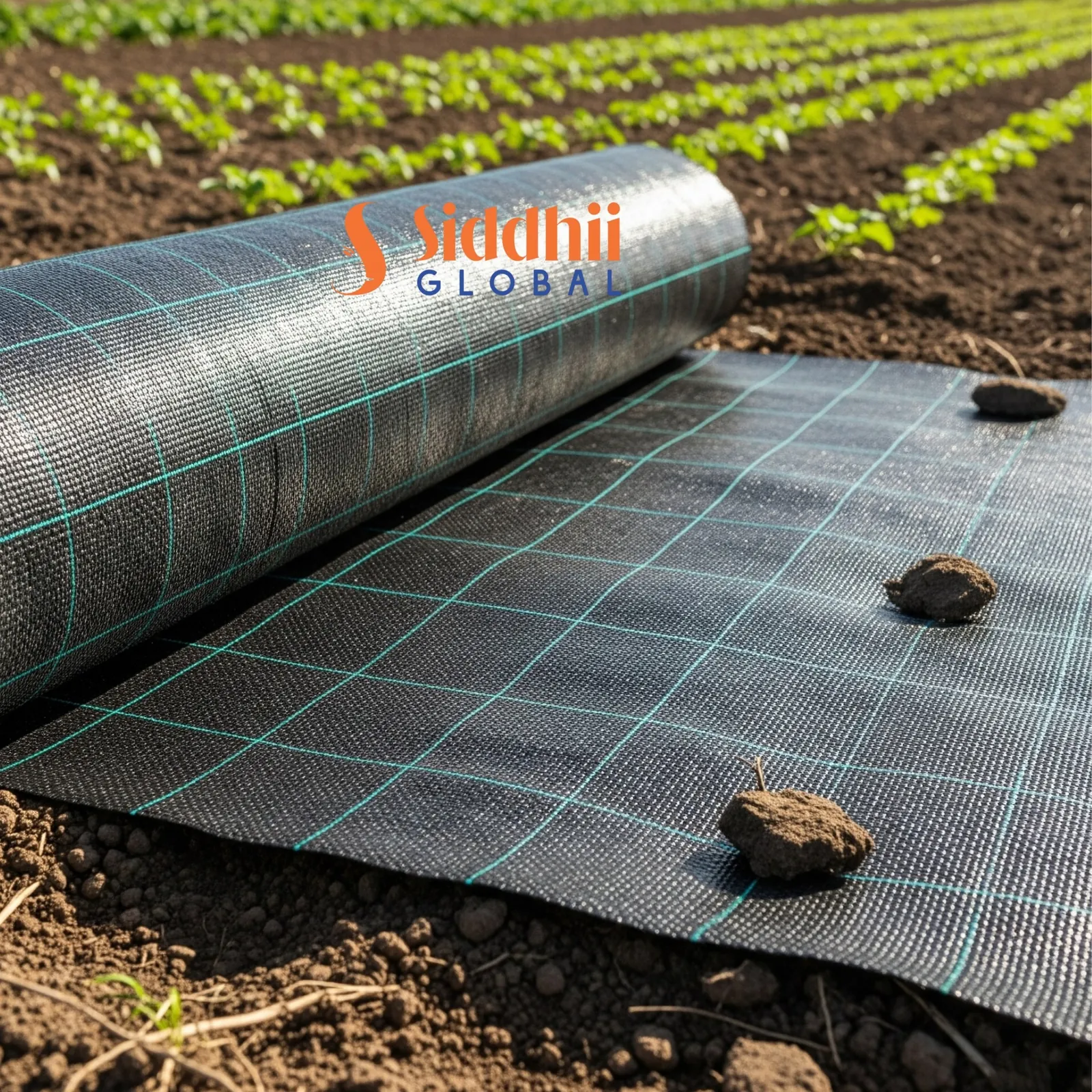
Woven weed mat is polypropylene tape fabric, woven flat, cut into rolls and UV stabilised. The specification sheet has five working parameters.
- Fabric weight: 70 to 150 GSM. Around 90 GSM is the entry point for seasonal beds; 100-125 GSM is the standard for orchards and nurseries; 150 GSM serves high-traffic landscapes and under-gravel installs.
- Widths: 1.0 to 3.3 metre rolls, with 1.83 m and 3.3 m the common landscape sizes; rolls of 50 to 100 metres.
- UV stabilisation: quoted as guaranteed years - 2, 3 or 5. The guarantee should be written, not implied by the word 'treated'.
- Permeability: woven construction passes irrigation and rain through the weave, so water and fertiliser reach roots without pooling on the surface.
- Line markings: printed grid lines every 15-30 cm for accurate planting spacing - a small detail that crews notice daily.
Roll sizes, GSM options and fixing accessories are listed on our weed mat product page for specification-based quoting.
Where Woven Ground Cover Is Specified
- Orchards and vineyards: under-row strips suppress weeds where mowers cannot reach and herbicide is restricted.
- Nurseries and polyhouses: container benches and bed floors stay weed-free and drain freely.
- Landscaping and GN divisions: under gravel and mulch in parks, medians and commercial campuses.
- Open-field vegetables: walkway covers that cut labour through the season - installation economics are worked out in our labour savings guide.
For buyers weighing mat against plastic mulch on the same farm, the decision factors are compared in our weed mat GSM selection guide; in short, mat wins on lifespan, mulch wins on soil warming.
Manufacturing and Quality Control
We weave ground cover on circular looms using UV-stabilised PP tape yarn, then slit and roll to width. QC tracks fabric weight, tensile in machine and cross direction, UV dosage against the declared guarantee and weave density that determines both strength and water passage. Every batch is logged with its UV package, so a 5-year roll is traceable to production records - the document trail procurement teams ask for in tenders.
How to Specify Your Order
Decide GSM from traffic and lifespan, width from your row or bed geometry, and UV years from how long the install must last. Count fixing pins at roughly 2-3 per square metre on edges and overlaps - heavy-wind sites need closer spacing. MOQ starts at pallet level for trials; container programmes for distributors run with mixed GSM loads. Lead time is typically 2-3 weeks. Insist on the written UV warranty and a sample roll from the actual production batch, not a showroom swatch.
Frequently Asked Questions
What GSM weed mat lasts 5 years outdoors?
In practice, 125-150 GSM with a written 5-year UV guarantee is the specification that survives full sun exposure; lighter mats can be stabilised well but the fabric reserve matters in year four.
Does woven weed mat block water?
No - the open weave passes irrigation and rainfall through, which is precisely why it is preferred over impermeable plastic under permanent plantings.
How many pins do I need per roll?
Budget 2-3 pins per square metre: more along edges and seams, fewer in field centres. A 1.83 x 100 m roll typically consumes 400-550 pins on a windy site.
Siddhii Global weaves weed mat and ground cover at its Kalol, Ahmedabad plant for farms, nurseries and landscape distributors worldwide. Share your roll sizes and guarantee period and we will quote with the UV warranty stated up front.