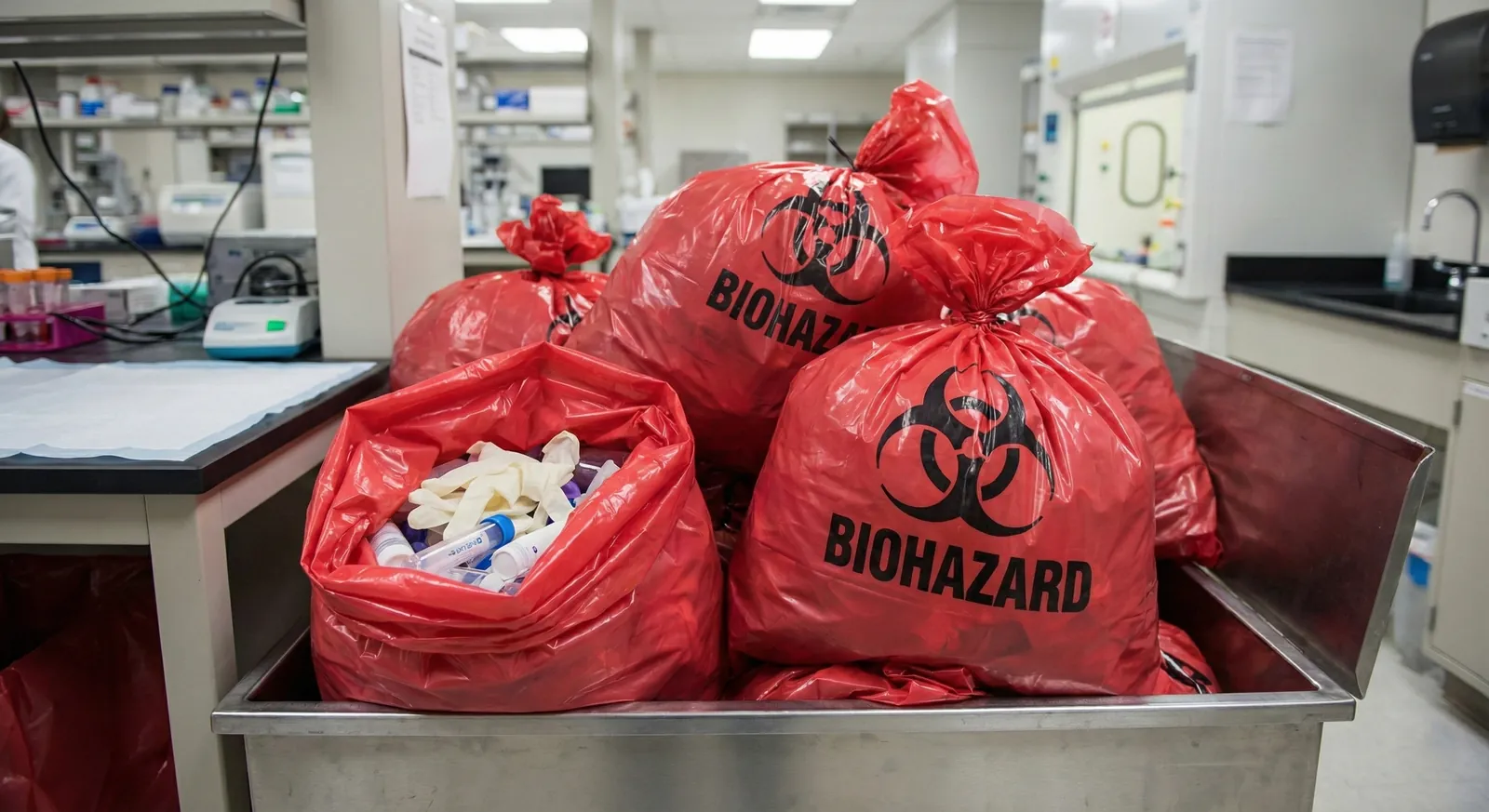
Spain's demand for biohazard bags comes from more than hospitals. The public health network (SNS) and private clinic groups are the anchor, but the veterinary and agricultural sector — Spain runs one of Europe's largest livestock industries — and the food industry's laboratory network add steady, price-sensitive volume. Distributors who understand both channels buy differently: hospital spec on one side, rugged practicality on the other. We manufacture biohazard bags in Gujarat for both.
Hospitals, clinics and laboratories
Spanish healthcare waste practice separates biosanitary waste — residuos biosanitarios — at the point of generation, with infectious streams going into marked, leak-proof bags, yellow dominating the infectious-waste convention. Hospital groups buy ward sizes (600x800mm and 700x1000mm formats) in 50-70 micron with printed biohazard symbols and Spanish text; laboratories add smaller sizes and heavier gauges where sharps-adjacent risk exists. Workplace protection law (Royal Decree 664/1997 on biological agents) drives the discipline: facilities must contain biological risk, and the bag is the first barrier — so buyers test for leak-proof seams and tear resistance, and they re-test deliveries. Our puncture-resistance guide and facility selection guide give your tender team the test frame.
Veterinary, agri-food and the practical spec
Spain's livestock and agri-food economy generates biological waste streams — clinic waste from veterinary practices, laboratory waste from food-safety testing, by-product handling — that buy the same bag families at commercial scale with less ceremony. Here the buying criteria are blunt: gauge honesty, seal strength, print legibility and price per bag. Autoclave-safe grades matter where on-site steam treatment is part of the waste plan (see our autoclave-grade guide), and colour-coded streams beyond yellow follow the facility's own segregation plan (our colour-coding guide maps the scheme).
Route and buying pattern
Mundra to Valencia or Barcelona runs 22-30 days port to port, Algeciras serving southern entries; EU duty on the HS 3923 TARIC line plus 21% Spanish import VAT at clearance. Production 7-10 days after Spanish-language artwork approval; clearance 2-4 days. Spanish distributors typically run quarterly containers — mixed hospital and veterinary SKUs — with private-label print under their own brand. The 21% VAT is cash-flow relevant for growing importers; your asesor will confirm the recovery timeline.
Full specifications sit on our biohazard bags product page, and the general-waste companion range is on our heavy duty garbage bags page.
Frequently Asked Questions
Which sectors buy the most volume in Spain?
Hospital and clinic networks anchor the market; veterinary clinics, agri-food laboratories and research facilities add high-frequency commercial volume. Distributors usually carry both spec families from one supplier.
Do bags need Spanish-language print?
The biohazard symbol is universal, but Spanish stream text is expected on bags and cases for facility tenders. We print to your approved Spanish artwork, both sides if required.
What gauge do Spanish hospital buyers use?
50-70 micron for ward and clinical-area bags, 70-90 micron for laboratories and theatres — with leak-proof seams and tear resistance as the pass/fail criteria on delivery inspection.
What are the import costs?
EU conventional duty on the HS 3923 TARIC line (mid single digits typically) plus 21% Spanish import VAT, recoverable via your VAT process. Your gestor or broker confirms the live line rate.