Stretch film is the last thing applied to a pallet and the first thing blamed when it arrives collapsed. The economics are equally sharp: wrap cost per pallet swings widely with gauge and pre-stretch discipline, so a buyer who specifies film like a professional cuts packaging spend without touching load safety. This guide covers the manual and machine grades we manufacture and the parameters that decide real-world holding force.
Stretch Film Specifications That Matter
- Grades: hand film 15-20 micron, 450-500 mm wide for manual wrapping; machine film 12-15 micron engineered for powered pre-stretch carriages.
- Pre-stretch capability: quality machine film sustains high pre-stretch percentages while retaining force - the property that drops metres per roll cost.
- Cast versus blown: cast for clarity, quiet release and consistent gauge; blown for higher holding force and puncture tolerance on sharp-edged loads.
- Holding force: measured as force-to-load after wrapping, not by feel - this is the number that predicts transit survival.
- Roll consistency: gauge-mapped film without hidden thin bands; inconsistent film jams carriages and breaks mid-wrap.
Grades and roll formats are on our stretch film product page, and gauge mathematics for cost control are worked in our gauge calculation guide.
Where Stretch Film Is Used
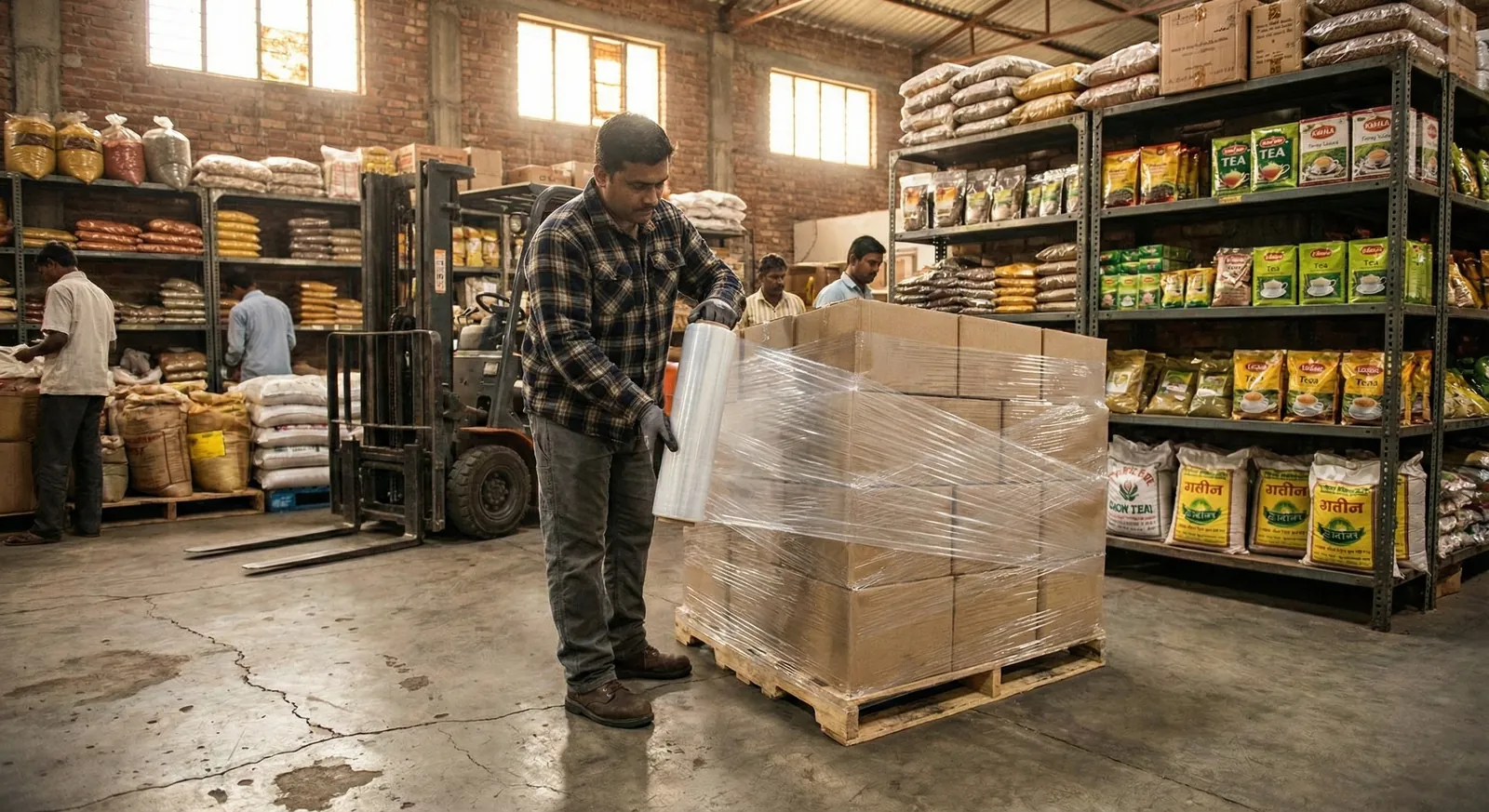
- Pallet unitisation: the core application across FMCG, chemicals, textiles and exports - manual versus machine trade-offs are compared in our manual vs machine guide.
- Bundling and collation: small-width films grouping cartons and profiles.
- Twist wrapping: long profiles, carpets and aluminium extrusions.
- Warehouse restacking: re-securing loads that arrive loosened.
Manufacturing and Quality Control
We cast stretch film in-house with gauge mapping across the web and batch-tested pre-stretch performance on powered carriages. Holding force, elongation at break and cling are logged per batch, and rolls are checked for unwind consistency - the property that keeps machine lines running without mid-roll breaks. Programme buyers receive trial rolls sized to their carriages, because the right gauge on your equipment beats the right gauge on paper.
How to Specify Your Order
State the load: weight, profile sharpness, wrap method (hand or machine and carriage type) and storage route. We quote grade, micron and width, then validate with trial rolls on your line. MOQ starts at pallet quantities for standard 500 mm machine film and 450-500 mm hand film; coloured and specialty films are quoted against volume. Lead time is typically 1-2 weeks. Buyers running powered pre-stretch should ask for the pre-stretch retention curve - it is the honest indicator of film quality.
Frequently Asked Questions
Can machine film be used by hand?
Physically yes, economically no - machine film is stiff to unwind manually and wastes its engineered pre-stretch; hand film with proper cling is cheaper per wrapped pallet.
What micron for a 500 kg pallet?
Light to medium stable loads wrap well on 15-17 micron machine film at good pre-stretch; heavy or sharp-edged loads justify 20 micron or blown construction.
Why does film break mid-roll?
Almost always gauge inconsistency or a winding defect - gauge-mapped production with batch release testing is the manufacturer-side fix, and trial rolls prove it before volume.
Siddhii Global casts manual and machine grade stretch film at its Kalol, Ahmedabad plant for exporters, 3PL warehouses and distributors. Describe your pallet profiles and wrap equipment and we will quote grades with trial rolls for validation.