Shrink film is the pack that gets blamed for every transit failure and credited for none of the successes. When a pallet of bottled water arrives leaning or a multipack splits in the shrink tunnel, the cause is usually gauge chosen by price and a shrink curve nobody matched to the tunnel. This guide sets out how LDPE shrink film is specified from the manufacturing side, for beverage multipacks, can bundles and pallet hoods alike.
Shrink Film Specifications That Matter
- Gauge/thickness: roughly 40-60 micron for bottle and can multipacks; 80-120 micron for pallet hoods and heavy collations.
- Shrink ratio and curve: free-shrink at tunnel temperature matched to your pack geometry - aggressive shrink wraps tight but can crush light packs.
- Sealing behaviour: consistent seal strength at wire or bar temperatures your line actually runs, not laboratory ideals.
- Clarity and gloss: retail multipacks need display-grade clarity; hoods need just enough to read pallet labels through the film.
- Roll format: widths and core sizes matched to your sealing head - mis-matched cores are the classic line-stop complaint.
Gauge options and roll formats are listed on our shrink film product page, and the film-versus-film decision for export units is compared in our stretch vs shrink guide.
Where LDPE Shrink Film Is Used
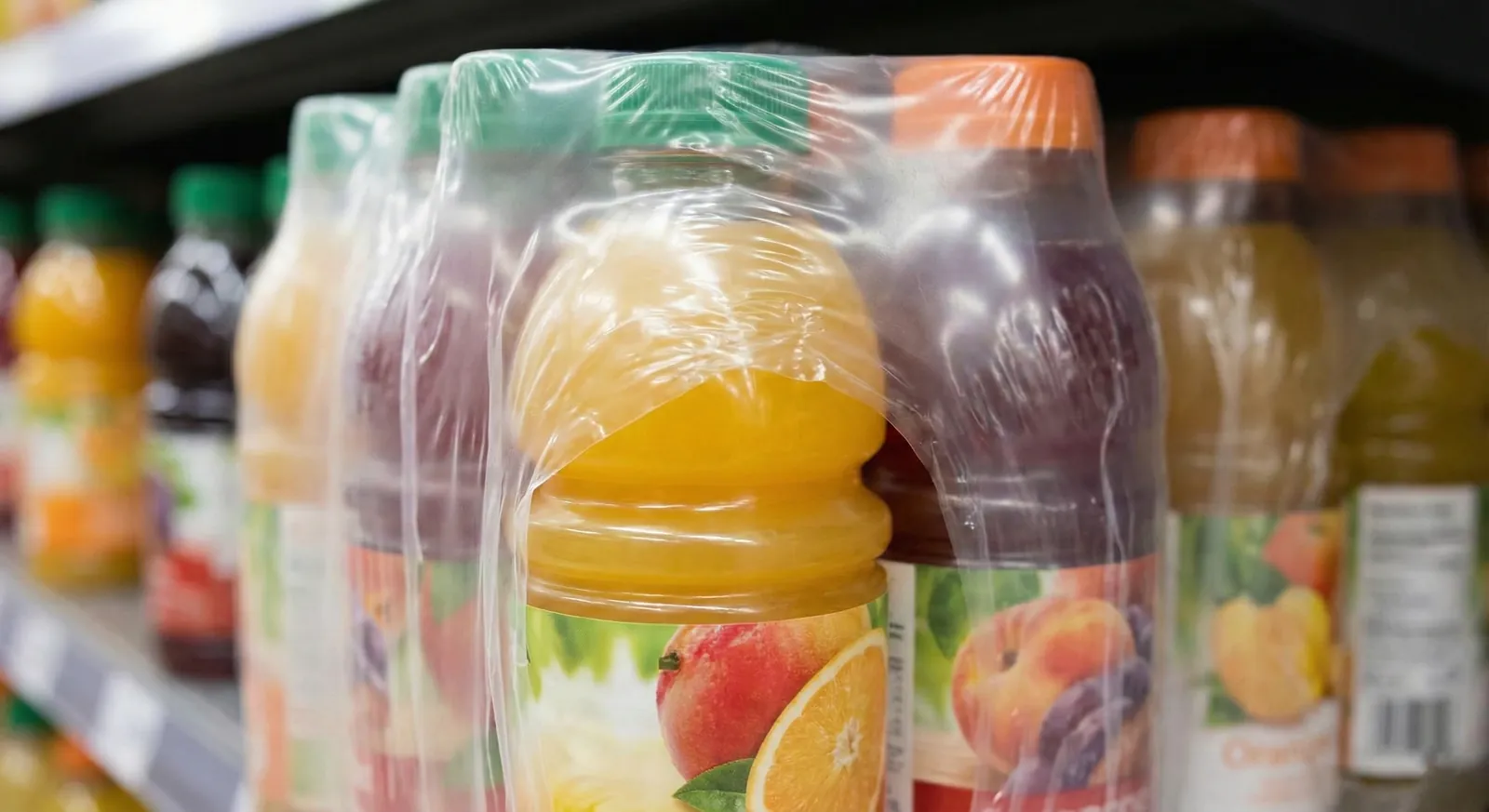
- Beverage multipacks: water, soft drinks and juice bundles that must survive vending and last-mile handling - the beverage case is worked through in our beverage transit guide.
- Pallet hoods: whole-pallet weather and dust protection for outdoor storage and port dwell.
- Can and jar collations: food and chemical packs grouped for retail trays.
- Export unitisation: heavy collations where stretch wrap alone lacks the rigidity a hood provides.
Manufacturing and Quality Control
We extrude LDPE shrink film in-house with melt and cooling profiles tuned for controlled free-shrink and strong seal shoulders. QC per batch covers thickness profile, tensile, free-shrink percentage at standard tunnel temperatures and seal strength on production-representative seals. Rolls are gauge-mapped before winding so no hidden thin band causes random pack failures downstream. For programme buyers we run transit simulations on actual packs - the honest way to prove gauge before a container ships.
How to Specify Your Order
Give us the pack: product mix, collation pattern, tunnel type and line speed. From that we propose gauge and roll format, then supply trial rolls for line validation. MOQ starts at pallet quantities for standard widths; custom widths are quoted against volume. Lead time is typically 1-2 weeks for standard film and 2-3 weeks for custom widths. Buyers switching gauges should plan a two-week line trial window - it is the cheapest insurance in the packaging budget.
Frequently Asked Questions
What gauge shrink film for a pallet hood?
Most pallet hoods run 80-120 micron depending on pallet height and weight; tall, unstable loads need the heavier end plus a top-sheet strategy.
Why does multipack film split at the seal?
Usually a seal-temperature mismatch or a film with inconsistent seal shoulders - gauge-mapped, line-tested film plus a correct sealing bar fixes the majority of split-seal complaints.
LDPE or POF shrink film?
POF wins on presentation clarity for small retail units; LDPE wins on strength, cost and heavy collations like beverages and industrial packs.
Siddhii Global extrudes LDPE shrink film at its Kalol, Ahmedabad plant for beverage brands, distributors and export packers. Send your pack pattern and tunnel specs and we will quote gauge options with trial rolls for line validation.