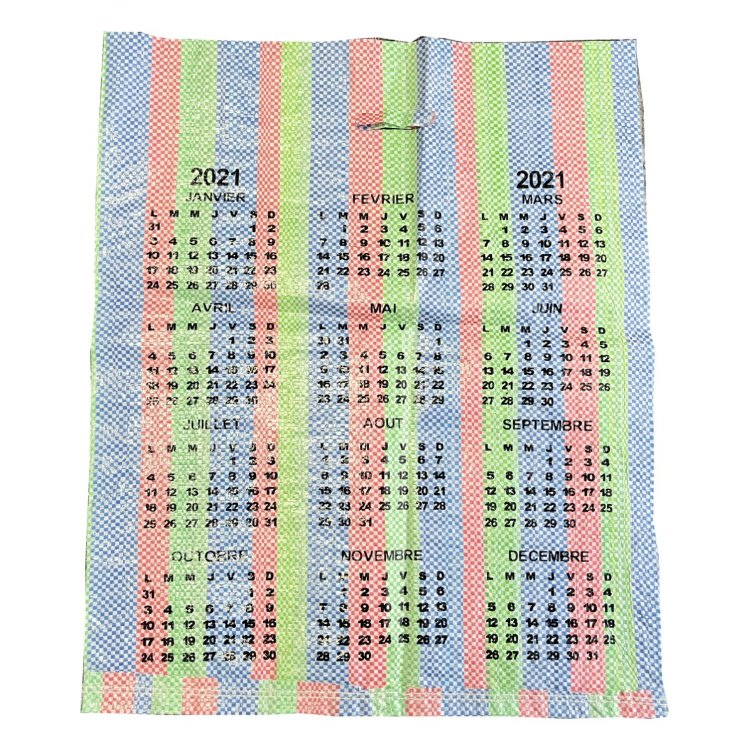
A construction merchant in Manchester, a flour miller in Yorkshire and a sand-and-gravel operator in Kent all buy what looks like the same product: a polypropylene woven sack. Sit through their specifications, though, and the three conversations diverge fast. The merchant cares about print that survives a wet yard, the miller about food-contact compliance and seam dust leakage, the aggregates firm about SWL ratings and drop behaviour on rough handling. That spread is exactly why buying PP woven bags for the UK market works better with a manufacturer who adjusts the spec per application than with a trader selling one catalogue to everyone.
What UK buyers actually spec
Most UK woven sack programmes land in the 60 to 120 GSM band. Unlaminated bags at the lighter end suit sand, topsoil and aggregates where breathability helps; laminated fabric with a 12 to 20 micron PP film layer suits flour, sugar, seed and pet products where dust and moisture control matter. Print runs from single-colour flexo on commodity goods to four-colour process with reverse-printed film for retail-facing SKUs. UV stabilisation is non-negotiable for yard-stored goods — we build six to twelve months of protection into the tape depending on how long bags sit outdoors at UK builders' merchants. Roll stock for automatic filling lines gets its own spec: width tolerance, corona treatment for printing and consistent reel tension matter more than anything else, because a weaving fault that jams a UK packing line costs more than the whole roll saved.
Why sourcing from India works for UK
India weaves more polypropylene fabric than almost anyone, and the cluster around Ahmedabad gives UK importers genuine depth: circular looms, tape plants and printing under one roof, with FCL pricing UK converters struggle to match. Containers sail from Mundra or Nhava Sheva to Felixstowe, London Gateway or Southampton in roughly 22 to 30 days. Duty treatment is friendly — woven polypropylene sacks under HS 6305.33 generally clear at a nil or low rate under the UK Global Tariff (confirm the live line with your broker), with 20% VAT payable on the import value and reclaimable through your VAT return. We quote FOB Mundra or CIF Felixstowe; most repeat UK customers prefer CIF with quarterly call-offs against an annual agreement, which smooths both their stock position and our production planning.
Quality checks before you commit
Three checks separate a reliable sack supplier from a cheap one. First, tensile and elongation testing on the tape — a bag that meets GSM on paper but tears along a warp line will fail in your yard. Second, a drop test on filled bags at the agreed SWL, because lamination hides weak seams. Third, print registration against a signed digital proof, especially on retail SKUs where a mis-registered colour means a rejected delivery at the DC. We retain lot samples and share test data with every shipment, and UK buyers are welcome to run third-party inspection before loading — it costs a few hundred dollars and has caught problems for importers more than once.
Frequently Asked Questions
What is the minimum order for UK imports?
A 20ft container is the practical floor — roughly 15 to 25 tonnes of baled sacks depending on size and GSM. Mixed sizes and GSMs can be combined in one FCL to spread the commitment.
Are PP woven bags duty-free into the UK?
Woven polypropylene sacks under HS 6305.33 typically attract a nil duty rate under the UK Global Tariff; 20% import VAT still applies and is recoverable for VAT-registered businesses. Always confirm the current tariff line before quoting landed cost.
Can you match our existing bag exactly?
Send us a physical sample or the full spec sheet — GSM, width, cut length, lamination, print colours. We counter-sample for approval before production, which keeps the first container honest.
How long does a UK order take door to door?
Production runs 2 to 3 weeks after proof approval and sea freight adds 22 to 30 days to Felixstowe or London Gateway; budget 6 to 8 weeks total for a first order including sampling.
Full specifications, widths and roll options are on the PP Woven Bags and Rolls page, and fabric-only requirements on the Woven Fabric page. For spec selection by product read choosing the right woven bag spec, and for what goes wrong with cheap imports see the importer's guide to high-tensile packaging.