Plastic mulch is the cheapest input on a vegetable farm that changes three outcomes at once: soil temperature at the root zone, moisture held between irrigations, and the weed pressure that decides how many labour days a season consumes. Yet most mulch film complaints we hear at our Kalol plant trace back to one mistake - the film was chosen by price per kilo instead of by micron, width and UV package matched to the crop cycle. This product guide collects what a buyer should actually specify, whether you farm 10 hectares or import containers for distribution.
Mulch Film Specifications That Matter
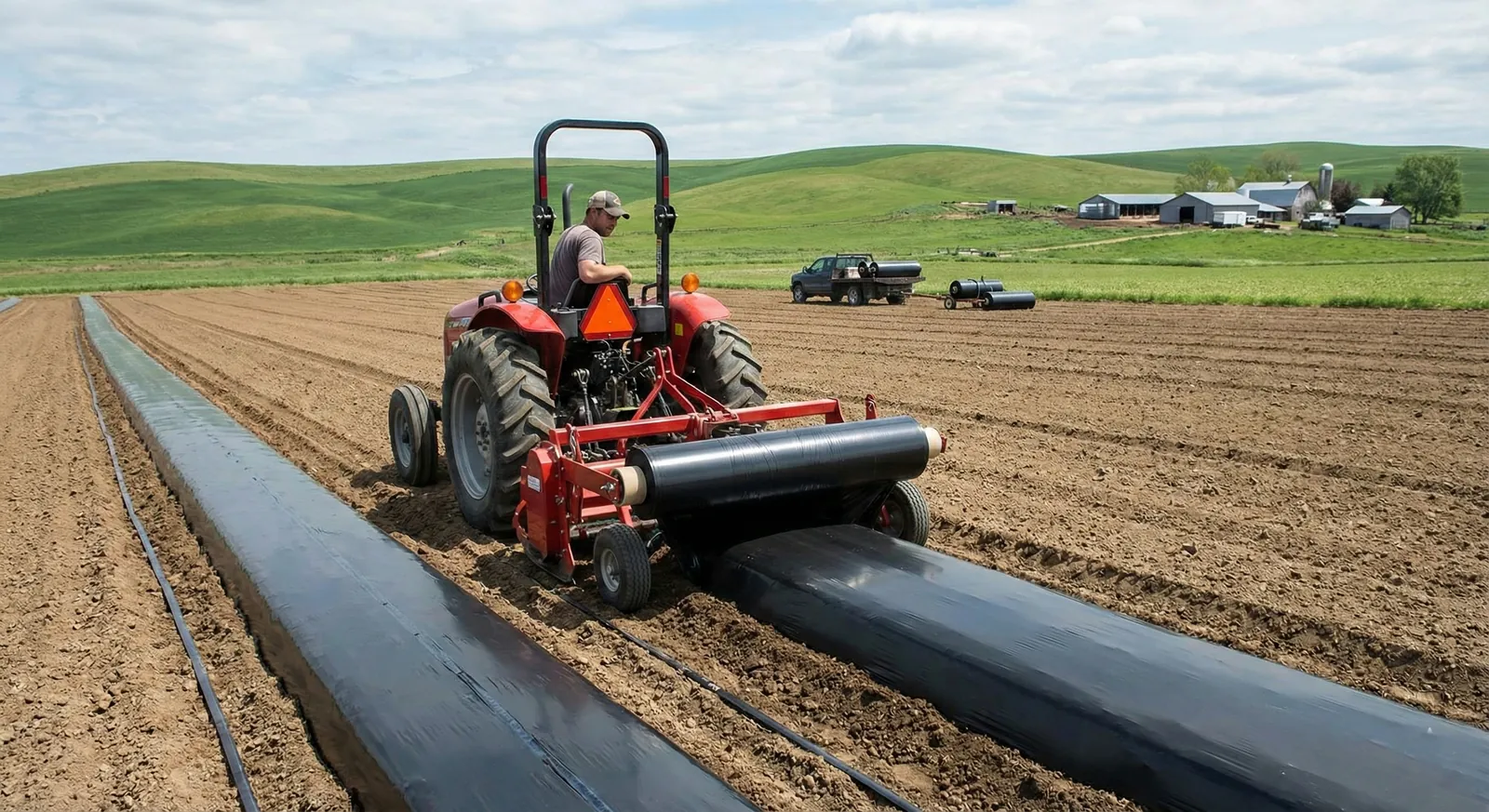
Mulch film is an LDPE or LLDPE sheet laid over raised beds, with the crop planted through pre-punched or field-punched holes. The film is not a generic plastic sheet; every parameter is a decision.
- Thickness: 20 to 100 micron. Thin 20-25 micron film suits short cycles of 8-12 weeks; 30-50 micron is the workhorse for one full season; 60-100 micron is specified for long-duration crops or double use.
- Widths: 0.8 to 1.2 metre standard, wider webs on request. Width must match your bed top plus the tucking edges buried on both sides.
- Colours: black for weed kill and warming, silver-black for aphid and thrips repellence in hot seasons, white-black for cooling the root zone in summer plantings.
- UV package: stabilised for 6, 12, 24 or 36 months of field exposure - matched to crop duration, not the calendar.
- Perforation: factory-punched holes at your spacing, or unperforated film for mechanical or manual punching in the field.
- Roll length: typically 400 to 600 metres per roll, wound on cores that survive mechanised laying.
All of these options are listed on our mulch film product page, where you can request a quotation against your exact bed width and crop calendar.
Where Mulch Film Pays for Itself
Plasticulture is now standard in crops where the economics are visible within one season.
- Vegetables: tomato, chilli, capsicum, brinjal and cucurbits respond with earlier harvest and cleaner fruit that sits off the soil.
- Strawberries and melons: keep berries and fruit dry and blemish-free, the difference between B-grade and A-grade packs.
- Nurseries and floriculture: beds stay workable through irrigation cycles.
- Drip-irrigated fields: the film caps evaporation, so emitter spacing does more work and water bills drop - the savings math is set out in our water conservation guide.
Silver-black film earns a premium in pepper and virus-prone crops because reflective colour measurably reduces sucking-pest landings; black remains the default where weed control is the single objective. Crop-by-crop micron and colour choices are tabulated in our vegetable farming guide.
How We Manufacture and Control Quality
We extrude mulch film in-house on multilayer lines with carbon black and UV masterbatch dosed at the hopper, not surface-coated later. Every production run is checked for thickness consistency across the web, tensile strength in both directions and UV dosage against the declared life. Rolls are inspected for gauge bands and wind quality before packing, because a roll that telescopes in the field costs a laying crew an hour per acre. Export orders ship with a specification sheet stating micron, width, roll length and UV life, so what arrives is what was quoted.
How to Specify Your Order
Before requesting a quote, fix six things: crop and cycle length, bed top width, colour, UV life, punched or unperforated, and packing per pallet. MOQ starts from one pallet for trial orders and scales to full 20-foot containers for distributors; typical lead time is 2 to 3 weeks for production after artwork or specification approval. Buyers in the Gulf and Africa usually standardise on 30 micron silver-black with 12-month UV; European importers order 50 micron white-black for longer strawberry cycles. Whatever your market, ask for UV warranty in writing - it is the parameter traders most often quietly downgrade.
Frequently Asked Questions
What micron mulch film should I use for tomato?
A 120-150 day tomato cycle works well on 30 micron black or silver-black with 12-month UV. Shorter baby-vegetable cycles can drop to 25 micron; monsoon plantings should step up, not down.
Does silver-black mulch really reduce pests?
Reflective mulch disrupts the landing behaviour of aphids, whitefly and thrips, so pressure starts lower - it is a suppression tool that works alongside, not instead of, your spray programme.
Can mulch film be reused for a second season?
Only 60 micron and above with a 24-month UV package holds up for careful double use; standard 25-30 micron film is a single-season product and removing intact is the exception, not the plan.
Siddhii Global manufactures mulch film at its Kalol, Ahmedabad plant and exports to more than 30 countries alongside its wider agriculture range. Send us your crop, bed width and cycle length and we will quote the film that fits - with the UV warranty on paper.