Australian orchards, vineyards and nurseries run some of the most demanding ground cover programmes anywhere: southern-hemisphere sun that destroys generic fabric, a border process that inspects everything, and buyers who ask about end-of-life before price. The import path from India is well established — here are the Australian specifics that decide whether a ground cover consignment clears smoothly and performs for years.
What Australian buyers spec
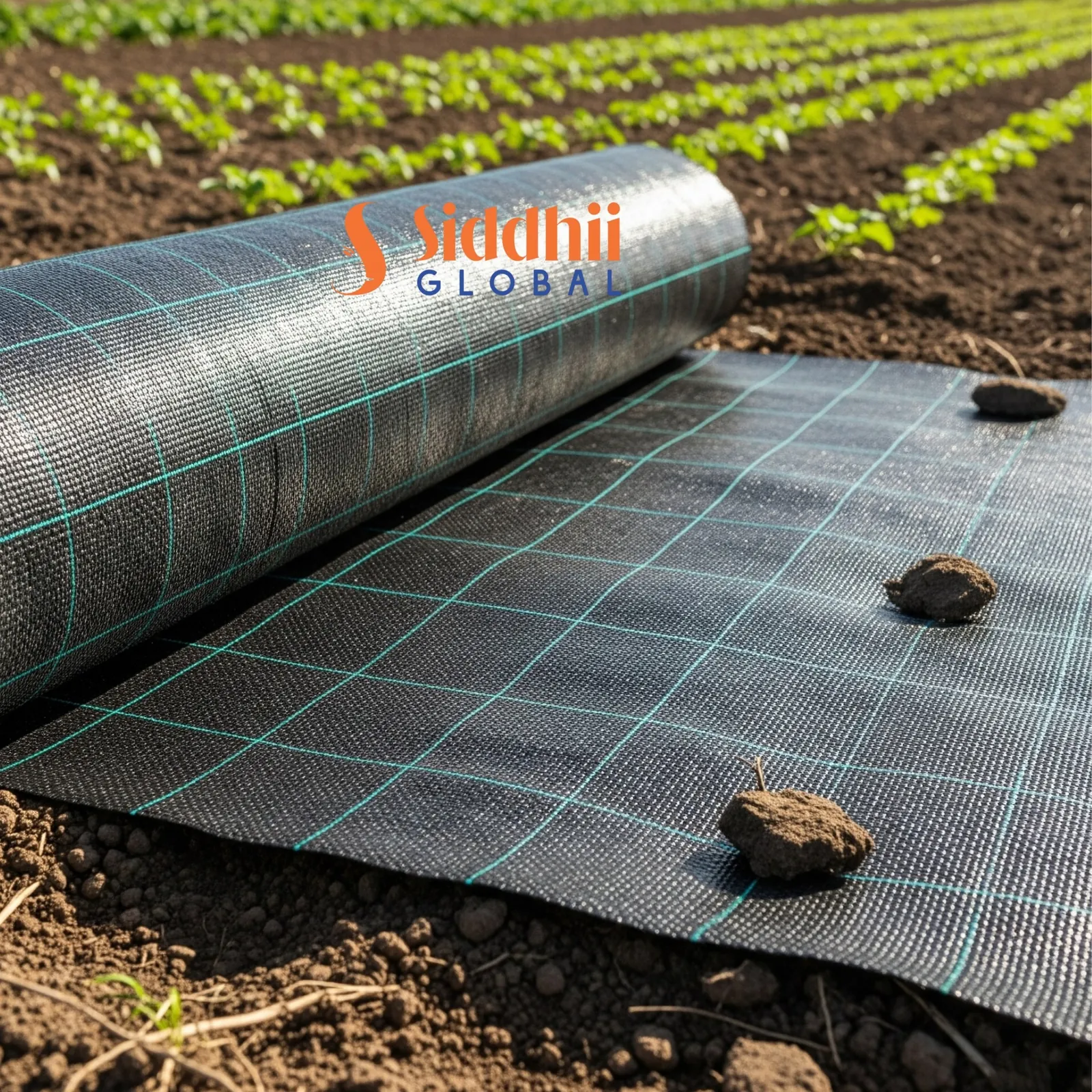
The workhorse fabric runs 100 to 150 GSM woven polypropylene with UV stabilisation validated for southern-hemisphere irradiance — the sun here is harder on polypropylene than northern packages assume, and multi-year service life requires the package built into the tape, not sprayed on. Nursery floors run the heaviest grades under pot traffic; orchard and vineyard rows run strip widths of 1.0 to 1.5 metres under drip lines; landscape contractors run full-cover rolls with marked grid lines where layout precision matters. Water permeability is the non-negotiable: irrigated Australian beds need water through and light blocked, and the weave geometry that delivers both is what separates real ground cover from plastic sheeting.
Biosecurity, duty and GST
DAFF biosecurity applies as to every Australian consignment: clean bale and roll packing, the packing declaration and container cleanliness statement ship with each order as standard, with loaded-container photographs for the file — fabric bales packed clean of plant material clear in days, sloppy packing invites inspection and demurrage. Duty on woven polypropylene ground cover runs low to nil on the general rate under the woven synthetics headings (your broker confirms the exact line), with AI-ECTA preferential access available on many Indian textile lines when a certificate of origin is filed; 10% GST applies on landed value and is creditable. Transit from Mundra to Melbourne runs 25 to 35 days, with Brisbane and Fremantle serving their regions.
Verification and the program calendar
Third-party pre-shipment inspection on first orders is routine — GSM, weave, UV validation and roll counts verified before loading, report shipped with the container. The program calendar matters because Australian planting and re-laying windows wait for no importer: nursery and landscape stock confirmed one to two cycles ahead lands in time, stock ordered late misses the season. End-of-life is part of the Australian conversation — fabric that lifts clean and dry has real value into collection programmes, and we supply removal guidance with every order.
Frequently Asked Questions
What GSM suits Australian orchard rows?
100 to 150 GSM strip widths under drip lines, with UV built for southern-hemisphere sun — nursery floors run the heaviest grades.
What DAFF documents arrive with the shipment?
Packing declaration, container cleanliness statement and standard trade documents, issued with every consignment so clearance runs on schedule.
What duty applies from India?
Low to nil on the general rate under the woven synthetics headings, with AI-ECTA preferential treatment available on many Indian lines with a certificate of origin; 10% GST is creditable.
How far ahead should seasonal stock be ordered?
One to two cycles before the planting or re-laying window: production plus ocean runs 8 to 10 weeks, and the stock should land before the season.
Fabric specifications are on the Weed Mat (Ground Cover) page. For the UV strategy read the UV stabilisation guide, and for other Australian import lines see the Australia import guide.