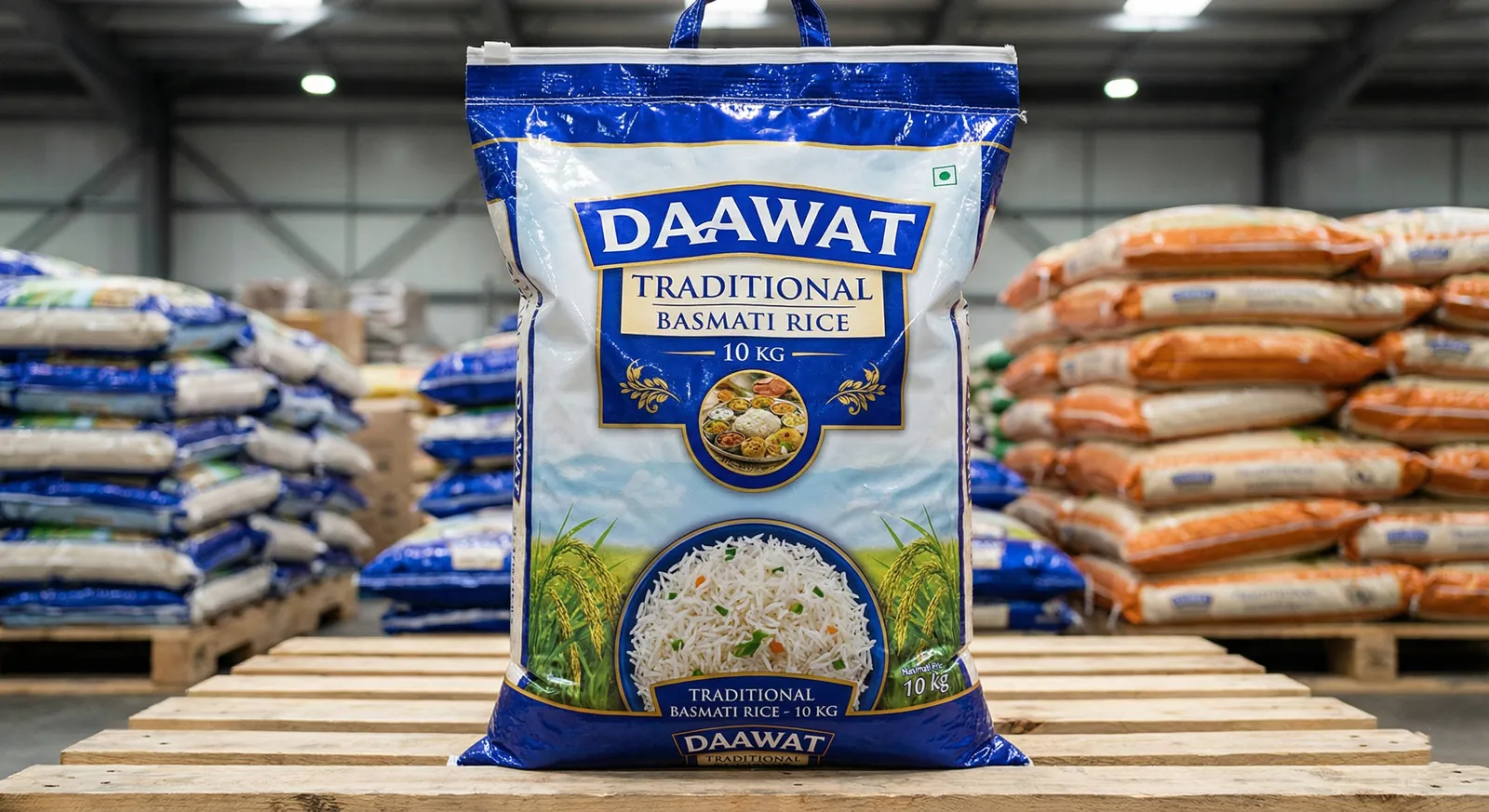
Walk a German or French pet shop aisle and the 15 kg premium kibble bags you see are almost certainly BOPP laminated woven polypropylene. The construction wins on three fronts that European retail cares about: reverse rotogravure printing traps photographic artwork under the film so it cannot scuff off on the shelf, the laminate gives a moisture barrier that paper simply cannot match in humid storage, and the woven core carries 5 to 25 kg fills without the interleaved tears that annoy logistics teams. For EU importers the conversation is usually about print quality expectations, documentation and where the real MOQ floor sits.
Print quality and artwork expectations
BOPP bags are printed reverse on film before lamination, which means up to eight colour photographic artwork with fine gradients reproduces faithfully, including food photography that flexo print on paper struggles with. What we need from European brands is separated vector artwork with pantone references and a hard proof approval cycle; the film proof we send matches the production press condition closely, so shelf colour surprises are rare. Matte, gloss and metallised laminate finishes are all standard options, and a soft-touch matte over photographic print has become the dominant look for premium EU pet food lines.
Barrier, documentation and MOQ reality
For moisture-sensitive fills like pet food, flour, seeds and milk powder, the laminate plus an optional internal liner keeps product stable through long European distribution chains. Material documentation matters in the EU: we supply composition declarations so your compliance team can screen against applicable food-contact and packaging legislation, and we keep artwork archived for repeat orders so seasonal SKUs stay consistent. On MOQ, a realistic floor is one 20 foot container split across up to four SKUs, which for a mid-size pet food brand is roughly a month of retail volume. Lead time runs four to five weeks including gravure cylinder making for new artwork.
Frequently Asked Questions
How does BOPP printing compare with paper bag printing?
Reverse rotogravure on BOPP delivers photographic, high-gloss or matte artwork that survives abrasion, while paper relies on surface inks that scuff. For premium retail shelves the visual difference is immediate.
Are BOPP laminated bags suitable for pet food in the EU?
Yes, they are widely used for 3 to 25 kg pet food, with an internal liner for high-fat kibble. We provide material composition declarations to support your EU compliance review.
What is the minimum order for custom printed BOPP bags?
One 20 foot container, split across up to four artworks, is the practical floor because gravure cylinders and lamination setup are per-design costs.
Can I get matte finish with photographic print?
Yes, matte lamination over reverse-printed film is a standard combination and gives the soft premium look common in European pet food and seed packaging.
Construction options and size charts are on the BOPP Bags and Rolls page. For a printing technology deep-dive read rotogravure vs flexographic printing, and for a construction comparison see BOPP vs regular PP woven bags.