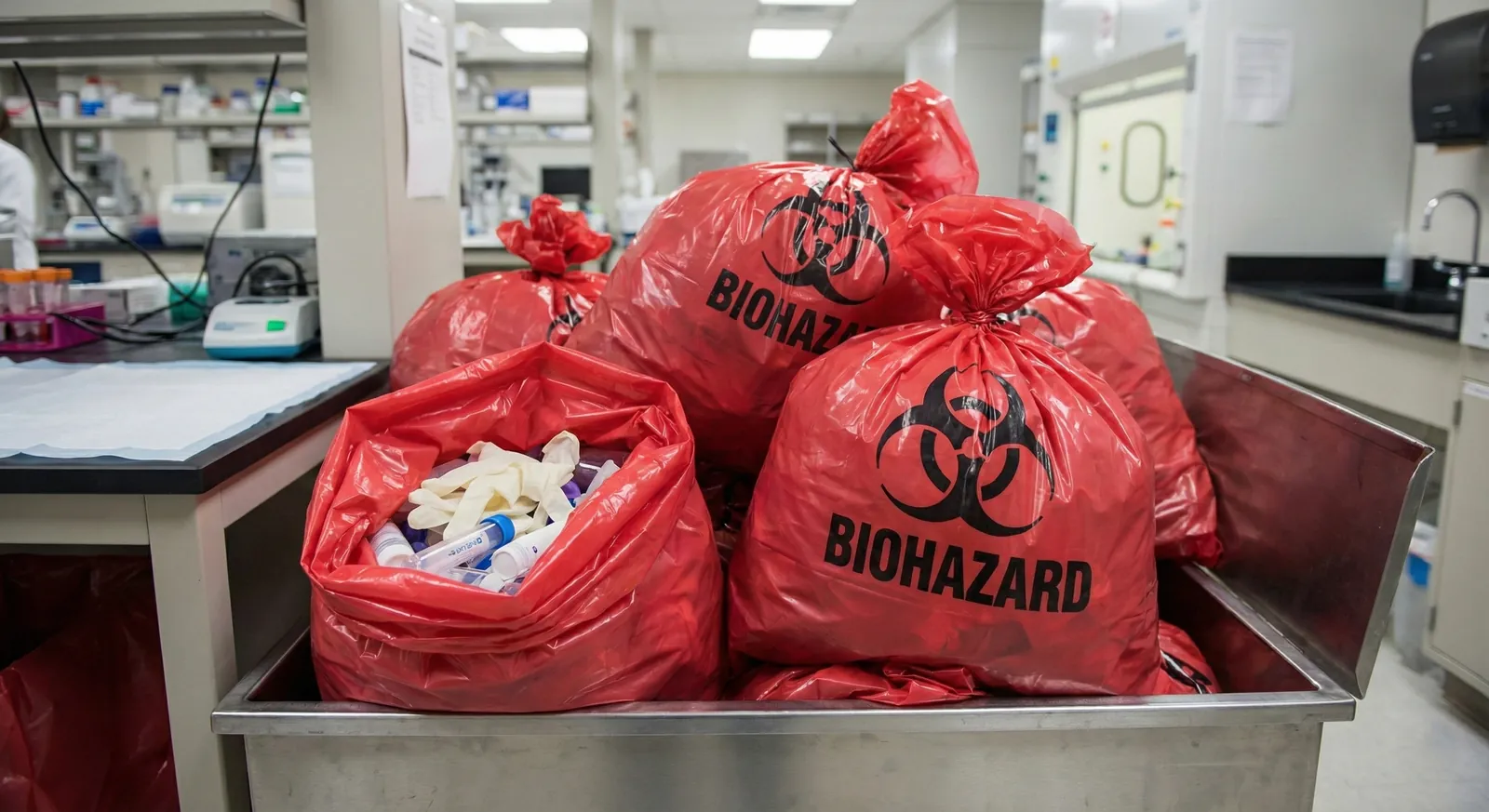
Quality testing is the backbone of reliable biohazard bag manufacturing. Unlike ordinary packaging bags, biohazard bags are used to contain potentially dangerous infectious and hazardous waste, making their performance and reliability a matter of health and safety, not just convenience. A defective biohazard bag that leaks or tears during handling can expose healthcare workers, waste handlers, and the environment to infectious materials, creating serious health risks and potential liability issues for the healthcare facility. At Siddhii Global, we have implemented a comprehensive quality testing program that covers every aspect of biohazard bag performance, from raw material inspection to finished product testing, ensuring that every bag that leaves our facility meets our zero-defect quality standards.
The first and most fundamental test is thickness verification. The thickness of a biohazard bag directly determines its strength, puncture resistance, and leak resistance, and maintaining consistent thickness throughout the bag is essential for reliable performance. We measure the thickness of every batch of bags using precision micrometers at multiple points across the bag surface, verifying that the thickness meets our specifications and is consistent from edge to edge and from top to bottom. Any bags that fall below the minimum thickness specification are rejected and recycled, ensuring that only bags that meet our exacting standards reach our customers.
Leak testing is perhaps the most critical quality test for biohazard bags, as the primary function of the bag is to contain waste without leakage. We perform leak testing by filling bags with a colored liquid and subjecting them to pressure and handling simulations that replicate the stresses the bags will experience during real-world use. Any bag that shows signs of leakage at the seams, closure, or surface is rejected. We also perform drop testing, where filled bags are dropped from a specified height onto a hard surface to simulate the impact of bags being handled and loaded into waste containers. This test verifies that the bags can withstand the rough handling that is common in healthcare waste management without rupturing or leaking.
Tensile strength testing measures the force required to tear the bag material, verifying that the bags have sufficient strength to withstand the stresses of filling, handling, and transportation. We test tensile strength in both the machine direction and the transverse direction of the bag, as well as the strength of the heat-sealed seams, which are often the weakest point of the bag. Additional tests include color fastness testing to verify that the bag color and printing do not fade when exposed to light or moisture, and compatibility testing to verify that the bag material is not degraded by common medical waste substances such as blood, disinfectants, and laboratory chemicals. Every test is documented and the results are stored in our quality management system, providing complete traceability from raw material to finished product. Contact our quality assurance team at +91 90168 44050 for detailed information about our testing protocols.