The Netherlands concentrates healthcare, laboratory and logistics density in a country you can cross in two hours — which makes it an efficient market to supply and an unforgiving one to supply badly. Dutch buyers of biohazard bags are pragmatic people with complete checklists: classification, marking, film tests, VAT mechanics, packaging duties. This checklist assembles the answers our Dutch distributor and facility accounts work from.
Classification and marking: UN 3291 and ADR
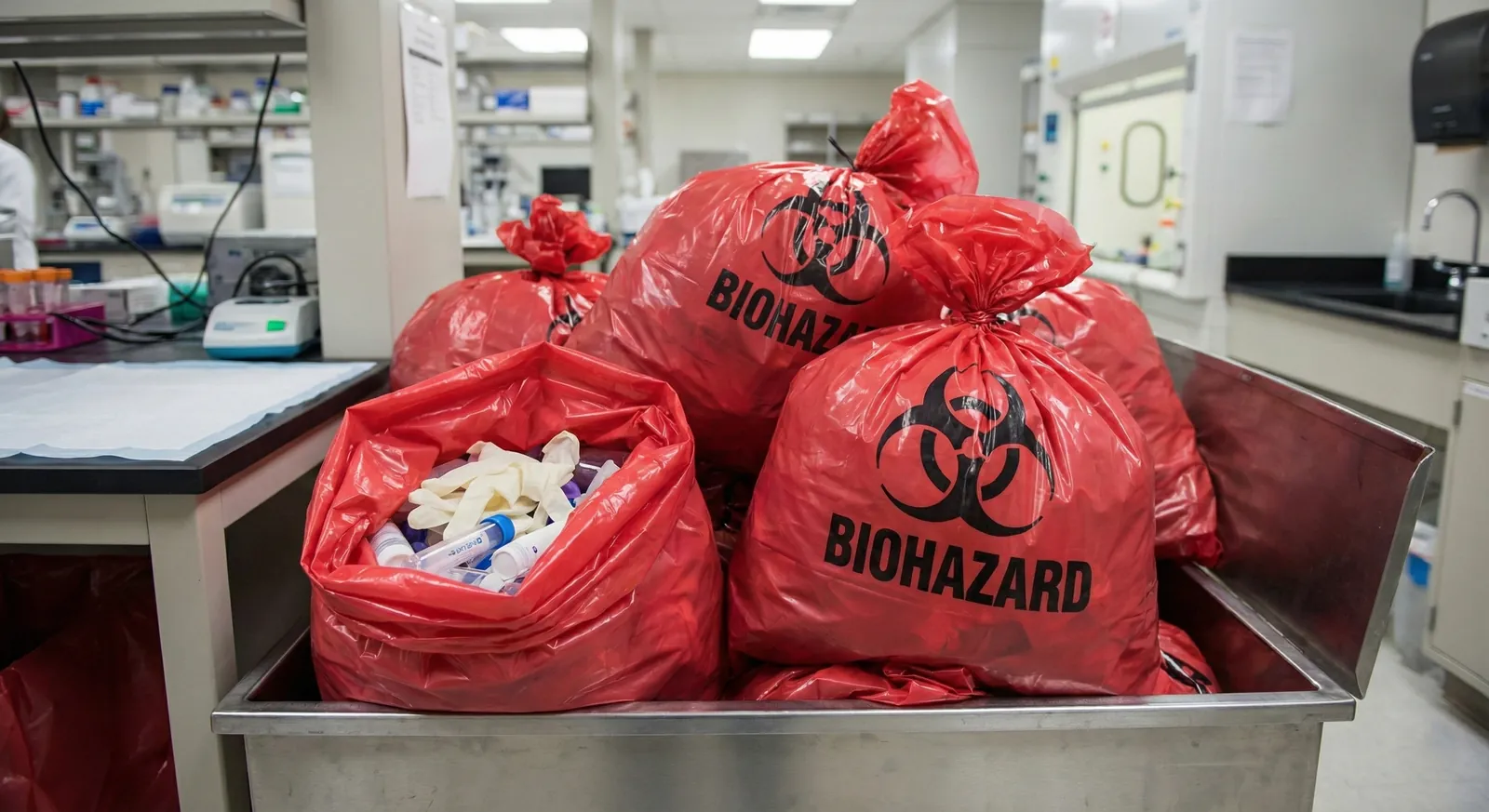
Dutch healthcare waste policy aligns with the European framework: infectious healthcare waste is segregated at source, contained in leak-proof marked bags, and where it moves on public roads the ADR rules apply with UN 3291 (clinical waste, unspecified, n.o.s.) as the classification for Category B material. Buyers verify print legibility of the biohazard symbol and stream text, colour consistency per the facility's waste plan (yellow dominates infectious streams in Dutch practice), and film performance — leak-proof seams, tear resistance, puncture tolerance for sharps-adjacent waste. Our colour-coding guide and facility selection guide give buyers the full decision frame.
The money mechanics: Article 23 and packaging duty
Two Dutch specifics make the import economics friendlier than neighbours expect. First, Article 23 VAT deferment: importers with Article 23 authorisation pay no import VAT at the border at all — the VAT flows through the periodic return instead, which protects your cash flow on every container through Rotterdam. Ask your Dutch accountant to arrange the authorisation before the first shipment; it is routine and takes weeks, not months. Second, packaging producer responsibility: as the importer placing packaged bags on the Dutch market you report packaging weights under the national packaging decree framework — our per-case weights feed the declaration. EU duty follows the HS 3923 TARIC line at mid single digits typically.
Quality checklist before you commit a container
Run this list on pre-shipment samples: tensile and elongation to ASTM D882 (elongation is what saves a bag meeting a sharps bin corner); leak testing on finished seams; print registration on both sides; gauge verification at five points across the web; batch traceability to the production date. For on-site steam treatment streams, autoclave performance records at your facility's cycle parameters — see our autoclave-grade guide. Rotterdam handles the entry: Mundra to Rotterdam runs 22-28 days ocean, clearance 2-4 days with Article 23 in place. Plan five weeks PO to warehouse, and note Dutch buyers' habit of annual agreements with monthly or quarterly deliveries — steady volume, steady spec, steady price.
Full sizes and grades sit on our biohazard bags product page; the puncture-resistance test set is explained in our hospital procurement guide.
Frequently Asked Questions
How does Article 23 change my landed cost?
It removes the import VAT cash payment at the border — the 21% flows through your periodic VAT return instead. That is working capital freed on every container, not a tax saving; the duty itself is unchanged.
Which markings must the bags carry?
The biohazard symbol plus your facility's stream text in the agreed language, and UN 3291 identification where the waste stream and transport plan require it. We print to approved artwork on both sides.
What tests should a Dutch buyer ask for?
Tensile/elongation (ASTM D882), leak testing on seams, puncture and tear data, gauge verification and autoclave performance for treatment-stream grades — all issued as batch certificates with the shipment.
What lead time should we plan on?
Production 7-10 days, ocean 22-28 days Mundra to Rotterdam, clearance 2-4 days. Five weeks PO to warehouse in normal conditions; annual agreements lock quarterly delivery slots.