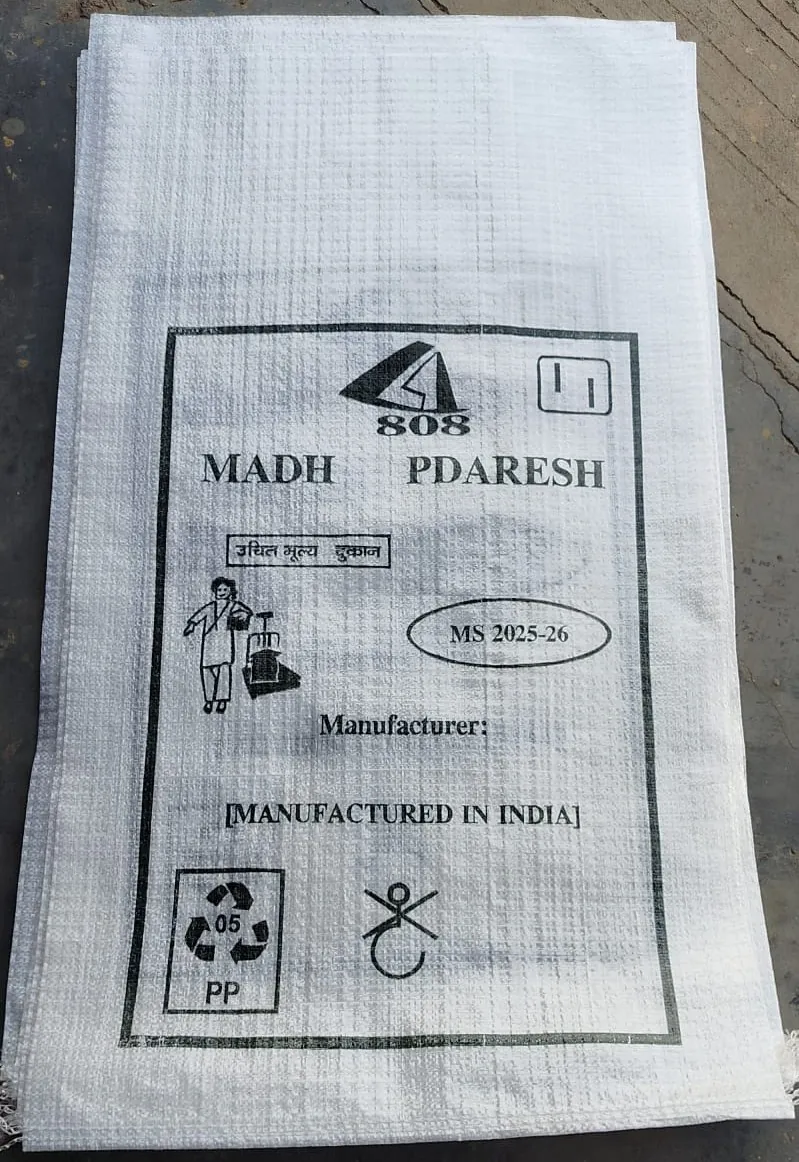
Quality assurance is the cornerstone of reliable anti slip bag manufacturing. Without rigorous testing at every stage of production, there is no way to guarantee that the finished bags will perform as expected under real-world conditions. At Siddhii Global, we have invested heavily in our in-house testing laboratory, equipping it with state-of-the-art testing instruments and training our quality assurance team to perform a comprehensive battery of tests on every batch of anti slip bags we produce. This guide provides a detailed overview of the testing methods we use to ensure that every bag that leaves our facility meets our zero-defect quality standards.
The coefficient of friction (COF) test is perhaps the most critical test for anti slip bags, as it directly measures the effectiveness of the anti-slip coating. This test is performed using a calibrated tribometer, which measures the force required to initiate sliding between two surfaces. At Siddhii Global, we test the COF of our anti slip bags in multiple conditions: dry surface at room temperature, wet surface to simulate humid conditions, and after UV exposure to simulate outdoor aging. Our standard requires a minimum COF of 0.5 for dry conditions and 0.4 for wet conditions, which is significantly higher than the COF of regular woven bags, which typically measures between 0.3 and 0.4 in dry conditions.
Tensile strength testing measures the maximum force that the fabric can withstand before breaking. This test is performed on both the warp (lengthwise) and weft (widthwise) directions of the fabric to ensure that the bag has sufficient strength in all directions. We test tensile strength at both the fabric level and the finished bag level, including the strength of the seams, which are often the weakest point of a woven bag. Our tensile testing machine applies a steadily increasing force to the sample until it breaks, recording the maximum force and the elongation at break. The results are compared against our specifications and the relevant Indian and international standards to ensure compliance.
UV resistance testing is essential for anti slip bags that may be stored outdoors or in areas with significant sun exposure. Prolonged UV exposure can degrade polypropylene fabric, causing it to become brittle and lose its strength. We test UV resistance by exposing fabric samples to accelerated UV aging in a QUV weatherometer, which simulates years of outdoor exposure in a matter of weeks. After exposure, the samples are tested for retained tensile strength and COF to verify that the UV stabilizers in our fabric are providing adequate protection. We also perform burst strength testing, which measures the bag's ability to withstand internal pressure from the product, and drop testing, which simulates the impact of the bag being dropped during handling.
Additional tests that we perform on our anti slip bags include seam strength testing, which verifies that the stitching can withstand the rated load; color fastness testing, which ensures that printed designs do not fade or bleed; and food safety testing, which verifies that food-grade bags do not release any harmful substances into food products. Every test is documented and the results are stored in our quality management system, providing complete traceability from raw material to finished product. This comprehensive approach to quality assurance is what makes Siddhii Global the most trusted name in anti slip bag manufacturing in India. Contact our quality assurance team at +91 90168 44050 for more information about our testing protocols.