German wholesale buyers do two things that decide everything else in a trash bag purchase: they read data sheets properly, and they ask about the VerpackG before they ask about price. Sourcing trash bags and rolls into Germany from India works well for Großhandel (wholesale) and janitorial distributors precisely because it is a documentation-driven market — if your paperwork is right, the price advantage holds; if it is not, the shipment sits. We export to German distributors from our Gujarat plant, and here is how the working relationship runs.
Product logic: what actually moves in Germany
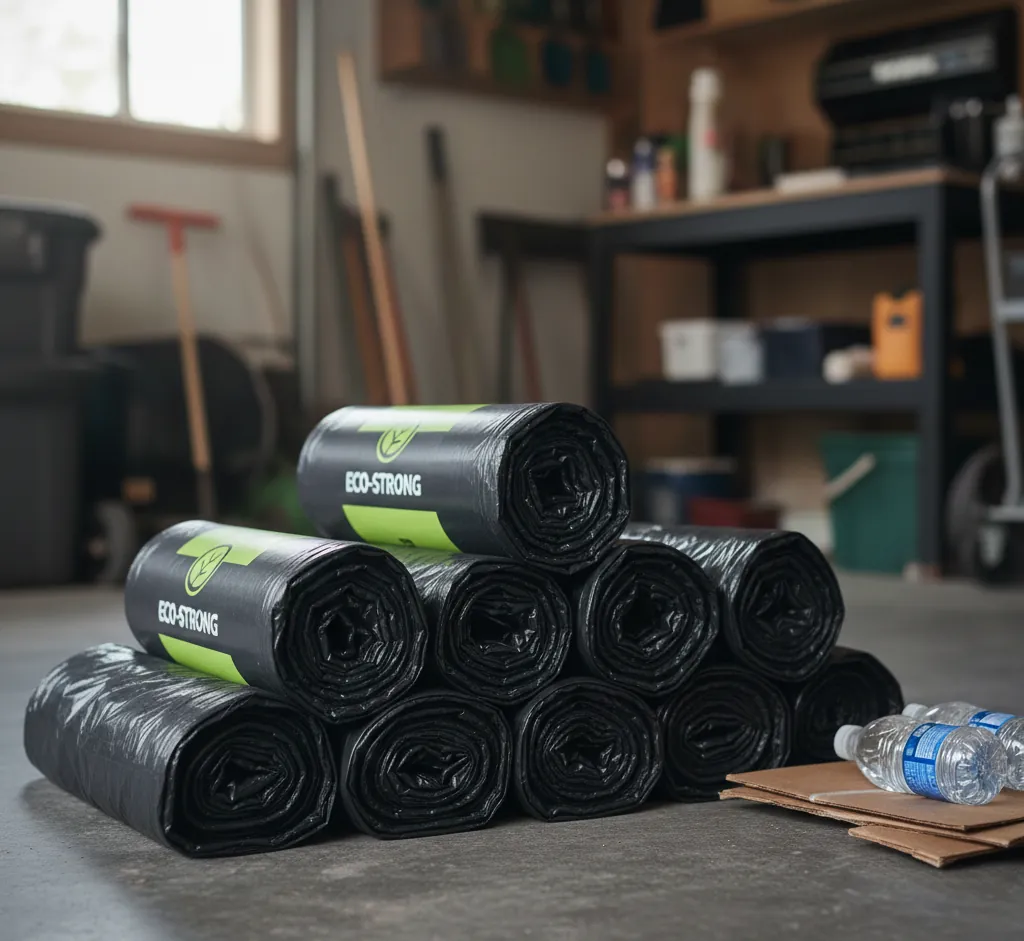
The German market splits cleanly. Retail-format rolls (the household Müllbeutel market) belong to domestic converters; the import opportunity is commercial and janitorial volume — 60L, 120L and 240L bin liners for offices, hotels, facility management and municipal contractors, plus 70-140L sacks for the waste industry. Gauge discipline matters: German buyers spec 40-60 micron for commercial 120L work and 60-90 micron for 240L municipal lines, and they check delivered film against the spec with their own gauges. Colour streams follow German waste habits — black for Restmüll (residual), yellow-sack logic where it applies, blue and green for paper and organics in commercial settings, clear for inspection. Outdoor kerbside sacks should be made to EN 13592, the European refuse sack standard, and German tenders increasingly name it. Star-seal bottoms, coreless or cored rolls, boxed sacks — all standard formats on our line.
VerpackG and LUCID: the question you will get
Germany's Packaging Act (VerpackG) requires anyone who commercially places packaged goods in Germany to register with the Zentrale Stelle Verpackungsregister — the LUCID register — and licence the packaging volumes through a dual system. As the importer of record, your company carries that obligation for the cases and any secondary packaging you place on the market; it is your registration, your licence fee, and German retail and wholesale partners will check your LUCID number before they order. We support the file with component weights per case so your licensing declaration is accurate. Separately, import duty on HS 3923.21 runs at the EU rate for the specific TARIC line and 19% import VAT applies at clearance — recoverable through your normal VAT process.
Container economics and the route
A 40ft high cube takes 20-24 pallets of cased rolls, 18-22 tonnes. German distributors typically split containers across their core size range with one or two colour variants — mixed-SKU loading is routine for us. Mundra to Hamburg runs 24-30 days port to port; Bremerhaven and Rotterdam (with a short European feed) cover the north well. Production is 7-10 days after artwork sign-off for private label; plan five to six weeks PO to warehouse door and build in buffer around Chinese New Year and pre-Christmas demand, when German janitorial volume peaks and every freight schedule tightens.
The full format range sits on our trash bags and rolls page, and for the heavy gauge municipal segment see our heavy duty garbage bags line. The refuse-sack standard itself is covered in our EN 13592 wholesale guide for Europe.
Frequently Asked Questions
Who registers under VerpackG — us or you?
You, as the importer placing packaged goods on the German market. We supply the per-case packaging weights and material breakdown that your LUCID declaration and dual-system licence need.
Can you certify sacks to EN 13592?
We manufacture outdoor refuse sacks to EN 13592 requirements and support the file with test reports from accredited labs your tender team can verify. Lead time for the full document set is a few days once the SKU is fixed.
What is the duty and VAT on entry?
The EU conventional rate for the specific HS 3923.21 TARIC line (mid single digits typically) plus 19% German import VAT, recoverable via your VAT return. Your broker confirms the live line rate before you price.
Do you supply private label for German wholesale?
Yes — German-language case print, your brand, gauge and colour per your range plan. Artwork approval takes about five working days; production follows in 7-10 days.