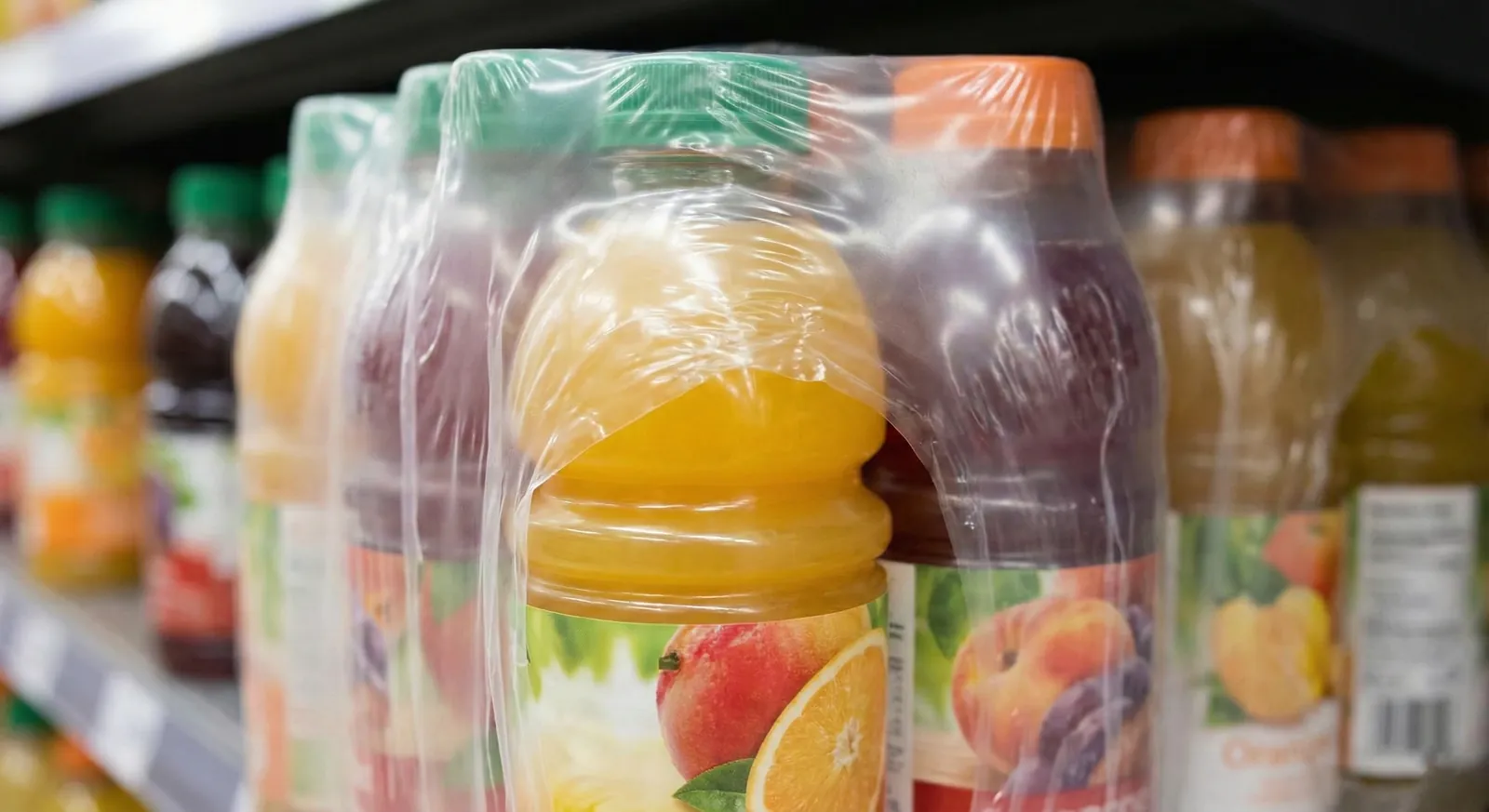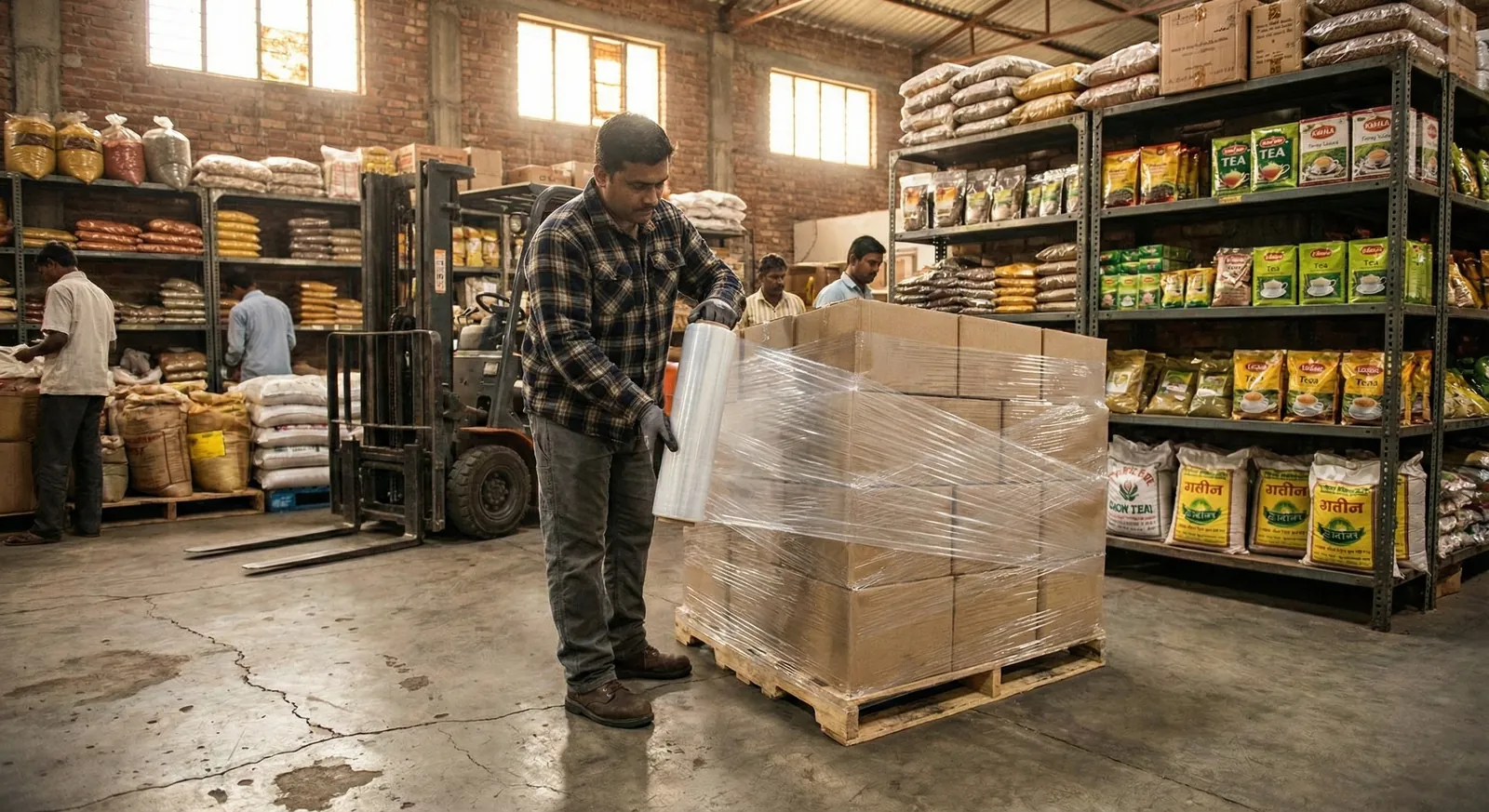
The Netherlands palletises more perishable value per hectare than any country in Europe. Flowers out of the Westland and Royal FloraHolland, bulbs from the Bollenstreek, food from the Venlo corridor, everything else through Rotterdam — and every one of those pallets gets wrapped before it rolls. Stretch film in the Dutch market is therefore a throughput product: buyers care about wraps per hour, film per pallet and zero breakage on the carriage, in that order. We manufacture manual and machine grade stretch film in Gujarat for exactly this kind of customer.
Horticulture: fast cycles, delicate loads
Dutch horticulture logistics wrap at speed — cages of flowers and trolleys of potted plants move through auction and distribution cycles in hours, and the wrap has to hold without crushing. The specs that win here: softer film with high elongation at lower containment force, hand rolls for the trolley and cage runs, and machine grades tuned for light-to-medium loads where over-wrap damages product. Clear film dominates because seeing the product is part of the job. Where security matters (high-value bulb and plant shipments), black or tinted film marks the load. The film-selection frame is in our manual vs machine guide.
Food logistics and the Venlo corridor
Venlo and the southern food hubs wrap mixed pallets at industrial rhythm — and this is where high-pre-stretch machine film earns its keep. Powered carriages running 200-300% pre-stretch on 17-20 micron film cut film per pallet 20-30% against standard 23 micron wraps, and at hub volumes that is the difference finance sees on the packaging line every month. One-sided cling is the default so pallets separate cleanly in the truck; silent-unwind grades matter in older warehouses more than buyers admit. Our gauge-calculation guide walks the per-pallet arithmetic your customers will run on any quote.
Rotterdam distribution and export loading
RDC pallets and export containers put different demands on film: long transit, humidity shifts, handling by forklifts that do not know your pallets personally. Higher-gauge machine film with strong tear propagation resistance survives that; vented and mesh-style wraps hold niche uses where condensation is the enemy. For cargo-choice clarity between the two film families, our stretch vs shrink comparison settles which product fits which lane. Supply-wise, Rotterdam is the easiest entry in Europe: Mundra to Rotterdam runs 22-28 days, production 7-10 days, clearance 2-4 days with Article 23 VAT deferment smoothing the cash flow — five weeks PO to warehouse in normal conditions.
Roll specs sit on our stretch film product page; the sister line is on our LDPE shrink film page, and pallet-stability context in our anti-slip pallet guide.
Frequently Asked Questions
What film do Dutch flower distributors use?
Clear, high-elongation hand rolls for trolleys and cages, and softer machine grades for light pallets — containment force is tuned to hold without crushing. Black or tinted film marks high-value loads.
Which specs suit Venlo-type food hubs?
17-20 micron machine film at 500mm x 1500m, one-sided cling, running 200-300% pre-stretch on powered carriages. That combination cuts film per pallet 20-30% versus standard 23 micron.
What is the supply lead time to Rotterdam?
Production 7-10 days, ocean 22-28 days, clearance 2-4 days with Article 23 VAT deferment in place. Plan five weeks PO to warehouse in normal conditions.
Can we trial film on our own wrappers?
Yes — air-shipped trial rolls from the same production family, a shift-long containment test on your carriage, then the container order at the proven gauge and spec.