Qatar generates waste the way it builds everything else — at scale and fast. A tower project in Lusail fills hundreds of bags a day; a workers' accommodation block outside Al Wakrah needs liners that survive glass, concrete slurry and 45-degree shade temperatures; a Doha mall runs colour-coded streams through a facility management contract that gets audited. Heavy duty garbage bags in Qatar are an industrial input, not a household afterthought, and the specs that work here are different from European defaults.
Construction and worker accommodation: the volume base
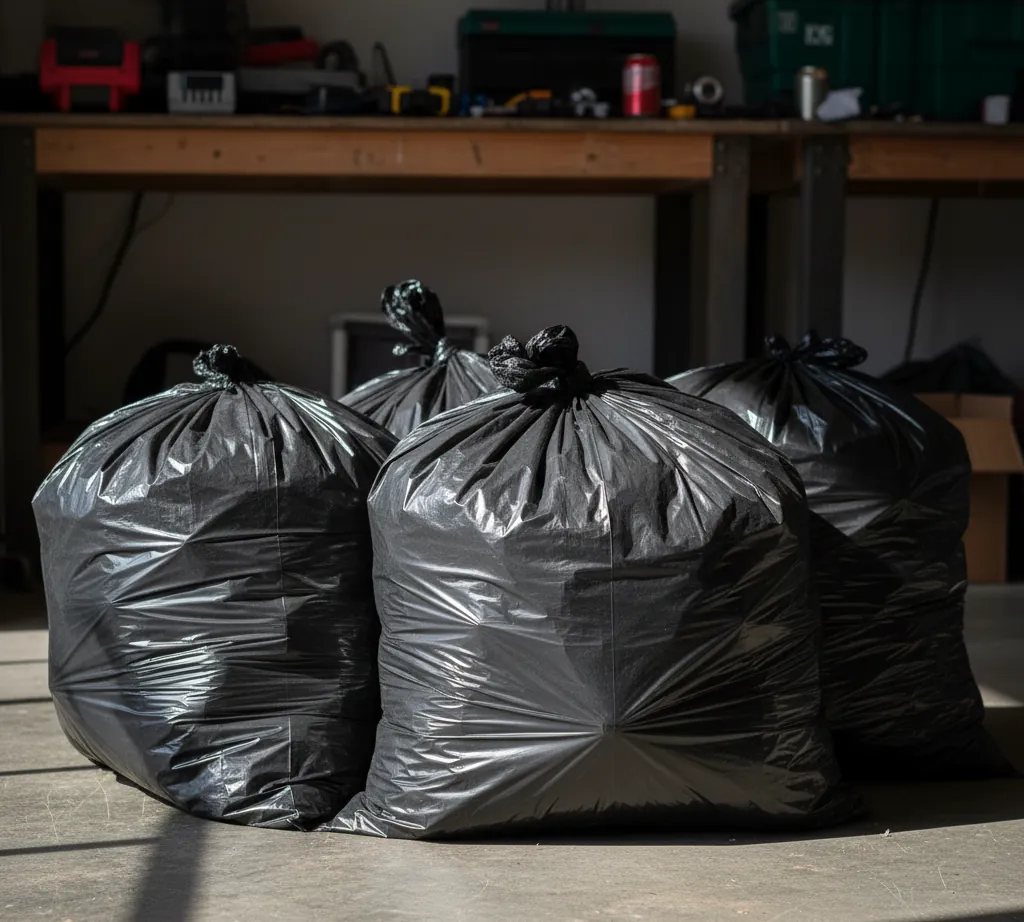
Qatar's construction sector and its accommodation campuses consume the heaviest liners in the market. Concrete dust, offcuts and packaging waste demand 60-90 micron bags for 240L bins, and the 1100L front-lift liners used by waste contractors at camp scale run 100 micron and above with reinforced gussets. Black recycled-blend film dominates because contents rarely need inspecting and recycled-blend handles rough handling well. The failure mode in this segment is always the same: bags stored outdoors in the sun get UV-brittle before they are even used. We build UV-stabilised film for Gulf-exposed stock — it costs a fraction more and ends the "the bag ripped before we filled it" complaint that plagues cheap imports here.
Facility management, hospitality and municipal fleets
Doha's malls, the Msheireb district, stadium precincts and hotel groups run contract cleaning on colour-coded streams — black for general waste, clear for inspection points, colour streams for recycling segregation mandated across many FM tenders. These buyers spec consistent gauge (40-60 micron for 120-240L bins), print on request, and case counts that match a cleaner's shift rather than a warehouse pallet. Municipal collections around the municipalities (Baladiyat) use heavy 240L and 1100L liners where manual handling meets summer heat; thin bags fail here not at the seam but at the heat-softened film. Hospitality adds a quieter spec: odour control and puncture resistance for kitchen waste, which pushes buyers toward slightly thicker film with a good seal rather than maximum capacity.
Importing to Qatar: short route, strict conformity
The supply route is the shortest we run: Mundra to Hamad Port in 4-7 days ocean transit, clearance in 2-3 days, and the GCC common external tariff of 5% on the customs value. Conformity sits with QGOSM — the Qatar General Organization for Standards and Metrology — through your import registration; our mill certificates, material data sheets and (where needed) test reports support the file. Arabic-English artwork printing is available for private label. One practical note for tender-driven buyers: Qatari FM contracts often run three to five years, so distributors who lock container pricing with a manufacturer — rather than buying spot from traders — win the renewal economics.
Specifications for every size sit on our heavy duty garbage bags page, the sister range is on our trash bags and rolls line, and our UAE and KSA industrial waste bag guide covers the wider Gulf market logic.
Frequently Asked Questions
What micron do Qatar municipal contractors use?
For 240L bins, 60-80 micron is the working range in Gulf heat; 1100L front-lift liners run 100 micron plus with reinforced gussets. UV-stabilised film is worth specifying for anything stored outdoors.
How fast can you deliver to Doha?
Production 7-10 days, ocean 4-7 days Mundra to Hamad Port, clearance 2-3 days. Realistic PO to door is two to three weeks — the shortest lead time of any export market we serve.
Do you print for Qatari facility management contracts?
Yes — Arabic and English print, gauge and colour per tender spec, private label cases. Artwork approval takes about five working days before the production slot.
Is there a duty on bags imported to Qatar?
The GCC common external tariff applies at 5% of customs value. Conformity documentation supports your QGOSM import registration; our certificates are prepared to that standard.