Germany wraps more pallets per square kilometre than almost any country in Europe — the logistics heartland around Frankfurt, the Ruhr and the ports runs on machine wrap film by the mile. German buyers of stretch film are also the most engineering-minded in the trade: they measure pre-stretch, they calculate cost per pallet, and they expect film data sheets with real numbers. We manufacture manual and machine grade stretch film at our Gujarat plant, and this guide collects what German buyers actually ask before they order a container.
The two grades and where each fits
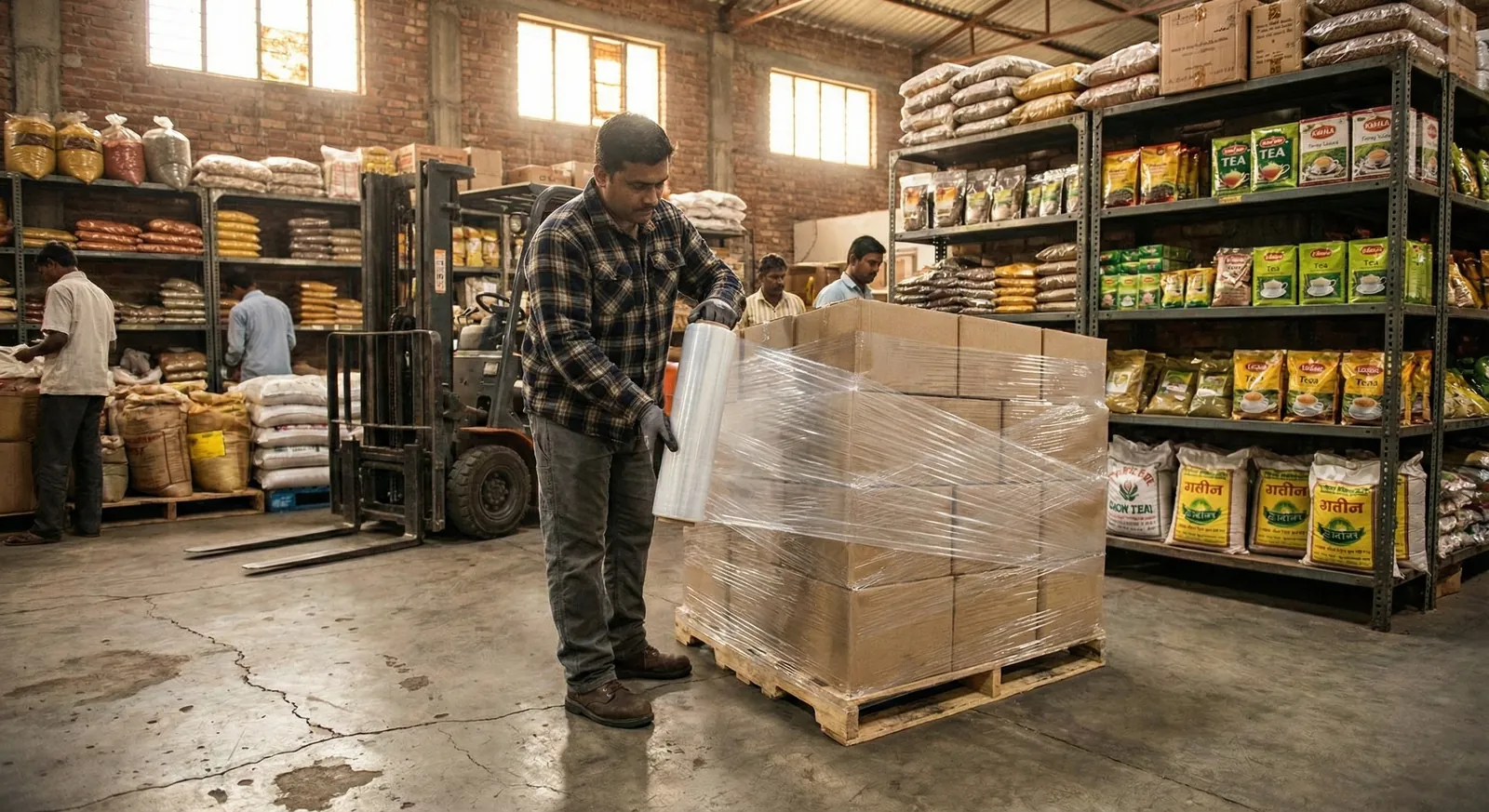
Manual (hand) grade runs 400mm and 500mm widths on 150-300 metre rolls, 15-23 micron, applied by a wrapper who stretches the film as they walk — the classic warehouse routine for low-volume dispatch. Machine grade runs 500mm x 1500 metre rolls, typically 17-23 micron, feeding powered pre-stretch carriages that stretch the film 150-300% before it hits the pallet; that is where the economics live, because every percent of pre-stretch is film you bought but never used. Downgauging is the conversation German buyers initiate: moving a standard 23 micron wrap to a premium 15-17 micron with better elongation resins cuts film per pallet by 20-30% at equal containment. Cast film dominates European machine wrap for its clarity and quiet unwind; blown film holds niches where puncture resistance matters more than optics. Both run on our line — see the stretch film product page for roll specs, and our manual vs machine comparison for the selection logic.
What German buyers test before committing
The test set is practical: tensile and elongation to ASTM D882, cling to the standard film tests (one-sided cling is the default so adjacent pallets do not weld together in the truck), tear propagation, and the honest test — a real pallet on a real wrapper, filmed and compared for containment force and film breakage over a full shift. We issue batch certificates for tensile and gauge, and we ship trial rolls by air so your wrapper trials happen before the container order. Roll concentricity and unwind consistency matter more than buyers expect: a roll that hunts on the carriage wastes film and stops the line, which is why our QC measures roll geometry, not just film properties.
Rules, route and rhythm
Stretch film is transport packaging under German packaging law — your advisor confirms whether the take-back or system-participation route applies to your volumes; we supply per-roll weights for whichever file it is. Duty follows the EU rate for the film's TARIC line (around 6.5% for polyethylene film typically) plus 19% import VAT. Mundra to Hamburg runs 24-30 days ocean; production 7-10 days for standard rolls, longer for private-label cores and boxes. German distributors order quarterly containers, usually mixed hand/machine, and the ones who downgauge successfully start with a trial pallet test — never a full switch on paper specs alone. Our gauge-calculation guide shows the arithmetic your customers will run on your quote.
Frequently Asked Questions
What roll specs do German machine wrappers need?
500mm x 1500m machine rolls in 17-23 micron, with roll diameter and core specs matched to your carriage; hand rolls 400/500mm x 150-300m in 15-20 micron. We match core IDs and roll OD to the wrapper model.
Can we trial before a container order?
Yes — air-shipped trial rolls from the same production batch family as your container. Run them on your wrapper, measure film per pallet, then commit; that is how downgauging projects should start.
What duty and VAT apply at import?
EU conventional duty on the film TARIC line (typically around 6.5% for polyethylene film) plus 19% import VAT, recoverable via your VAT process. Your broker confirms the exact line.
How is one-sided cling different from standard?
Cling only on the inner face — pallets stop sticking to each other in transit and warehouse handling gets quieter and cleaner. It is the default spec for most European logistics buyers and runs as standard on our machine grades.