An onion packing shed in Idaho runs 18 hours a day in season, and the bag that goes through its filler has to do one thing a hundred thousand times without breaking: hold 5 or 10 pounds of onions while breathing. Leno mesh does that job better than any other packaging format — the open weave vents heat and moisture so product arrives without condensation rot — but not all leno is equal, and US packers who buy on price per bag alone usually learn the difference mid-season when a cheap weave splits at the filler and staff start hand-bagging. Here is what actually matters when sourcing leno mesh bags for the US market.
Mesh counts, denier and the packing line
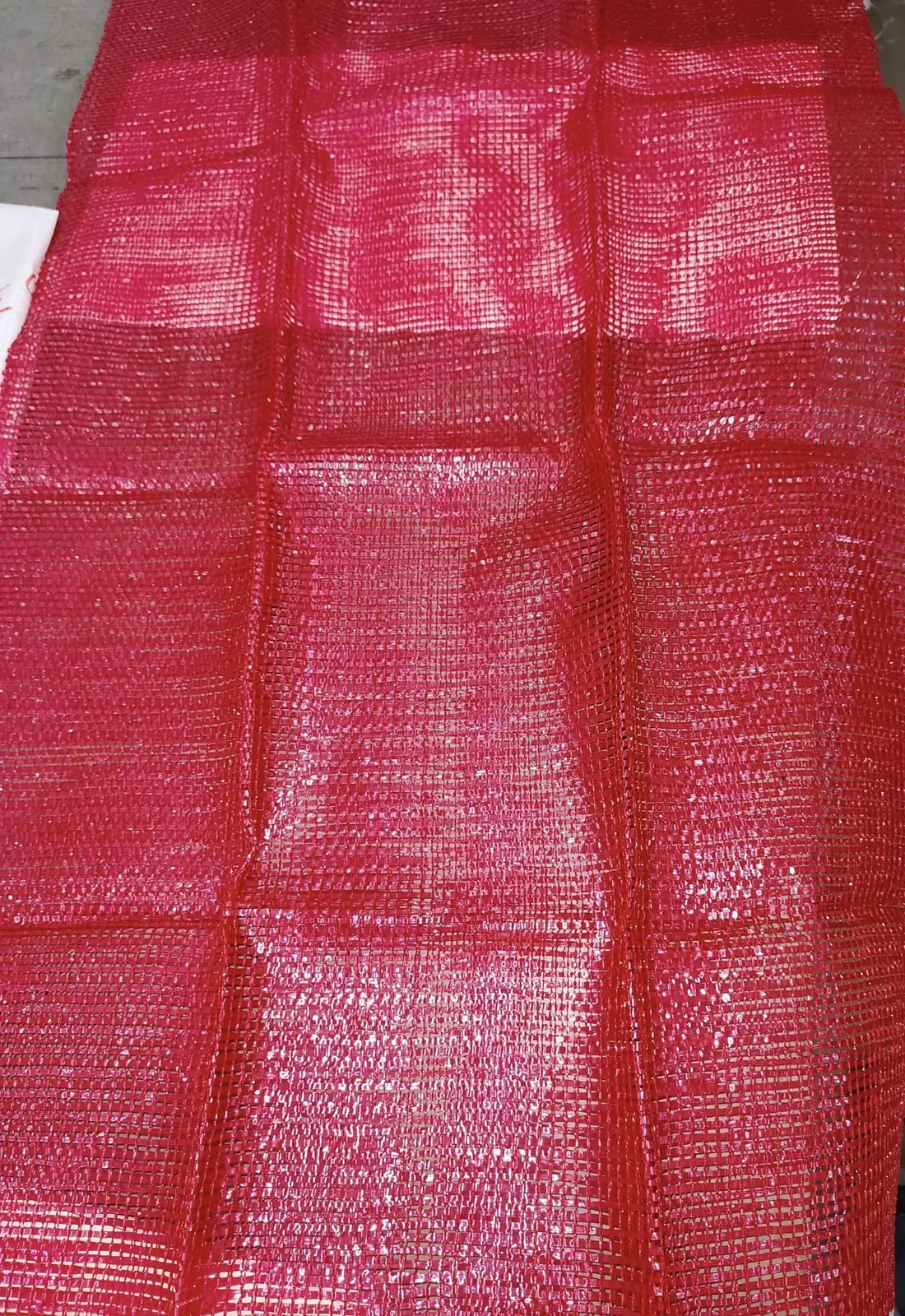
Leno mesh is specified by mesh count and denier — the number of yarns per inch and the thickness of each yarn. Retail onion and potato bags in the 2 to 10 pound range typically run 20x20 or 24x24 mesh with moderate denier for a clean retail look; larger 25 and 50 pound produce and citrus field bags run coarser, stronger weaves. The critical property for automated filling is tear propagation: a snag at the filler should leave a small puncture, not unzip the whole side, and that comes from yarn quality and weave balance rather than fabric weight alone. Drawstring and heat-cut closures both run through US equipment; we cut to the width your filler was built for and roll or bale accordingly.
Food contact and the US compliance picture
Polypropylene leno touching produce falls under FDA food-contact expectations (21 CFR 177.1520 for polypropylene), which the base resin satisfies when it is genuine food-grade — a production-line decision, not paperwork. We supply the material declarations US packers' retail customers ask for during onboarding. Duty is favourable: leno mesh sacks under HTS 6305.33 generally clear duty-free at MFN, and India-origin goods avoid the Section 301 tariff exposure that complicates China-sourced packaging — a real advantage as US produce packers diversify supply.
Why baled leno changes the landed cost
Leno mesh compresses like almost no other packaging: a bale of 100,000 retail bags fits in a fraction of a pallet's cube, which means a 40ft container from Mundra carries staggering piece counts and per-bag landed cost drops below what domestic converters can usually touch. Transit to NY-NJ or Philadelphia runs 25 to 35 days, and bales stack two-to-three high through the whole journey without damage because the weave recovers its loft once unpacked. First-time US buyers should trial with a mixed container — several mesh counts and sizes share one FCL — then lock the annual programme against season calendars.
Frequently Asked Questions
Which mesh count suits retail onion bags?
20x20 or 24x24 with retail-grade finish for 2 to 10 pound bags; coarser, stronger weaves for 25 and 50 pound field packs. Send your filler specification and we match it.
Are leno bags food-contact compliant?
Yes — food-grade polypropylene under FDA 21 CFR 177.1520 with material declarations supplied per shipment for your retail onboarding file.
How many bags fit in a container?
Baled leno loads extremely densely — hundreds of thousands of retail-size bags per 40ft depending on size and mesh; we return exact bale plans per order.
Can you match our bag colour and closure?
Yes — standard produce colours (yellow, red, orange, white) plus custom tones, with drawstring, heat-cut or sewn closures to run through your existing equipment.
Mesh sizes and roll options are on the Leno Mesh Bags and Rolls page. For produce packing technique read the UAE produce export guide, and for the material fundamentals see why leno dominates breathable produce packaging.