South Africa's produce trade runs on two engines — the domestic onion and potato channels that feed the Highveld markets, and the citrus export industry that packs some of the most quality-controlled fruit on the planet. Both buy leno mesh, and both judge a bag by what happens after it leaves the packhouse. The compliance story here is less about a single mandatory certificate and more about proving, lot by lot, that the weave does what the spec sheet claims. Here is the checklist that keeps South African leno programmes out of trouble.
Testing: what SABS-accredited labs check
South Africa has no dedicated mandatory standard for woven produce bags, but the testing culture is real: buyers routinely send samples to SABS-accredited laboratories for tensile strength, mesh consistency and, for outdoor-stocked product, UV weathering. The tests that matter for leno specifically are tear propagation — a snag must puncture, not unzip — and seam or closure strength at the filled weight. We test to these parameters per lot and share the reports with each shipment; South African buyers running their own verification can send our retained samples to any SABS-accredited lab and the numbers will match, which is the whole point of honest sampling. Food-contact declarations for produce bags complete the file for retail-facing SKUs.
Application specs: onions, citrus and the Highveld sun
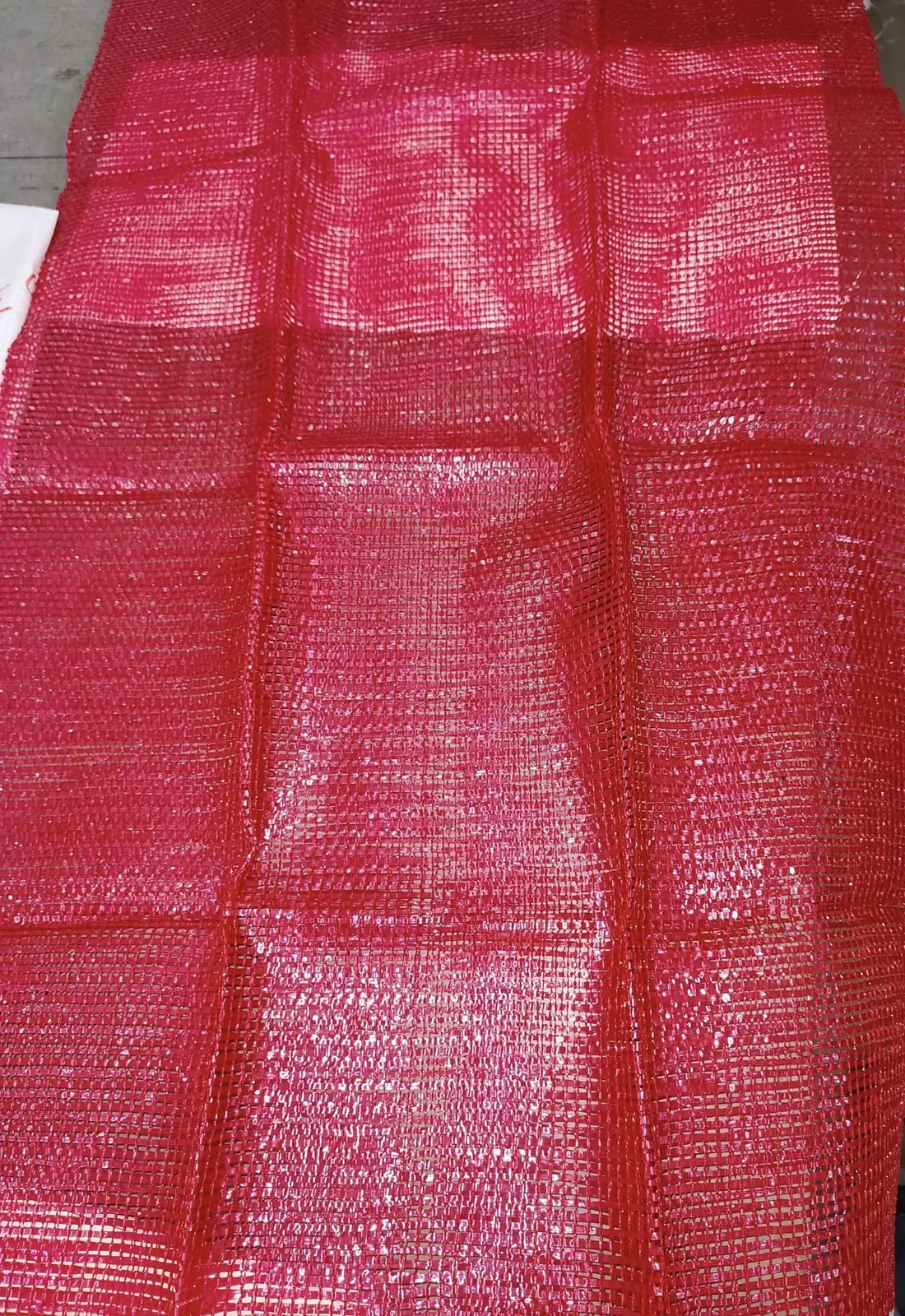
Domestic onion and potato bags run retail sizes from 2kg to 10kg in 20x20 to 24x24 mesh with food-grade polypropylene, colour-coded to house brand. Citrus field and ventilation bags run stronger weaves with cleaner food-contact declarations because the fruit travels further and the cold-chain packers document everything. The Highveld sun is the sleeper variable: bags stored outside at markets and depots age fast without UV stabilisation, so any South African leno programme for outdoor exposure specs a 6 to 12 month UV package — a tape-level decision made before weaving, not a coating added after.
Pre-shipment inspection and the import flow
Textile sack lines can carry meaningful duty into South Africa — often double-digit — so the SARS tariff line gets confirmed with your clearing agent before pricing, and the question of ITAC import permits gets a pre-check even though most plain sack lines move without one. Containers land at Durban or Cape Town 20 to 28 days from Mundra, and the pre-shipment step South African buyers value most is third-party inspection before loading: a few hundred dollars that verifies GSM, mesh, print and bale counts against the proforma. We book and support inspection for every SA order that requests it, and lot samples stay with us for a year in case a downstream question ever needs answering.
Frequently Asked Questions
Which standard applies to produce mesh bags in SA?
No single mandatory standard — buyers verify through SABS-accredited lab testing of tensile, mesh consistency and UV weathering against the agreed spec, which we support with per-lot reports.
What duty applies to leno mesh imports?
Textile sack lines often carry double-digit duty into South Africa — confirm the exact SARS tariff line with your clearing agent before setting landed prices, and pre-check ITAC permit requirements.
Which mesh suits retail onion bags?
20x20 to 24x24 mesh in food-grade polypropylene for 2 to 10kg retail; stronger coarser weaves for market and field packs.
Do bags need UV protection for outdoor storage?
Yes for any outdoor-stocked product — a 6 to 12 month UV package built into the tape, validated with weathering hours before the weave is cut.
Mesh counts and roll options are on the Leno Mesh Bags and Rolls page. For importer quality mistakes read the top sourcing mistakes guide, and for fabric fundamentals see why woven fabric anchors bulk packaging.