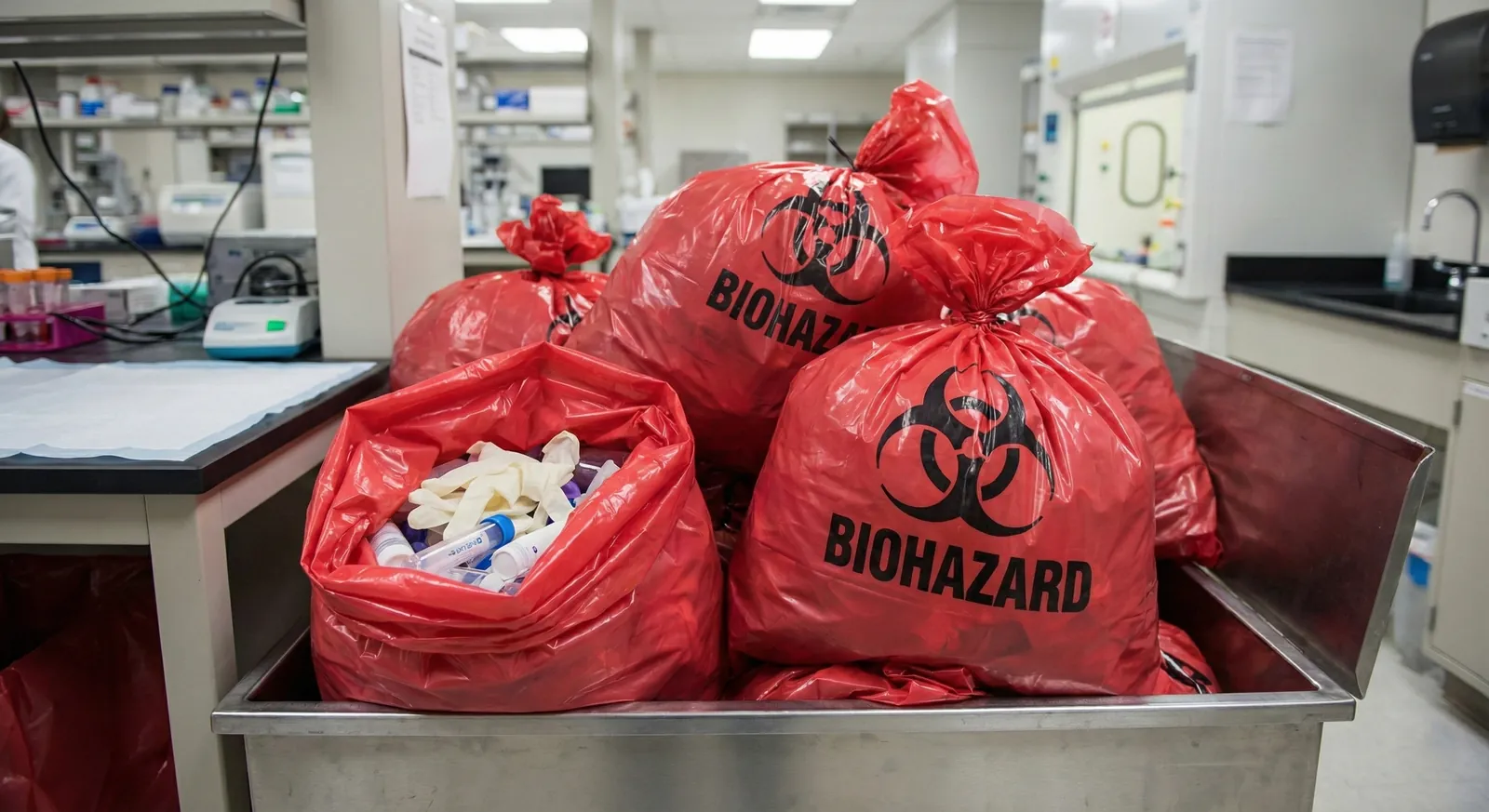
France classifies healthcare waste as DASRI — déchets d'activités de soins à risques infectieux — and everything about the biohazard bag market flows from that label: the colours, the print, the transport rules and the buyer's document file. For importers and medical distributors, France is a valuable market precisely because it is demanding; bags that arrive with proper classification support and print quality rarely face price-only competition. Here is the import path as our French accounts run it.
The regulatory frame: DASRI, UN 3291, ADR
DASRI rules separate infectious healthcare waste from ordinary refuse at the point of generation, and the bags that contain it must be leak-proof, tear-resistant and marked for what they carry. Where DASRI waste moves — from clinic to treatment site — ADR transport rules apply with UN 3291 (clinical waste, unspecified, n.o.s.) as the classification reference for Category B infectious waste. French buyers therefore ask for: printed biohazard symbols and French stream text, film with documented tensile and leak performance, and consistent colour per the facility's DASRI plan — yellow is the dominant infectious-waste colour in French practice. Our colour-coding guide covers the international scheme and our puncture-resistance guide covers the tests behind the spec claims.
Duty, VAT and the packaging file
Classification sits under the HS 3923 lines for polyethylene bags; EU conventional duty for the TARIC line applies (typically mid single digits) and 20% French import VAT is charged at clearance, recoverable through your VAT process. As importer you also carry the French EPR packaging obligations for the packaging you place on the market — per-case component weights from our packing list feed that declaration. None of this is heavy; all of it is easier when the manufacturer supplies clean documents the first time, which is what our document set is built for.
Lead times and ordering pattern
Mundra to Le Havre runs 24-30 days port to port, Marseille/Fos for southern accounts; production is 7-10 days after print approval, with French-language artwork adding about five working days on first orders. Clearance 2-4 days. Realistic PO to warehouse is five to six weeks. French medical distributors typically order quarterly containers mixed across ward and laboratory sizes (600x800mm and 700x1000mm formats dominate), with printed packaging under their own brand. First-time importers often trial 3-5 pallets LCL through Le Havre or Roissy freight; the FCL switch comes as soon as the volume justifies it, because per-bag cost drops sharply at container scale.
Specifications sit on our biohazard bags product page; autoclave-grade performance is covered in our autoclave-safe bag guide, and the wider waste-bag family (including general waste) on our heavy duty garbage bags page.
Frequently Asked Questions
Do the bags need French-language printing?
For facility use, the biohazard symbol is universal; French stream text is what French buyers expect on the bag and case. We print to your approved French artwork as standard for this market.
What duty and VAT apply at import?
EU conventional duty on the HS 3923 TARIC line (mid single digits typically) plus 20% French import VAT, recoverable via your VAT return. Your broker confirms the live line rate before pricing.
How long is the full lead time to Le Havre?
Five to six weeks PO to door: 7-10 days production (plus artwork on first orders), 24-30 days ocean, 2-4 days clearance. Add buffer around August, when French logistics slows for holidays.
Can we start with an LCL trial?
Yes — 3-5 pallets through Le Havre consolidators with the full document set. Most French distributors move to FCL within two orders as per-bag economics kick in.